






Definition and Purpose of the Vendor Vendor Agreement Template
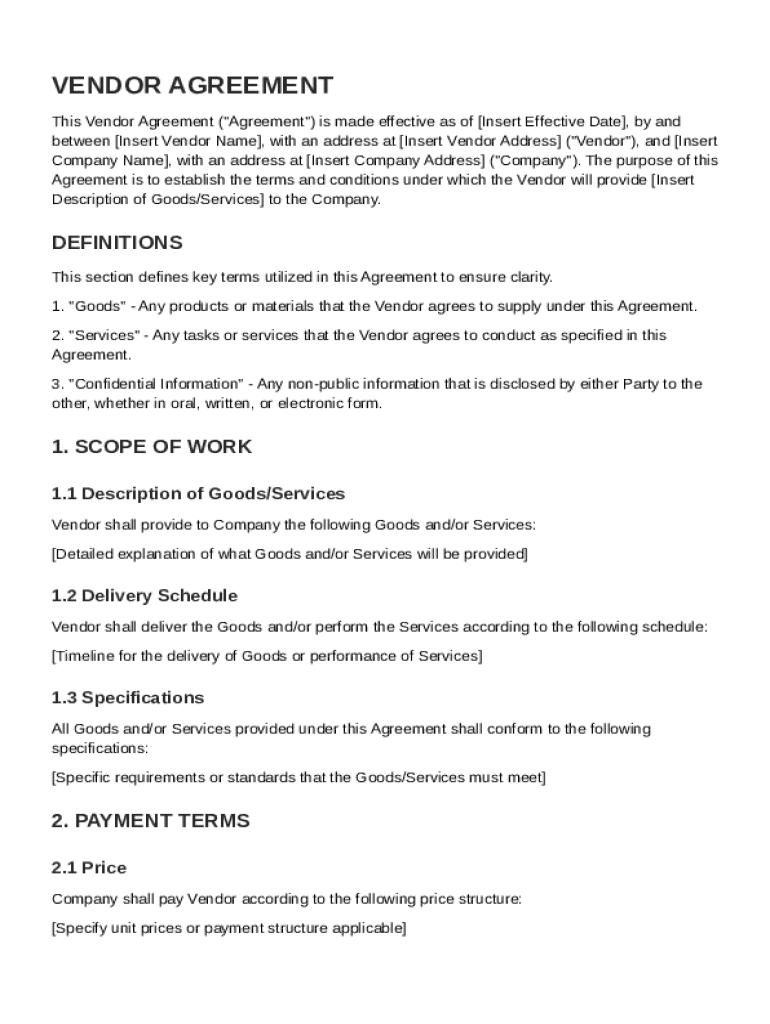
The Vendor Vendor Agreement Template is a structured document designed to outline the terms and conditions under which a vendor provides specified goods and services to a company. It serves as a legally binding framework that defines roles, responsibilities, and expectations between the two parties. Key components of this agreement typically include definitions, the scope of work, payment terms, confidentiality obligations, and termination clauses. In addition to establishing the groundwork for professional interactions, this template helps prevent misunderstandings and disputes by clearly delineating each party's obligations and rights.
Key Elements of the Vendor Vendor Agreement Template
Several fundamental components contribute to the robustness of a Vendor Vendor Agreement. These include:
- Definitions: Provides clear interpretations of essential terms used throughout the agreement. This ensures that all parties share a common understanding of critical elements such as “goods,” “services,” and any industry-specific jargon.
- Scope of Work: Details the specific tasks or services that the vendor is responsible for delivering. This section may include timelines, milestones, and deliverables that must be met.
- Payment Terms: Explains the financial arrangements, including payment amounts, schedules, and methods. It may also cover contingencies, such as penalties for late payments or discounts for early payment.
- Confidentiality Obligations: Establishes protocols to protect sensitive information, ensuring that all proprietary data shared during the partnership remains secure and undisclosed to third parties.
- Termination Clauses: Specifies the conditions under which the agreement can be legally terminated. It also defines the procedure for addressing breaches of contract or unsatisfactory performance.
Steps to Complete the Vendor Vendor Agreement Template
Creating a comprehensive Vendor Vendor Agreement involves several structured steps:
- Review Template Content: Begin by reviewing the template to understand its sections and the information required for each part.
- Detail the Scope of Work: Clearly articulate the work to be completed by the vendor, including specific deliverables, quality standards, and deadlines.
- Specify Payment Terms: Define the payment structure, including amounts, schedules, and any related stipulations.
- Outline Confidentiality Measures: Establish agreements on how sensitive information will be handled. Consider both parties' interest in maintaining confidentiality to foster trust.
- Set Termination Conditions: Describe the process for contract termination under different scenarios, including voluntary termination, breach of terms, or force majeure events.
- Finalize and Review: Ensure all sections are complete and accurate. It is advisable for both parties to review the contract thoroughly or consult with legal experts before signing.
Legal Use of the Vendor Vendor Agreement Template
The Vendor Vendor Agreement Template is a binding legal document and must comply with applicable laws and regulations. It is essential for both parties to understand the legal implications and commitments they agree upon in the contract. These agreements are typically governed by U.S. contract law, emphasizing the need for clarity and mutual consent. Users must ensure that the template covers all necessary legal bases to be enforceable in a court of law, including obtaining valid signatures from authorized representatives of each party.
Examples of Using the Vendor Vendor Agreement Template
This template is widely applicable across various industries and business scenarios. Some practical examples include:
- Supply Chain Management: A company entering a partnership with a supplier to ensure timely delivery of raw materials.
- IT Services: A technology firm engaging a software provider to maintain and upgrade systems.
- Marketing Agencies: A business hiring an agency to manage its advertising campaigns, including digital marketing strategies and social media management.
- Event Planning: Hiring a vendor to deliver catering services during corporate events or conferences.
Business Types That Benefit Most from the Vendor Vendor Agreement Template
A diverse range of businesses can leverage the Vendor Vendor Agreement Template to solidify their partnerships with vendors. Common beneficiaries include:
- Small and Medium Enterprises (SMEs): Can benefit by formalizing relationships with suppliers without expensive legal fees.
- Corporations: Use this agreement to manage large-scale vendor contracts efficiently.
- Nonprofits: Secure partnerships with service vendors while ensuring compliance with mission-driven objectives.
- Startups: Emerging businesses use the template to quickly and effectively establish supplier agreements crucial for scaling operations.
Important Terms Related to the Vendor Vendor Agreement Template
To fully utilize the Vendor Vendor Agreement Template, it is important to familiarize oneself with associated terms:
- Indemnity: A clause that provides protection to one party against certain losses or damages.
- Force Majeure: Situations beyond control that may prevent contractual obligations from being fulfilled, such as natural disasters or pandemics.
- Warranties: Assurances that specific facts or conditions about the products or services are true and will be maintained for the term of the contract.
- Arbitration: A method of dispute resolution involving a neutral third party.
Digital vs. Paper Version
The Vendor Vendor Agreement Template can be utilized in both digital and paper formats, each with its benefits:
- Digital Versions: Easily edited, shared, and stored. Ideal for organizations that prioritize speed and efficiency. It supports options for electronic signatures, providing convenience for geographically dispersed teams.
- Paper Versions: Useful when hard copies are required for record-keeping or legal compliance. While less efficient, paper versions ensure accessibility for stakeholders who prefer traditional documentation methods.