
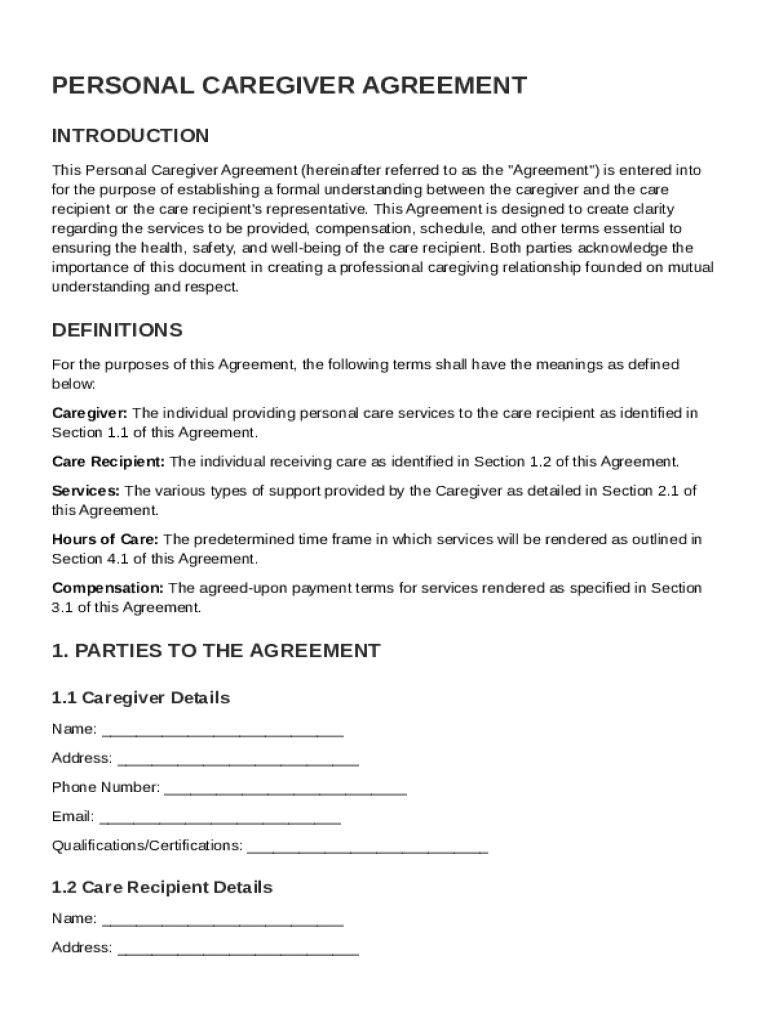







Definition and Meaning
A Personal Caregiver Agreement Template is a formal document that outlines the relationship between a caregiver and a care recipient or their representative. This document typically includes details about the services the caregiver will provide, the compensation arrangement, and the schedule for care. It also sets the terms for ensuring the well-being of the care recipient, serving to protect both parties legally. The agreement delineates responsibilities and expectations, making it a vital tool for managing caregiving relationships effectively.
- Role of the Caregiver: Specifies tasks such as personal care, meal preparation, or transportation.
- Responsibilities of the Care Recipient or Their Representative: May include providing necessary equipment or facilitating access to certain areas of the residence.
It is essential for establishing clear communication and understanding between all parties involved, minimizing potential conflicts or misunderstandings.
How to Use the Personal Caregiver Agreement Template
To effectively utilize a Personal Caregiver Agreement Template, follow these steps:
- Download the Template: Obtain the template from a reliable source or create one using a document-editing platform like DocHub.
- Fill in Basic Information: Include names, addresses, and contact information for both the caregiver and the care recipient.
- Detail Services Provided: Clearly define the specific services the caregiver will offer, such as bathing, dressing, housekeeping, or medication administration.
- Schedule and Hours: Specify the days and times the caregiver is expected to work, including any flexibility or on-call requirements.
- Compensation Agreement: Outline payment terms, including hourly rates, overtime, and payment frequency.
- Terms and Conditions: Include confidentiality agreements, liability waivers, and dispute resolution processes.
Ensuring that each party understands their respective obligations will help facilitate a smooth caregiving experience, advocating for both parties' rights and responsibilities.
Key Elements of the Personal Caregiver Agreement Template
A well-prepared Personal Caregiver Agreement Template should include key components such as:
- Identification of Parties: Clearly lists all individuals involved, ensuring transparency.
- Service Description: Details the scope of services, catering to the specific needs of the care recipient.
- Payment Terms: Establishes compensation arrangements, including any additional stipends or bonuses.
- Confidentiality Clause: Protects the privacy of the care recipient and their family, safeguarding sensitive information.
- Termination Clause: Explains how either party can terminate the agreement, with or without cause, and any notice requirements.
Such components form the backbone of a robust caregiver agreement, addressing all angles to prevent future disputes.
Legal Use of the Personal Caregiver Agreement Template
This template is crucial in establishing a legally binding contract between caregivers and care recipients. Here are some legal considerations:
- Compliance with Labor Laws: Ensure the agreement adheres to state labor laws, especially regarding working hours and compensation.
- Tax Implications: Capture necessary tax information, like whether the caregiver is an independent contractor or an employee.
- Licensing and Certification: Specify any required certifications for certain types of care, aligning with state regulations.
It's imperative to consult with a legal professional when drafting the agreement to assure full compliance with applicable laws.
State-Specific Rules for the Personal Caregiver Agreement Template
Each state in the United States may have unique rules and requirements related to caregiver agreements. Consider the following:
- Differences in Minimum Wage: States vary in their minimum wage laws, which must be considered in the agreement.
- Health and Safety Regulations: Some states have standards that caregivers and recipients must meet, such as CPR certification.
- Insurance Requirements: Check if liability insurance is required for the caregiver within the state.
Adapting the template to conform with state-specific rules ensures that the agreement is both appropriate and compliant.
Important Terms Related to the Personal Caregiver Agreement Template
Understanding specific terms within the caregiver agreement is critical to its proper execution:
- Caregiver: The individual providing the required services to the care recipient.
- Care Recipient: The person availing caregiving services or the one whose behalf the services are availed.
- Compensation: The payment, outlined in the agreement, that is due to the caregiver for services rendered.
- Liability Waiver: A portion of the document that clarifies what the caregiver is or is not responsible for, legally.
- Dispute Resolution: Protocols included to manage conflicts between parties, potentially avoiding litigation.
Grasping these terms supports a smooth operation of the agreement, fostering clarity and understanding among parties.
Steps to Complete the Personal Caregiver Agreement Template
Completing the template requires attention to detail and adherence to the outlined steps:
- Gather Information: Collect all necessary personal information for both the caregiver and the care recipient.
- Define Expectations: Clearly articulate the roles and responsibilities each party will uphold.
- Draft Terms: Develop clear terms regarding services, compensation, and working conditions.
- Review for Accuracy: Ensure that all information is correct and reflects the agreed-upon terms and conditions.
- Legal Review: Consider having a legal professional review the document to ensure compliance and completeness.
- Sign and Date: Once both parties are satisfied with the document, sign and date it to make it official.
Thoroughly completing each step solidifies a responsible and comprehensive agreement that can govern the caregiving relationship.
Examples of Using the Personal Caregiver Agreement Template
The agreement template finds applications in various contexts, such as:
- Family Caregivers: Relatives providing paid care to a family member can use it to formalize their arrangement.
- Professional Caregivers: Utilized by agencies or individuals who offer caregiving services as a business, ensuring clarity and legality.
- Senior Care Facilities: Establishes agreements with independent caregivers who provide supplemental services to facility residents.
These scenarios illustrate the template’s versatility, demonstrating its functionality in numerous caregiving environments.


