




01. Edit your form online
Type text, add images, blackout confidential details, add comments, highlights and more.

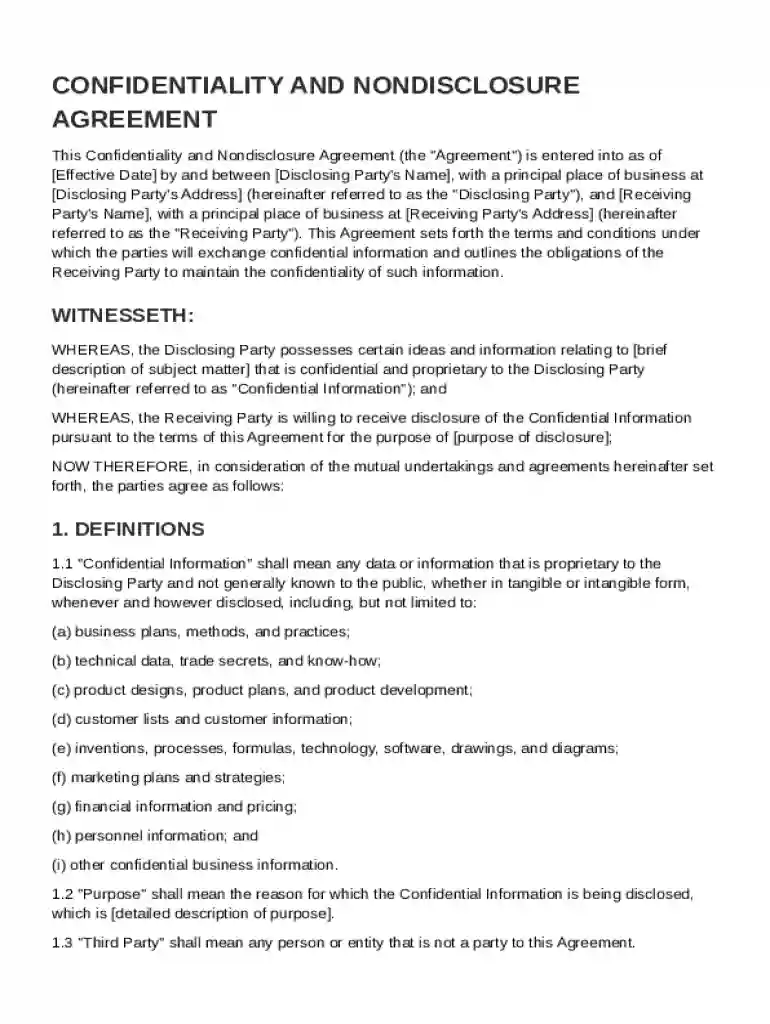
Type text, add images, blackout confidential details, add comments, highlights and more.

Draw your signature, type it, upload its image, or use your mobile device as a signature pad.

Send it via email, link, or fax. You can also download it, export it or print it out.
A Confidentiality and Nondisclosure Agreement (NDA) is a legal contract between two or more parties, typically referred to as the Disclosing Party and the Receiving Party. This agreement establishes the framework for sharing confidential information, ensuring that the information remains protected and is not disclosed to unauthorized entities. It serves to define 'Confidential Information', outlining what information is considered sensitive and the scope of protection required. Commonly used in business settings, NDAs help protect proprietary information, trade secrets, and other sensitive data during negotiations, collaborations, and business dealings.
The NDA template includes several critical components:
Using the NDA template involves several steps to ensure it meets the specific needs of the involved parties:
By customizing the template, parties can create an NDA that reflects their specific intentions and requirements.
NDAs are commonly used by various individuals and organizations, including:


Completing an NDA involves the following steps:
Ensuring thorough understanding and agreement of all terms by involved parties helps facilitate smooth completion and enforcement of the NDA.
Legally, an NDA is used to bind parties to confidentiality limitations. It prevents unauthorized information sharing and establishes a clear legal recourse in case of breaches. Under U.S. law, NDAs are enforceable provided they meet the necessary legal standards, including clear definitions and reasonable terms. NDAs must not contravene public interest or impose undue restrictions beyond necessary confidentiality protection.
While NDAs are generally governed by federal law, particular states in the U.S. may have additional requirements or considerations. For instance:
Understanding state-specific variations ensures compliance and enhances enforceability.
Understanding these terms ensures a comprehensive grasp of the NDA’s implications and potential repercussions associated with its usage.
Examples illustrate the diverse contexts in which NDAs may be applied:
These examples underscore the versatility and necessity of NDAs in protecting sensitive information across various professional scenarios.
At DocHub, your data security is our priority. We follow HIPAA, SOC2, GDPR, and other standards, so you can work on your documents with confidence.


The parties agree to enter into a confidential relationship with respect to the disclosure of certain proprietary and confidential information (ConfidentialRead more
Sample Confidentiality/Non-Disclosure Agreement. Samples, Templates Rates. Sample Confidentiality/Non-Disclosure Agreement. Category: General Document
May 13, 2019 sample Confidentiality and Trade Secrets Policy as a starting point. You can sign up for Staff.Wiki and download the template by clicking here.Read more


