







Definition & Meaning
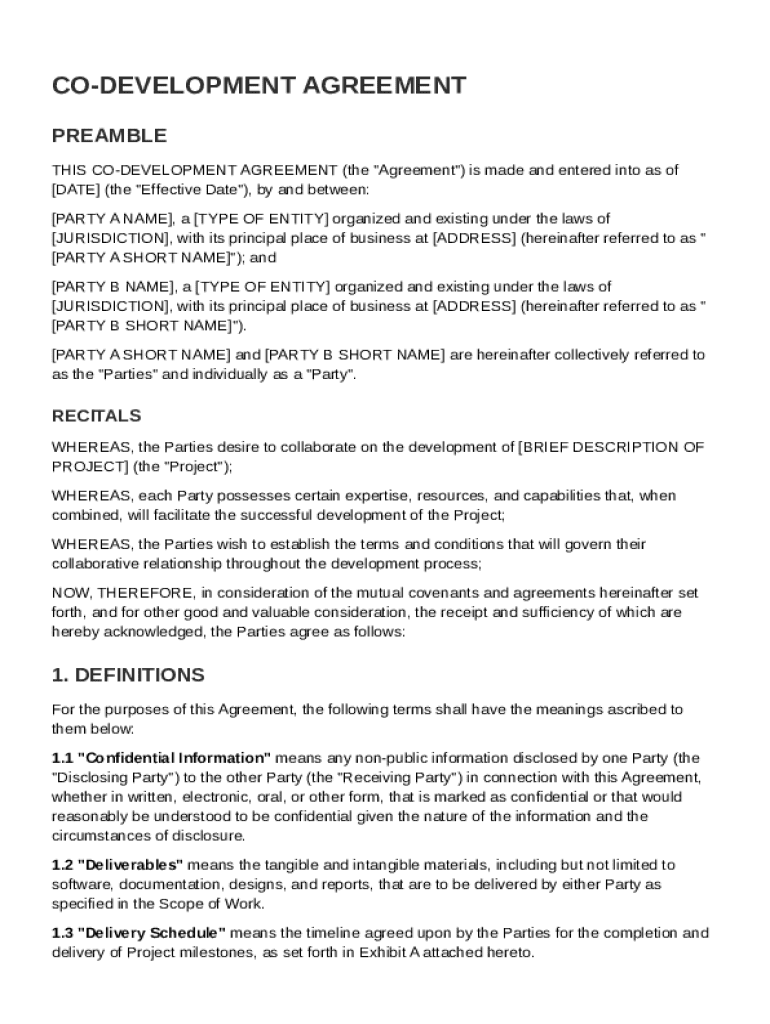
A Co-Development Agreement Template is a structured document that serves as a formal agreement between two or more parties collaborating on a specific project. This template outlines the terms and conditions of their joint efforts, focusing on responsibilities, intellectual property rights, financial arrangements, governance structure, confidentiality obligations, and mechanisms for dispute resolution. This agreement aims to set clear parameters to foster successful collaboration and mitigate potential conflicts.
Key Components of the Agreement
- Collaboration Terms: Establishes the scope and nature of the cooperation, detailing each partner’s contribution.
- Roles and Responsibilities: Lists specific tasks and obligations assumed by the parties involved.
- Intellectual Property (IP) Rights: Clarifies ownership and usage rights of IP generated during the collaboration.
- Financial Contributions: Details cost-sharing, budget allocation, and revenue distribution specifics.
- Confidentiality and Non-disclosure: Protects sensitive information exchanged during the project.
How to Use the Co-Development Agreement Template
Using the Co-Development Agreement Template requires knowing each section's intent and customizing the template to fit the project's unique requirements. This structured guide allows parties to ensure that all essential elements are covered effectively.
Steps to Personalize the Template
- Review All Sections: Gain a comprehensive understanding of each section’s purpose and requirements.
- Customize Details: Tailor the general terms to fit the specifics of your project and partners' roles.
- Consult Legal Experts: Before finalizing, seek legal advice to ensure compliance with relevant laws and interests.
- Review and Revise: All parties should review and propose necessary amendments.
- Finalize and Sign: Once all parties agree, the document should be signed to indicate acceptance.
Steps to Complete the Co-Development Agreement Template
Completing the template is a systematic process of filling in each section with accurate and relevant information. This ensures the agreement is enforceable and aligns with the project goals.
Step-by-Step Breakdown
- Identify Parties Involved: Enter the complete legal names and contact information of all parties.
- Describe the Project: Provide a concise but comprehensive overview of the project, including goals and timelines.
- Allocate Responsibilities: Clearly outline the duties assigned to each partner.
- Detail Financial Arrangements: Specify the financial terms, including funding requirements and profit-sharing models.
- Establish IP Ownership: Define how intellectual property will be managed, protected, and shared.
- Set up Governance Structure: Describe decision-making processes, leadership roles, and any advisory committees.
- Include Termination Clauses: Draft conditions under which the agreement may be amended or terminated.
- Sign and Date: Ensure all parties sign where appropriate, and record the date of execution.
Key Elements of the Co-Development Agreement Template
The effectiveness of a Co-Development Agreement often hinges on including essential components tailored to the project's context. Each element serves a critical role in fostering a successful partnership.
Crucial Elements Explained
- Scope of Work: Detailed description of the project, highlighting intended outcomes and deliverables.
- Milestones and Deliverables: Timeline with specific checkpoints to assess progress and facilitate project management.
- Financial Terms: Outline budgets, payment schedules, and expense responsibilities.
- Ownership and Use of IP: Clear terms on IP rights can prevent future disputes and foster innovation.
- Legal Compliance: Include compliance with all relevant state and federal laws to make the agreement enforceable.
Who Typically Uses the Co-Development Agreement Template
This template is used across various industries and by diverse stakeholders engaged in joint ventures or collaborative projects. Understanding who benefits the most can help tailor the agreement to industry-specific needs.


Examples of Typical Users
- Technology Companies: Often collaborates to develop new software or hardware solutions.
- Pharmaceutical Firms: Partnerships for research and development of new drugs.
- Manufacturing Enterprises: Joint ventures for production processes or equipment development.
- Academic Institutions: Collaborations focused on research and educational advancements.
Legal Use of the Co-Development Agreement Template
The legal framework within the Co-Development Agreement ensures the partnership operates within the boundaries of applicable laws, safeguarding against potential legal disputes.
Legal Considerations
- Jurisdiction: Specify the governing law and jurisdiction for dispute resolution.
- Arbitration Clauses: Include clauses for arbitration to handle disputes out of court.
- Amendments: Outline the process for making amendments to the agreement, ensuring all parties consent.
- Indemnification: Define how risks and liabilities will be managed and who bears responsibility.
State-specific Rules for the Co-Development Agreement Template
Due to varying laws across states, it is essential to address state-specific requirements in your agreement to ensure legality and enforceability.
Variations and Considerations
- State Law Compliance: Tailor the agreement to adhere to specific state statutes that impact partnerships or IP rights.
- Registration Requirements: Some states may require registration of certain types of co-development agreements.
- Tax Implications: State-specific tax regulations can impact the financial terms and require careful analysis.
Business Types That Benefit Most from the Co-Development Agreement Template
Understanding which business types find the most value in a Co-Development Agreement can assist in applying the template effectively.
Beneficial Business Models
- Joint Ventures: Enables companies to leverage combined strengths for new market opportunities.
- Strategic Alliances: Businesses seeking mutual benefits while maintaining individuality.
- Consortia: Group of businesses or organizations seeking to achieve common goals.




