







Definition & Meaning
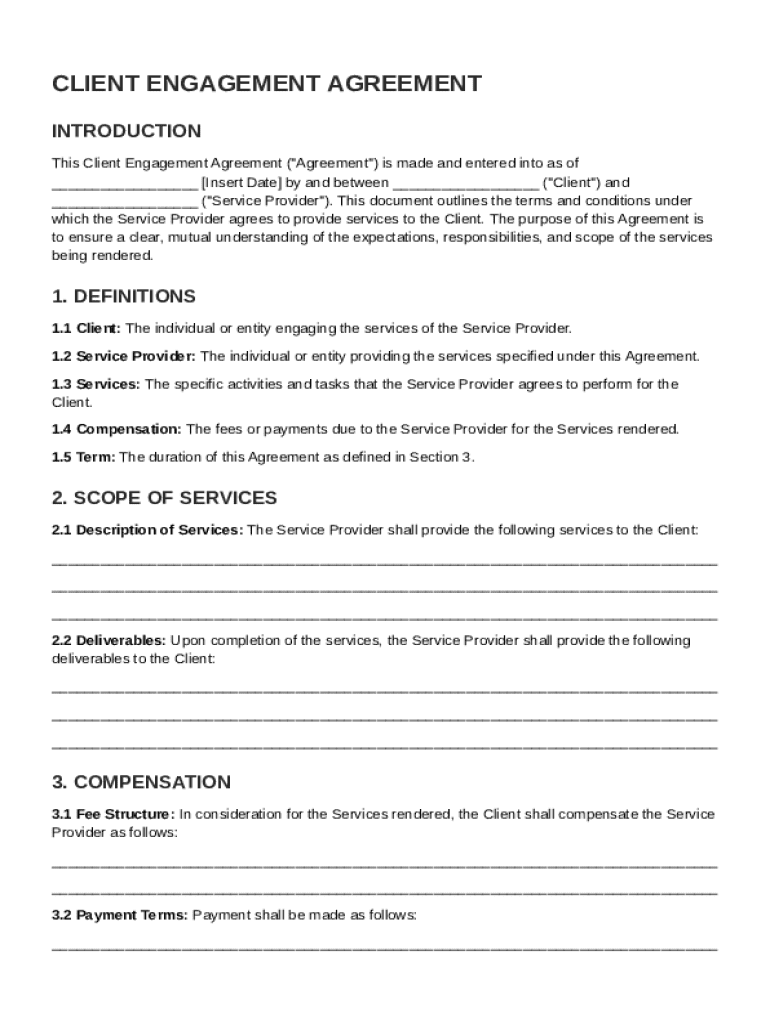
A Client Agreement Template is a standardized document that establishes the terms and conditions between a Client and a Service Provider. It serves as a guideline to define the professional relationship, ensuring both parties have a clear understanding of their roles and responsibilities. This template includes several critical components such as the scope of services, fees, confidentiality obligations, and methods of conflict resolution. It is designed to minimize misunderstandings and legal disputes by outlining specific expectations and commitments, contributing to a harmonious working relationship.
Key Elements of the Client Agreement Template
The Client Agreement Template contains several fundamental sections that provide a comprehensive overview of the contractual relationship. Key elements include:
- Scope of Services: Clearly defines the services or products to be provided, specifying any limitations or conditions.
- Compensation Details: Outlines the payment terms, including rates, billing frequency, and any applicable taxes.
- Confidentiality Clauses: Protects sensitive information exchanged during the engagement, prohibiting unauthorized disclosure.
- Liability Limitations: Sets boundaries on the responsibilities and legal obligations of each party.
- Governing Law and Dispute Resolution: Establishes which state laws apply and how disputes will be resolved, such as through arbitration or litigation.
How to Use the Client Agreement Template
Using the Client Agreement Template involves a straightforward process to customize the document according to the needs of the Client and Service Provider. Here’s how:
- Download the Template: Obtain the template from a reliable source, ensuring it is compatible with your software.
- Review and Customize: Carefully read through each section, modifying the language to reflect the specific terms agreed upon by both parties.
- Add Specific Clauses: Include any unique clauses that address special circumstances or additional agreements between the parties.
- Consult Legal Counsel: Consider having the document reviewed by a lawyer to ensure legal compliance and adequacy.
- Finalize and Execute: Once both parties agree on the terms, sign the document electronically or in person to formalize the agreement.
Steps to Complete the Client Agreement Template
Completing the Client Agreement Template requires attention to detail to ensure all necessary information is accurately captured. Follow these steps:
- Identify the Parties: Clearly list the legal names and contact information of the Client and Service Provider.
- Specify Service Details: Outline the specific services to be delivered, including timelines and any milestones.
- Define Payment Terms: Clearly articulate the payment structure, including due dates and acceptable payment methods.
- Include Confidentiality Agreements: Insert clauses to protect sensitive data relevant to the business relationship.
- Set Terms for Termination: Provide guidelines on how the agreement can be altered or terminated by either party.
Who Typically Uses the Client Agreement Template
The Client Agreement Template is versatile and applicable across various industries and sectors. It is commonly used by:
- Freelancers and Consultants: Independent professionals offering specialized services who need a clear understanding of engagements.
- Agencies and Firms: Organizations that provide a range of services to Clients, requiring standardization in agreements.
- Corporate Entities: Companies engaging in partnerships or service agreements that require structured documentation.
- Nonprofits and Educational Institutions: Entities that may outsource certain functions and require formalized agreements.


Legal Use of the Client Agreement Template
Ensuring the legal use of the Client Agreement Template involves adherence to applicable laws and regulations. Important considerations include:
- Compliance with State Laws: The template should reflect the legal requirements of the state where the services are provided.
- Valid Execution: Parties involved must be legally capable of contracting, and the document should be signed by authorized individuals.
- Confidentiality and Privacy: The agreement must comply with relevant data protection regulations, such as GDPR or CCPA, if applicable.
- Dispute Resolution: Legal arrangements for handling disputes, like arbitration, should align with acceptable legal practices.
State-Specific Rules for the Client Agreement Template
Different states may have unique requirements or regulations that impact the Client Agreement Template. This section provides insights into state-specific considerations:
- Choice of Law Clauses: Some states may not honor certain choice of law provisions, requiring the agreement to adhere to local laws.
- Varying Disclosure Requirements: Requirements for disclosure can differ, and the agreement should reflect those specific to the state of jurisdiction.
- Limitations on Liability: States have different limitations on liability clauses that need to be incorporated correctly to remain enforceable.
- Service Specific Laws: Certain services might be regulated differently, necessitating adjustments in contract terms.
Examples of Using the Client Agreement Template
To understand its application, consider these practical examples of how a Client Agreement Template might be used:
- Technology Services: A software developer enters into an agreement with a client for a custom application, specifying deliverables, timeline, and costs.
- Marketing Agency: An agency uses the template to outline a year-long digital marketing strategy, detailing services like SEO, content creation, and analytics.
- Consulting Engagement: A management consultant defines the scope of a project management engagement with a corporation, including objectives and key performance indicators.
- Creative Collaboration: Graphic designers use the template to formalize terms with clients for branding projects, specifying revisions and payment schedules.




