






Definition and Purpose of a Media Buying Agreement
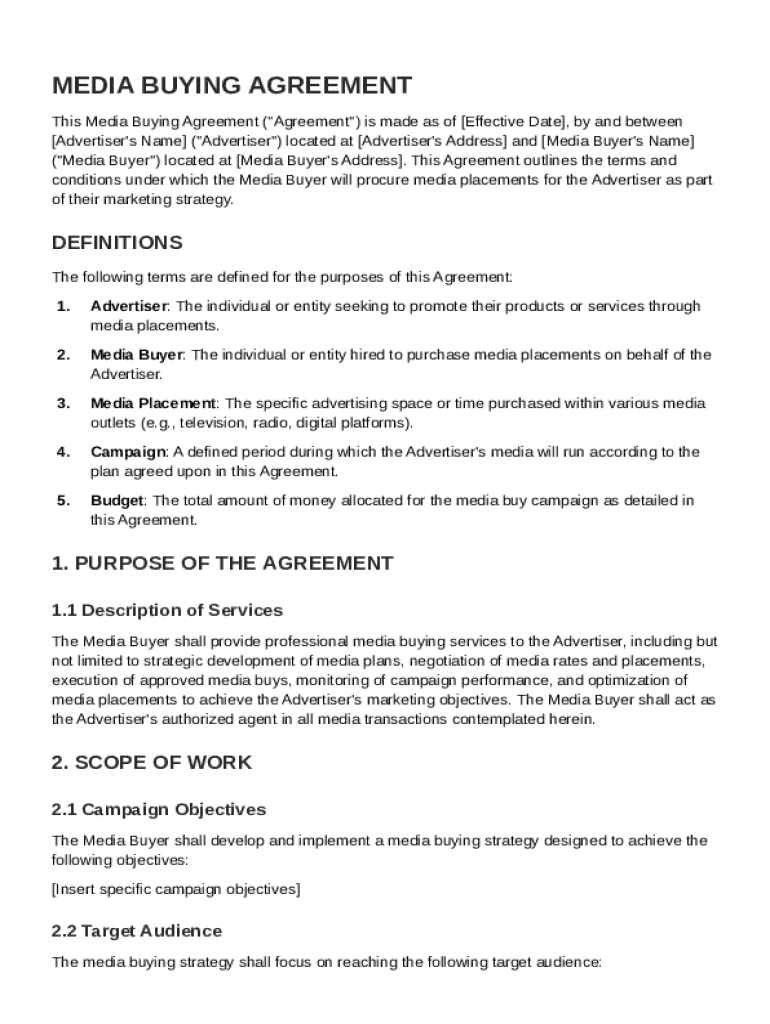
A Media Buying Agreement is a crucial document that delineates the terms and conditions between an advertiser and a media buyer. Its primary function is to ensure the clear understanding and successful execution of a media buying campaign. This agreement details specific responsibilities, such as the development of media plans, negotiation of rates, and performance reporting, to ensure that both parties are aligned in their expectations.
Key Elements
- Roles and Responsibilities: Clearly defines what is expected of both the advertiser and the media buyer.
- Services and Campaign Objectives: Outlines the specific goals of the media campaign and the services that will be provided.
- Financial Arrangements: Details the budget, payment terms, and any financial obligations each party has.
- Confidentiality: Sets the standards for the protection of sensitive information shared between parties.
How to Use the Media Buying Agreement Template
Utilizing the Media Buying Agreement Template effectively involves several stages. Typically, both parties will first discuss and outline the objectives of the agreement before filling in the template. This ensures the document accurately represents the mutual understanding and agreements.
Steps to Follow
- Identify Objectives: Begin with a clear discussion of the specific campaign goals and targets.
- Complete the Template: Use the pre-defined sections to input relevant details, ensuring each aspect of the agreement is covered.
- Review and Revise: Both parties should review the document to ensure no part is overlooked or misunderstood.
Steps to Complete the Media Buying Agreement Template
Completing the Media Buying Agreement Template requires careful consideration to capture all necessary data. This involves a methodical approach to ensure the agreement is thorough and legally sound.
Detailed Process
- Input Basic Information: Start with the names, addresses, and contact details of each party involved.
- Specify Campaign Details: Include targeted media outlets, intended audience, and overall strategy.
- Financial Clauses: Accurately state the budget allocations and payment schedules.
- Legal Compliance: Confirm that all terms meet legal standards and include termination rights and confidentiality clauses.
- Final Review: Conduct a final review with legal advisors to ensure compliance with applicable laws.
Importance of Using a Media Buying Agreement Template
The significance of using such a template lies in its ability to safeguard both parties through clear, predefined terms. It facilitates smoother negotiations and helps in the avoidance of potential disputes by ensuring every aspect of the media buying process is documented.
Key Benefits
- Time Efficiency: Templates save time by providing a structured format to quickly generate comprehensive agreements.
- Risk Mitigation: Reduces the risk of misunderstandings and legal disputes by setting clear guidelines from the onset.
- Professionalism: Enhances the professionalism of interactions between advertisers and media buyers.
Important Terms Related to the Media Buying Agreement Template
Understanding the terminology within the Media Buying Agreement is crucial. Key terms should be clearly defined to prevent any ambiguities.
Essential Terms
- Media Buy: The purchase of ad space across varying channels and platforms to reach a targeted audience.
- ROI (Return on Investment): A measure of the profitability of the campaign.
- Ad Placement: Specific slots or times where the ad content will be showcased.
- Impressions: The number of times an advertisement is viewed.
Legal Use of the Media Buying Agreement Template
Ensuring the legal utilization of the Media Buying Agreement Template requires adherence to U.S. laws governing advertising and contractual agreements. This ensures that both the advertiser and media buyer comply with federal and state regulations.
Legal Compliance Considerations
- ESIGN Act Compliance: Ensures electronic signatures are legally binding.
- State Regulations: Adheres to specific state laws where the media buy will take place.
- Data Privacy Laws: Compliance with data privacy standards to protect consumer information.
State-Specific Rules for Using the Media Buying Agreement Template
Attention to state-specific rules is vital, as variations can exist in contract enforcement and advertising laws across different U.S. jurisdictions. Understanding these differences ensures compliance and minimizes legal risks.
Notable Variations
- Jurisdiction Clauses: Specify which state’s law governs the agreement.
- Tax Obligations: Be aware of differing state tax implications for media buys.
- Advertising Restrictions: Some states have unique advertising standards or prohibitions, particularly for industries like alcohol or gambling.
Examples of Using the Media Buying Agreement Template
Utilizing real-world scenarios can illuminate the practical application of the Media Buying Agreement Template, making it easier for users to conceptualize its integration into their operations.
Practical Scenarios
- Local Business Campaign: A local restaurant uses the template to detail terms with a media agency for a TV spot and social media advertisements, focusing on increasing lunch sales.
- National Product Launch: A technology firm employs the template to outline a nationwide media strategy across digital and print media to promote a new gadget, defining metrics for success and payment upon achieving specific milestones.