
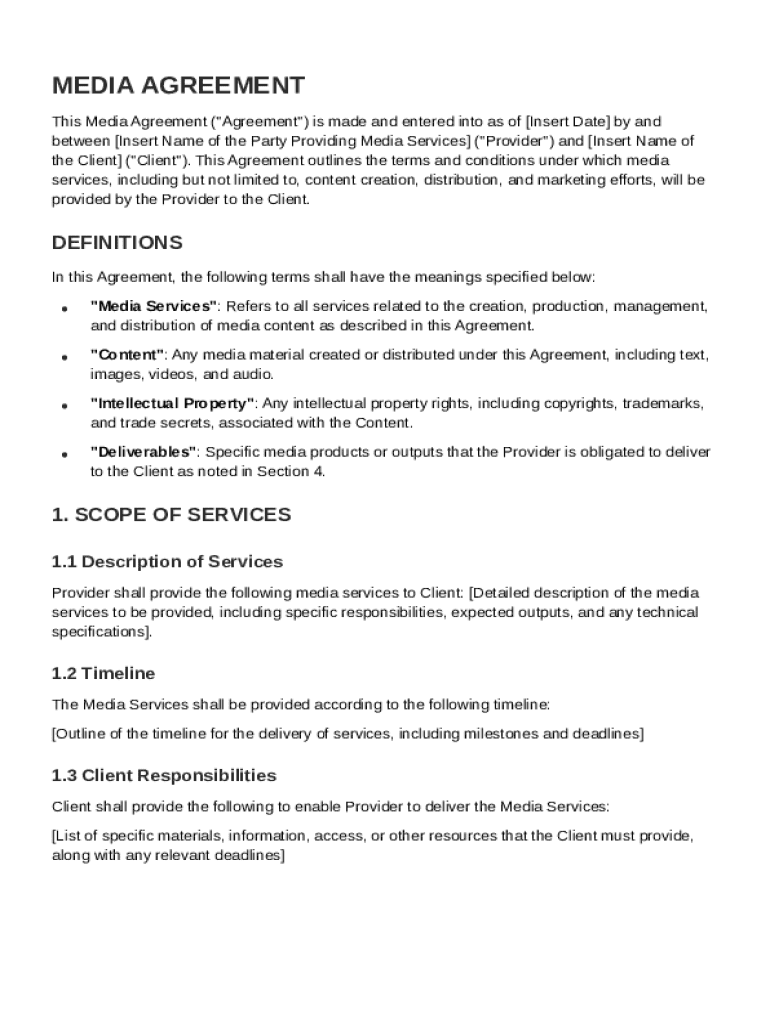







Definition & Meaning
A Media Agreement Template is a formal contract that establishes the terms and conditions under which media-related services are provided by a provider to a client. It serves as a comprehensive outline for both parties, detailing responsibilities and expectations in the creation, distribution, and ownership of media content. This document often includes definitions of key terms to prevent ambiguities, ensuring both provider and client have a mutual understanding of the agreement's provisions.
In general, these templates are designed to streamline the process of entering into a media services contract. They cover aspects such as the scope of services, payment terms, rights and ownership of content, deliverables, confidentiality obligations, and the duration and termination of the agreement. By providing a structured framework, the Media Agreement Template helps both parties avoid potential disputes and fosters a professional relationship rooted in clear communication.
Key Elements of the Media Agreement Template
The Media Agreement Template comprises numerous critical components essential for a thorough and binding contract. Key elements typically include:
- Scope of Services: Detailed description of the specific services the provider will deliver, including timelines and deliverables.
- Payment Terms: Clauses specifying payment amounts, schedules, and methods for compensating the provider for their services.
- Rights and Ownership: Provisions addressing who retains ownership of the media content produced and any licensing rights granted to the client.
- Confidentiality Obligations: Agreements about maintaining the confidentiality of certain information shared between parties during the contract execution.
- Liability and Indemnification: Clauses outlining responsibilities and protections against potential legal claims or damages arising from the services.
- Termination Clauses: Terms governing how and when the agreement can be terminated by either party.
A well-rounded template will also include miscellaneous legal stipulations that address unforeseen circumstances and dispute resolution processes.
How to Use the Media Agreement Template
To utilize the Media Agreement Template effectively, stakeholders should follow these steps:
-
Review and Customize: Both parties should carefully review the template to ensure it aligns with their specific needs. Customizations may be necessary to address unique service offerings, pricing structures, or any particular business practices.
-
Negotiate Terms: Engage in discussions to negotiate and refine terms to the satisfaction of both parties. This includes setting clear expectations for deliverables and creating a payment schedule that works for both the provider and the client.
-
Draft Initial Agreement: Fill in the necessary information, such as names, addresses, and specific service details. Use the customization capabilities of a platform like DocHub to edit and restructure the template as needed.
-
Review Legally: It’s prudent to have the completed agreement reviewed by legal counsel to ensure compliance with applicable laws and the inclusion of critical protective clauses.
-
Finalize and Sign: Once both parties agree on the terms, they should sign the agreement using an electronic signature tool like the one provided by DocHub. This ensures the document is legally binding and enforceable.
Important Terms Related to Media Agreement Template
Understanding specific terminology within a Media Agreement Template is vital for clarity. Here are some essential terms you may encounter:
- Deliverables: The final media content (e.g., videos, articles, advertisements) that the provider is obligated to deliver.
- Licensing: Permissions granted to the client to use the created media content.
- Confidential Information: Any proprietary or sensitive information that must remain undisclosed.
- Force Majeure: A clause that frees both parties from liability or obligation when an extraordinary event beyond their control prevents contract fulfillment.
Familiarity with these terms and others ensures both parties have a clear understanding of their rights and obligations under the agreement.
Steps to Complete the Media Agreement Template
Completing a Media Agreement Template involves several steps that ensure the agreement is comprehensive and enforceable:
-
Identify Parties: Clearly name and describe the client and provider, including their legal business names and contact details.
-
Define Services and Scope: Elaborate on the specific media services to be provided, including any milestones or deadlines.
-
Set Payment and Terms: Specify the total compensation, due dates, and preferred payment methods.
-
Assign Rights and Ownership: Clarify who will own the rights to the final media outputs, and stipulate any licensing agreements.
-
Incorporate Legal Terms: Add necessary legal protections, such as liability limitations or indemnification terms.
-
Establish Confidentiality Requirements: Define what constitutes confidential information and how it must be handled.
-
Include Termination Conditions: Detail how the agreement can be dissolved by either party under certain conditions.
By following these steps, parties can ensure that all necessary information is accurately captured, leading to a complete and reliable agreement.
Legal Use of the Media Agreement Template
The Media Agreement Template functions as a binding contract that is enforceable under U.S. contract law. Legal enforceability ensures that both the provider and client must adhere to the terms outlined within the document. Key legal aspects include:
- Compliant Signatures: Utilize electronic signatures in compliance with the ESIGN Act to make the document legally binding.
- Adherence to Contract Laws: Ensure contract terms meet state-specific contract law requirements, especially concerning enforceability and validity.
- Incorporating State Laws: Include any state-specific provisions to address variations in legal standards or obligations.
It is advisable that parties consult with legal professionals to ensure all aspects of the agreement comply with current legal standards and to incorporate any applicable state requirements.
State-Specific Rules for the Media Agreement Template
U.S. states may have unique rules or requirements for media agreements that participants should consider. These variations can influence the enforceability and terms of the contract:
- State Regulations: Some states may mandate specific wording in contracts covering confidentiality or liability.
- Recording Requirements: Laws about recording consent can affect agreements involving audiovisual media.
- Tax Implications: Determine if state taxes apply to services rendered or deliverables produced.
Considering these state-specific rules ensures that the media agreement not only aligns with general U.S. laws but also adheres to regional legal stipulations where the services are provided or received. Consulting with a legal expert familiar with local laws can help address these nuances effectively.
Why Should You Use a Media Agreement Template
Employing a Media Agreement Template offers significant advantages for both media providers and clients, including:
- Clarity and Precision: Clearly defined terms and expectations reduce misunderstandings and disputes.
- Time Savings: Pre-structured templates save time in drafting agreements from scratch.
- Professional Standards: Using a template constructed by legal experts ensures all necessary legal protections are in place.
- Consistent Approach: Ensures a consistent method of drafting contracts, aligning with organizational or industry standards.
For those involved in media services, using such a template is not merely beneficial but often necessary to protect interests and ensure a smooth working relationship.




