






Definition & Meaning
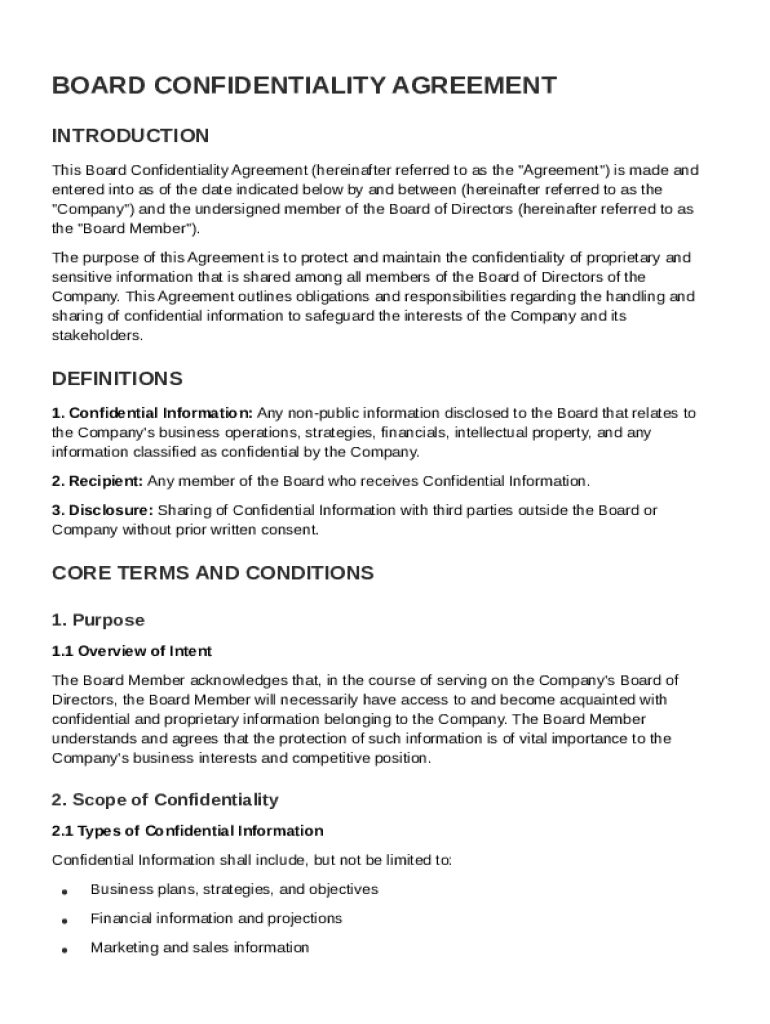
The Board Confidentiality Agreement Template is a fundamental document designed to protect sensitive and proprietary information shared among a company's board members. This legal instrument ensures that board members maintain the confidentiality of the information disclosed during their service. It specifically defines 'Confidential Information,' which can include business plans, financial records, proprietary strategies, client details, and internal communications. The template outlines the obligations of board members, emphasizing that confidentiality commitments persist indefinitely, even after their tenure with the board ends. This agreement is crucial in safeguarding a company's interests against unauthorized disclosures, ultimately preserving its competitive advantage and operational integrity.
How to Use the Board Confidentiality Agreement Template
Utilizing the Board Confidentiality Agreement Template involves several key steps:
-
Customizing the Document: Begin by tailoring the template to align with your organization’s specific needs. This may involve inserting the company name, board member details, and defining the scope of confidential information particular to your business operations.
-
Review and Amendments: Ensure all terms outlined are relevant and comprehensive. Engage legal counsel to advise on any additional clauses or amendments. This step is vital for ensuring the document complies with particular industry standards or legal requirements.
-
Distribution to Board Members: Circulate the customized agreement to all current and incoming board members upon their appointment. This ensures everyone comprehensively understands their confidentiality obligations from the onset.
-
Regular Updates: Periodically review and update the template to reflect any changes in legal standards or business operations. Regular reviews help maintain the document’s validity and relevance.
Key Elements of the Board Confidentiality Agreement Template
The Board Confidentiality Agreement Template typically includes several critical components:
- Definition of Terms: Precise definitions of what constitutes 'Confidential Information' and what does not, ensuring clarity for all parties.
- Obligations of Confidentiality: Detailed obligations of board members to safeguard confidential information and the measures they should take to prevent unauthorized disclosures.
- Permitted Disclosures: Exceptions and circumstances where sharing information might be legally required or permitted, such as in compliance with court orders.
- Non-Disclosure Periods: Duration of confidentiality obligations, commonly extending beyond the termination of a board member's tenure.
- Breach Consequences: Specification of penalties or repercussions in case of a breach, which can include legal action or removal from the board.
Legal Use of the Board Confidentiality Agreement Template
Implementing the Board Confidentiality Agreement Template legally binds board members to maintain the confidentiality of sensitive information. This binding is supported under various legal frameworks applicable across the United States. The template also complies with the Uniform Trade Secrets Act (UTSA), which provides a statutory mechanism for the protection of trade secrets. Legal counsel can further tailor the document to align with state-specific laws governing confidentiality and non-disclosure, ensuring all legal aspects are adequately addressed. This legal assurance prevents potential conflicts and facilitates trust among board members.
Examples of Using the Board Confidentiality Agreement Template
In practice, companies utilize the Board Confidentiality Agreement Template across various scenarios:
- Mergers and Acquisitions: During sensitive negotiations or due diligence processes where proprietary financial and strategic information is shared amongst board members.
- Strategic Planning: When developing new business strategies or products, ensuring that premature disclosure does not undermine competitive advantages.
- Internal Audits: To maintain the confidentiality of findings or insights arising from internal reviews or audits until a suitable disclosure time is appropriate.
These examples highlight how the template facilitates the secure handling of confidential information, fostering an atmosphere of trust within the boardroom.
Important Terms Related to the Board Confidentiality Agreement
Several terms are critical in understanding the Board Confidentiality Agreement:
-
Confidential Information: Broadly refers to all non-public data, proprietary knowledge, and intellectual property shared during board service.
-
Non-Disclosure Agreement (NDA): A broader category of legal agreements that encompasses the specific commitments outlined in confidentiality agreements.
-
Restrictive Covenant: Legal obligations, such as those found in non-compete clauses, restricting board members from using confidential information post-tenure for competing purposes.
Understanding these terms enriches the comprehension and implementation of the confidentiality agreement, ensuring all parties fully appreciate the boundaries and commitments involved.
Steps to Complete the Board Confidentiality Agreement Template
Completing the Board Confidentiality Agreement Template involves a sequential approach:
-
Input Organizational Details: Begin by inserting the company name, board member details, and any other relevant identifiers at the top of the template.
-
Outline Confidential Information: Clearly define what information is regarded as confidential. Be explicit to avoid vague terms that can lead to ambiguity.
-
Specify Obligations and Consequences: Enumerate the obligations of confidentiality and detail the potential consequences for breaches, including legal recourse.
-
Include Permitted Disclosures: Clearly state any exceptions or legal requirements for information disclosure, such as regulatory filings or compliance with judicial orders.
-
Finalize and Distribute: After customization and review by legal counsel, distribute the document for signature by all board members. Retain copies for organizational records.
This structured approach ensures comprehensive completion of the document, promoting adherence and understanding among all signatories.
Who Typically Uses the Board Confidentiality Agreement Template
The Board Confidentiality Agreement Template is essential for a broad spectrum of organizations:
-
Corporations: To protect business strategies, financial dealings, and other sensitive information discussed in board meetings.
-
Nonprofits: To shield donor information, grant applications, and strategic initiatives from unauthorized disclosure.
-
Startups: Often dealing with proprietary technology, intellectual property, or business models that require protection as they scale.
These organizations utilize the template to safeguard their confidential information, ensuring that board members uphold their fiduciary responsibilities with the utmost integrity.