






Understanding the Manufacturing Agreement Template
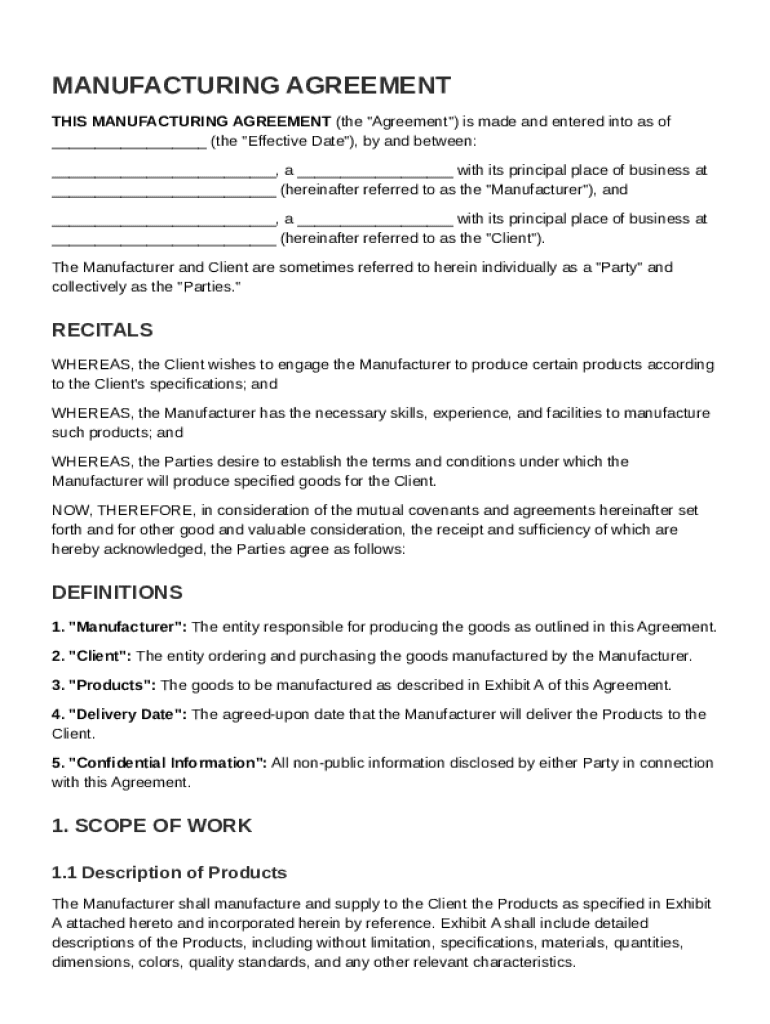
A Manufacturing Agreement Template serves as a comprehensive document outlining the terms and conditions under which a Manufacturer produces specified products for a Client. This template ensures clarity between the two parties, protecting their interests and facilitating a smooth production process. The agreement includes detailed definitions, scope of work, pricing and payment terms, delivery, warranties, confidentiality, termination clauses, and dispute resolution mechanisms. Each section is crucial for defining the expectations and responsibilities of both the Manufacturer and the Client.
Key Elements of the Manufacturing Agreement Template
-
Product Specifications: This segment details the exact requirements the Manufacturer must meet, including dimensions, materials, and quality standards. Clear product specifications prevent misunderstandings and ensure the Manufacturer meets the Client's expectations.
-
Payment Terms: The agreement outlines the payment structure, including advance payments, milestone payments, and final settlement upon delivery. It may also include penalties for late payments or bonuses for early completion.
-
Confidentiality Obligations: To protect proprietary information, this section stipulates non-disclosure terms that both parties must adhere to. Confidentiality is vital when dealing with sensitive product designs or business plans.
-
Delivery and Acceptance Procedures: Here, the precise timeline for product delivery is set, along with the process for the Client to accept or reject products based on adherence to the agreed specifications.
How to Use the Manufacturing Agreement Template
Using a Manufacturing Agreement Template involves several steps to customize the document to the specific needs of the Manufacturer and Client. Start by filling in basic information about both parties, such as contact details and authorized representatives. Next, define the products involved, specifying attributes such as size, materials, and production techniques.
Steps to Customize
-
Outline Responsibilities: Clearly distinguish the duties of both the Manufacturer and the Client. This includes production schedules, raw material sourcing, and communication protocols.
-
Establish Timeline: Detail the expected production timeline, including start and completion dates. Include contingencies for delays beyond control, such as natural disasters or supply chain disruptions.
-
Incorporate Sector-Specific Terms: Depending on the industry, there may be special regulations or practices that need to be included, such as safety standards for manufacturing automotive parts.
Who Typically Uses the Manufacturing Agreement Template
This template is primarily used by business entities that engage in the production of goods. Typical users include:
- Manufacturers: Companies specializing in producing goods for others often rely on this agreement to formalize terms with clients.
- Clients: Businesses that commission products, such as retailers or wholesalers, use the template to ensure delivery of items meeting their specifications.
- Legal Advisors: Attorneys might facilitate the drafting process, ensuring the document meets legal and regulatory requirements.


Business Types Benefiting
- Startups: New companies without in-house production capabilities may use these agreements to outsource manufacturing.
- Established Corporations: Larger companies might utilize these templates when expanding product lines or seeking cost-effective production solutions.
Legal Use of the Manufacturing Agreement Template
The legal enforceability of a Manufacturing Agreement Template is paramount. All terms must comply with relevant laws, and both parties must have the legal capacity to enter into a contract. The template often includes clauses pertaining to intellectual property protection, dispute resolution through arbitration, and adherence to U.S. manufacturing standards.
Important Legal Terms
- Warranties: Guarantees from the Manufacturer regarding the product's quality and compliance with the contract specifications.
- Limitations of Liability: Clauses that cap the potential damages one party might recover from the other in the event of contract breach.
Examples of Using the Manufacturing Agreement Template
Real-world scenarios illustrate the varied use of the Manufacturing Agreement Template. For instance, a tech startup might use the agreement when outsourcing the production of a new gadget. The agreement would specify unique requirements such as chip sourcing and assembly processes, ensuring the final product aligns with the startup's innovative design.
Practical Scenario
Consider a fashion brand commissioning a manufacturer to produce a new clothing line. The agreement would detail fabric choices, stitching standards, quantities, and delivery deadlines, reducing the risk of potential disputes over product quality or delivery times.
Digital vs. Paper Versions of the Template
The Manufacturing Agreement Template is available in both digital and paper formats, each offering unique benefits. Digital versions are easily sharable and editable, ideal for parties collaborating across distances. They also offer functionality for electronic signatures, streamlining the signing process.
Benefits of Digital Format
- Ease of Modification: Digital contracts allow for quick adjustments to terms, which is especially useful during negotiations.
- Environmental Friendliness: Reducing paper use aligns with sustainability goals and lowers costs associated with printing and physical storage.
Software Compatibility
For businesses using digital systems, software compatibility is essential. The Manufacturing Agreement Template can integrate with various document management platforms like DocHub, facilitating edits and storage. Compatibility with cloud services such as Google Drive and Dropbox allows for efficient file management.
Compatible Tools
- DocHub: Allows for secure editing and signing, providing a legally binding process without needing additional software.
- Microsoft Word and PDF Readers: The template is typically formatted to work with these common tools, ensuring accessibility and ease of use.
State-Specific Rules and Considerations
While the template provides a broad structure, it might need adjustments to comply with state-specific regulations in the United States. Each state can have unique requirements regarding contractual terms, intellectual property, and manufacturing standards that could impact the agreement's validity.
State-specific Adjustments
- California: Known for stringent environmental regulations that might necessitate clauses about manufacturing processes.
- Texas: Potentially requires specific language for liability and insurance requirements, given its business-friendly legal environment.
Ensuring that these state-specific considerations are integrated into the agreement is crucial for maintaining its enforceability and ensuring compliance with regional laws.