






Definition and Purpose of the Game Development Agreement Template
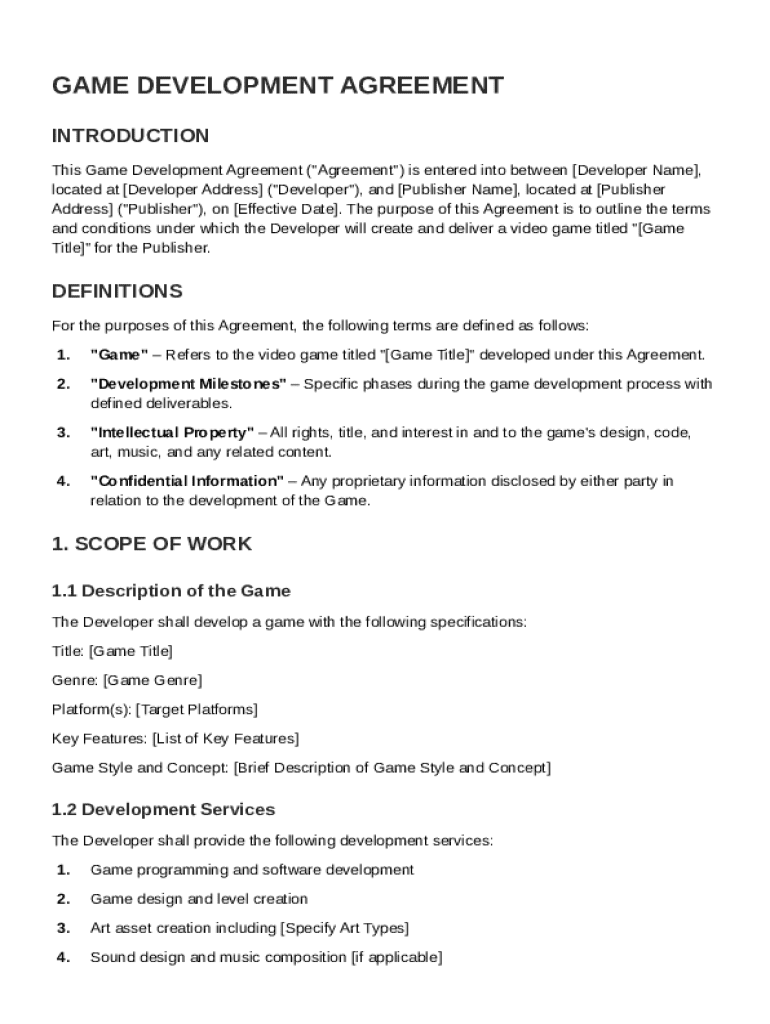
The Game Development Agreement Template is a legal document intended to outline the terms and conditions between a game developer and a publisher for the creation of a video game. This agreement serves as a framework to define roles, responsibilities, and expectations, ensuring both parties are clear about their obligations and rights regarding the project. It typically includes elements such as the scope of work, project timeline, payment structure, intellectual property rights, confidentiality obligations, warranties, indemnification clauses, and termination conditions. By formalizing these components, the agreement mitigates potential disputes and provides a legal basis for conflict resolution.
How to Use the Game Development Agreement Template
Utilizing a Game Development Agreement Template involves a few systematic steps. First, both parties should review and understand each section of the template to ensure all terms are aligned with their mutual goals. They should then customize the template by filling in specific information such as the game title, milestones, financial terms, and any unique requirements. Important aspects like intellectual property rights and confidentiality obligations must be negotiated and clearly documented. Once complete, legal professionals should review the agreement for compliance and completeness before both parties sign it.
Steps to Complete the Game Development Agreement Template
- Review All Sections: Familiarize yourself with the template, ensuring all standard terms meet your requirements.
- Fill in Project Details: Input specific information, such as game title, project milestones, and financial agreements.
- Negotiate Terms: Discuss critical elements such as intellectual property rights and confidentiality to ensure mutual agreement.
- Seek Legal Review: Have a legal expert examine the template to ensure thoroughness and adherence to legal standards.
- Finalize and Sign: Once reviewed, print and sign the document to formalize the agreement between both parties.
Why Use a Game Development Agreement Template
Using a Game Development Agreement Template is crucial for protecting the interests of both the developer and the publisher. Such a document ensures that all parties are on the same page regarding the terms of collaboration. It provides a legal safety net that helps manage risks, specifies deliverables, safeguards intellectual property, and establishes a framework for financial transactions. In the fast-evolving gaming industry, well-crafted agreements are indispensable for preventing misunderstandings and fostering transparent collaboration.
Key Elements of the Game Development Agreement Template
- Definition of Terms: Clearly defines all terms used in the agreement to avoid ambiguities.
- Scope of Work: Outlines the responsibilities and activities involved in the game development process.
- Project Timeline: Establishes deadlines and milestones for project deliverables.
- Payment Terms: Details how and when payments will be made, including advance payments and royalties.
- Intellectual Property Rights: Specifies ownership rights for the game's content and technology.
- Confidentiality Obligations: Insures sensitive information remains protected.
- Termination Conditions: Details the conditions under which the contract may be terminated by any party.
- Dispute Resolution: Provides a framework for resolving any conflicts that may arise during the project.
Important Terms Related to the Game Development Agreement Template
- Developer: The party responsible for creating the game.
- Publisher: The entity financing or distributing the game.
- Milestones: Specified checkpoints in the development process associated with deliverables.
- Royalties: Payments based on the percentage of sales or profits generated by the game.
- Confidential Information: Information classified as private, including trade secrets and proprietary data.
- Force Majeure: A clause to address unpredictable events that may prevent contract fulfillment.
Legal Use of the Game Development Agreement Template
The Game Development Agreement Template is legally binding and adheres to the laws of the governing jurisdiction determined by the parties involved. Both parties must agree on the governing law, which is crucial for determining the jurisdiction should any disputes arise. In the United States, this means the template must adhere to state laws, which may vary in terms of enforceability of certain clauses, such as non-compete or confidentiality obligations.
State-Specific Rules for the Game Development Agreement Template
Different states in the U.S. may impose specific rules or limitations regarding certain clauses in a Game Development Agreement Template. For instance, confidentiality agreements or non-compete clauses may have varying enforceability based on state legislation. Parties should ensure compliance with applicable state laws where the agreement will be governed. Consulting with a legal professional familiar with state-specific requirements is advised to ensure the agreement's enforceability.
Who Typically Uses the Game Development Agreement Template
The Game Development Agreement Template is typically used by independent game developers, game development studios, and publishing companies. It is particularly beneficial for startups or small to mid-sized developers who may not have the internal resources for legal document drafting. Publishers, ranging from large companies to indie labels, also use this template to formalize partnerships with developers, ensuring a structured approach to game creation and distribution.