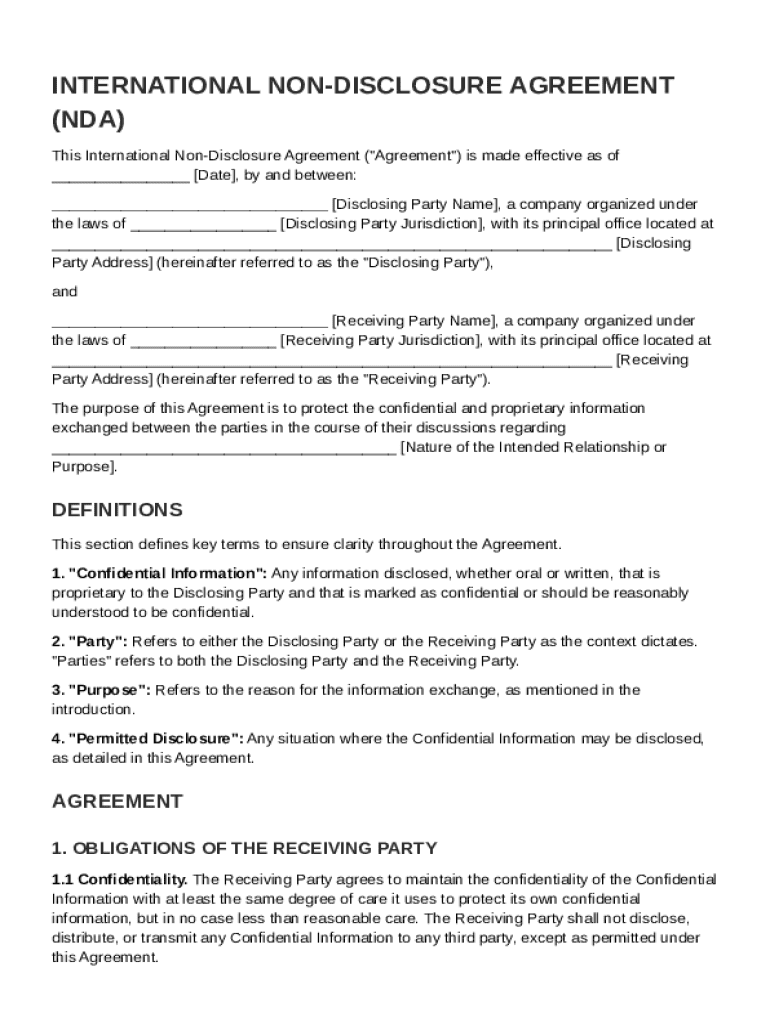







Definition and Purpose of the International NDA Agreement Template
The International Non-Disclosure Agreement (NDA) Template is a legal tool designed to safeguard confidential information shared between the Disclosing Party and the Receiving Party. It aims to define the parameters for handling confidential and proprietary information, ensuring both parties understand their obligations regarding non-disclosure. This document is crucial in maintaining the confidentiality of sensitive discussions which may include business strategies, intellectual property, or trade secrets.
The core elements encapsulated within the template include the scope of confidentiality obligations, the boundaries for using the disclosed information, and specific exclusions to these obligations. Moreover, it delineates the ownership rights of the confidential information and outlines the governing law applicable to the agreement, making it a comprehensive protective measure for international dealings. Practical utility is found in diverse scenarios ranging from business negotiations to research collaborations, where the secure exchange of sensitive data is vital.
Key Elements of the International NDA Agreement Template
The template is structured to include various key elements that must be clearly understood to maximize its protective capability:
- Confidential Information: Details what constitutes confidential material. This may include documents, verbal exchanges, or proprietary data communicated during the engagement.
- Responsibilities of the Receiving Party: Outlines the duty of the Receiving Party in safeguarding the information, stipulating non-disclosure and non-use outside permitted purposes.
- Exclusions from Confidentiality: Identifies categories of information that are not subject to confidentiality obligations, such as publicly available data or information the Receiving Party developed independently.
- Duration and Termination: Specifies the time frame for which confidentiality obligations apply and conditions under which the agreement may be terminated.
- Governing Law and Jurisdiction: Establishes which country's legal framework will govern the agreement, critical for international contexts.
How to Use the International NDA Agreement Template
To effectively utilize the International NDA Agreement Template, follow these steps:
- Identify the Parties: Clearly state the identities of both the Disclosing and Receiving Parties.
- Define Confidential Information: Precisely describe the information that requires protection under the agreement.
- Set Permissions and Restrictions: Specify what the Receiving Party can do with the information and what is expressly prohibited.
- Define the Agreement Term: Determine the period for which the agreement is enforceable.
- Sign and Date the Document: Ensure that both parties sign and date the document, confirming their understanding and acceptance of the terms.
Detailed attention to these steps ensures the NDA is tailored to the specific needs of the parties involved and effectively serves its purpose.
Advantages of Using the International NDA Agreement Template
The template provides numerous advantages:
- Clarity and Specificity: By defining what constitutes confidential information, the template helps prevent disputes and misunderstandings.
- Legal Safeguard: Offers a legally recognized means of protecting sensitive information in international dealings.
- Flexibility: Can be tailored to specific industries such as technology, finance, or pharmaceuticals, where confidentiality is paramount.
- Prevention of Information Misuse: Deters unauthorized use or disclosure of information, protecting a party's competitive edge.
Who Typically Uses the International NDA Agreement Template
This template is indispensable for various stakeholders:
- Businesses: Especially in mergers or collaborations, where sharing proprietary information is necessary.
- Entrepreneurs: Protecting intellectual property when discussing potential partnerships or acquisitions.
- Consultants and Contractors: Where access to sensitive client information is required to perform services.
- Researchers and Academics: Engaged in collaborations that involve sharing research findings or methodologies.


Important Terms Related to the International NDA Agreement Template
Understanding specific legal terms used within the template can enhance its efficacy:
- Disclosing Party: The individual or entity disclosing confidential information.
- Receiving Party: The individual or entity receiving confidential information.
- Confidential Information: Information designated as confidential by the Disclosing Party.
- Non-disclosure: The obligation not to share the information without consent.
Legal Use and Compliance for the International NDA Agreement Template
Ensuring compliance with relevant laws and regulations is essential:
- Adherence to ESIGN and UETA: Ensures that electronic signatures used in executing the NDA are legally binding.
- Compliance with International Laws: Awareness of varying legal standards across jurisdictions prevents potential legal disputes.
- Adaptation for Specific Legal Contexts: Tailoring the template to meet specific national requirements, such as data protection laws, enhances its validity.
Steps to Complete the International NDA Agreement Template
A structured approach is essential:
- Review and Customize the Template: Adjust the template to reflect the specific needs and legal environment of the transaction.
- Fill in Party Details: Insert all relevant details about the involved parties.
- Define the Scope of Confidentiality: Clearly characterize the nature of the information being protected.
- Set Enforceability Terms: Determine the time period and conditions under which the agreement is valid.
- Finalize and Sign: Ensure both parties review the document thoroughly and sign it to enact the agreement.
By following these steps, parties can ensure that the NDA meets their specific requirements and effectively safeguards confidential exchanges.