







Definition & Meaning
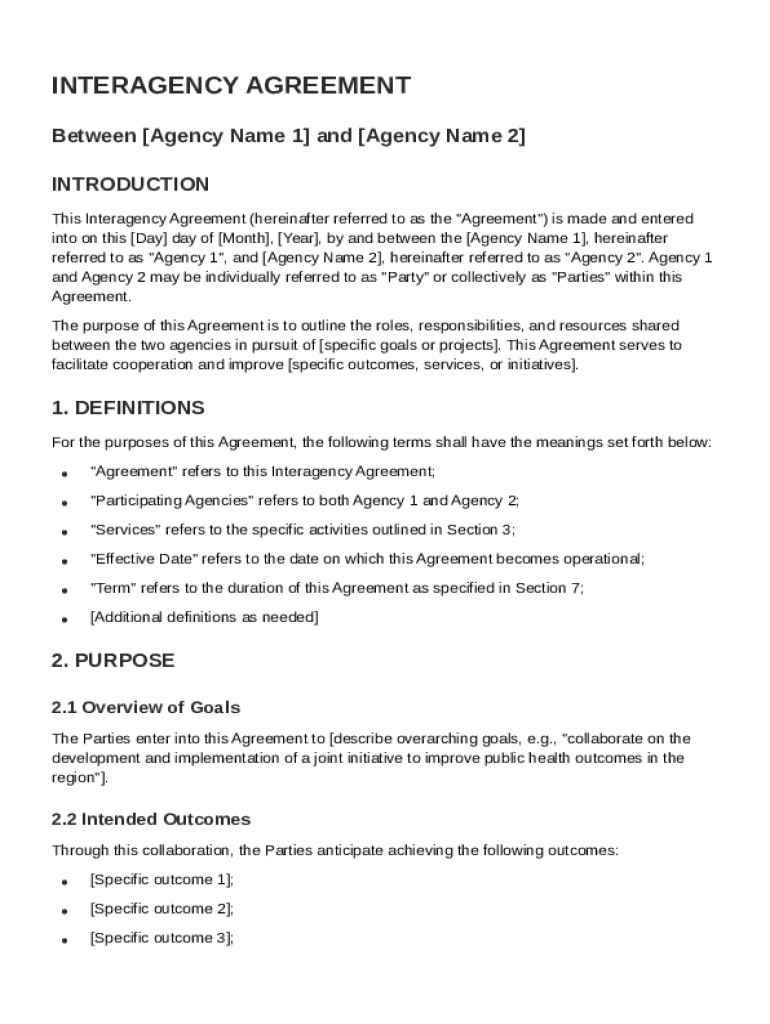
An interagency agreement is a formal document that establishes a collaborative framework between two or more agencies, outlining their roles and responsibilities. This document is typically employed when organizations or departments seek to pool resources in order to efficiently achieve shared objectives. These agreements are crucial for defining the terms of collaboration, which may involve sharing personnel, funding, or data. The primary goal of such agreements is to enhance outcomes by leveraging the strengths of each participating entity. The document usually includes sections such as purpose, scope of collaboration, and obligations of each party.
Purpose of Interagency Agreements
- Collaborative Efficiency: Aimed at improving operational efficiency through joint efforts.
- Resource Allocation: Formalizes how resources like funding, personnel, or equipment will be shared.
- Defined Roles: Clearly delineates the roles and responsibilities to avoid confusion and duplication of effort.
Examples of Use
Interagency agreements are often used in government settings, where different departments work together on common goals, such as disaster response or shared public health initiatives.
Key Elements of the Interagency Agreement Template
The interagency agreement template contains essential components necessary to ensure clear understanding and commitment from all parties. Key sections include:
- Definitions: Essential terms used throughout the agreement.
- Purpose and Scope: A detailed explanation of the objectives and the extent of the agreement.
- Roles and Responsibilities: Outlines the specific duties and expectations from each party.
- Funding and Resources: Describes financial arrangements and resource sharing mechanisms.
Additional Clauses
- Duration and Termination: Specifies the time frame and conditions under which the agreement can be terminated.
- Conflict Resolution: Mechanisms for addressing disputes that may arise.
- Confidentiality and Compliance: Assures the protection of sensitive information and adherence to relevant laws and regulations.
Steps to Complete the Interagency Agreement Template
Completing an interagency agreement template involves several structured steps to ensure all necessary details are captured accurately.
- Initial Consultation: Meet with all stakeholders to discuss the objectives and framework of the agreement.
- Drafting the Agreement: Use the template to outline all sections, filling in relevant information specific to the agencies involved.
- Review and Revise: Conduct multiple reviews to ensure accuracy and comprehensiveness.
- Approval and Signatures: Obtain necessary signatures from authorized representatives to validate the agreement.
Practical Tips
- Clarity is Key: Use precise language to avoid misunderstandings.
- Legal Review: Have the document reviewed by legal counsel to ensure compliance with applicable laws.
Important Terms Related to the Interagency Agreement Template
Understanding key terms is vital for efficiently navigating and completing an interagency agreement. Important terms include:
- Parties: The agencies entering into the agreement.
- Amendments: Changes or additions to the agreement post-signing.
- Indemnification: Protection against liability or claims resulting from the agreement's execution.
Examples of Terminology Use
- Parties refer to all organizations listed in the opening section of the agreement.
- Amendments can be included as clauses specifying conditions under which the agreement can be altered.
Software Compatibility
Completing this template can be facilitated by using document management and collaboration platforms like DocHub, known for its seamless editing and signing capabilities.
Integration Capabilities
- Google Workspace: The ability to import and export documents to and from Google Drive.
- Cloud Storage: Supports importing documents from various cloud services, ensuring easy document access and version control.
Legal Use of the Interagency Agreement Template
Interagency agreements must adhere to legal standards to ensure binding and enforceable terms. This involves compliance with federal and state regulations, which can affect areas such as data protection, funding allocations, and operational procedures.
Legal Considerations
- Compliance with ESIGN Act: Electronic signatures should comply with this act to be legally binding.
- State-Specific Regulations: Regional laws may impose specific requirements for interagency agreements, necessitating thorough legal review.
State-Specific Rules for the Interagency Agreement Template
While interagency agreements have a standard structure, state-specific regulations may dictate additional clauses or requirements.
Examples of State Variations
- Data Privacy: Some states may have stringent data protection laws influencing the agreement’s confidentiality sections.
- Funding Policies: State-specific policies can affect allocation and reporting procedures in funding arrangements.
Who Typically Uses the Interagency Agreement Template
This template is primarily used by government agencies and departments that seek to collaborate on initiatives that require shared responsibilities and resources. However, it can also be adapted for use in corporate settings where collaboration across distinct organizational units is necessary.


Typical Users
- Government Departments: For policy implementation and regulatory enforcement.
- Non-Governmental Organizations (NGOs): When working together on joint projects.
- Educational Institutions: For collaborative academic and research projects.




