






Key Elements of the Intellectual Property Sale Agreement Template
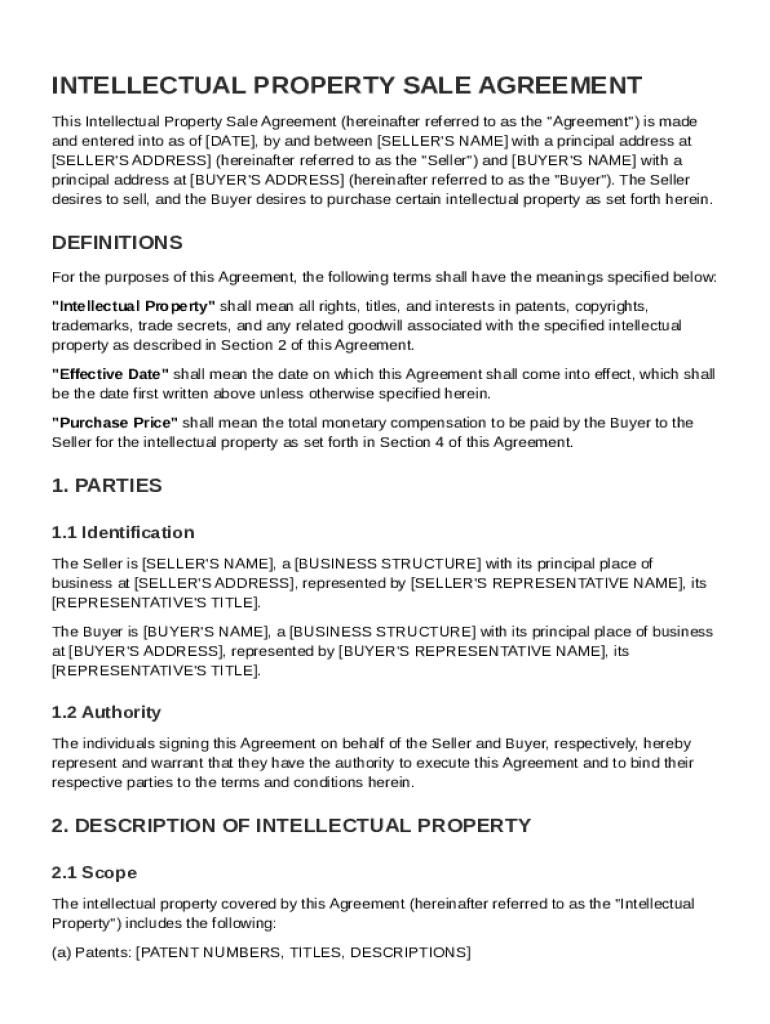
An Intellectual Property Sale Agreement Template is a detailed document that outlines the terms and conditions of transferring ownership of intellectual property rights between a Seller and a Buyer. Understanding the essential components of this agreement is crucial for ensuring a smooth transaction and protecting the interests of both parties.
Identification of Parties
- Seller: The individual or entity transferring the intellectual property rights.
- Buyer: The entity or individual acquiring these rights.
- Both parties must be clearly identified, including their legal names and, if applicable, company details.
Description of Intellectual Property
- Types of Rights: The agreement must specify the intellectual property rights being sold, such as patents, copyrights, trademarks, and trade secrets.
- Details of Property: A comprehensive description of the intellectual property, including any registration numbers or identifying information.
Purchase Price and Payment Terms
- Price Agreement: The agreed-upon purchase price must be clearly stated.
- Payment Method: Description of how and when payment will be made, including any installment terms or deadlines.
Steps to Complete the Intellectual Property Sale Agreement Template
Ensuring accurate completion of the Intellectual Property Sale Agreement Template is vital for legal validity. Follow these steps for a thorough and compliant document.
- Gather Information: Begin with collecting all necessary details related to the intellectual property, parties involved, and payment terms.
- Complete Identification Sections: Fill in the names and contact information for both the Seller and Buyer.
- Detail Intellectual Property: Clearly describe the intellectual property being sold, including all relevant details and documentation.
- Define Payment Terms: Specify the purchase price and method of payment. Outline any installment plans if applicable.
- Include Confidentiality Clauses: Add clauses outlining confidentiality obligations to protect sensitive information during and after the transaction.
- Review Governing Law: Ensure the agreement reflects the legal system under which it will be interpreted. Typically, this is the jurisdiction in which the Seller or the intellectual property is located.
- Obtain Signatures: Both parties must sign the document to confirm their understanding and acceptance of the terms.
Legal Use of the Intellectual Property Sale Agreement Template
The legal significance of the Intellectual Property Sale Agreement Template necessitates careful consideration of several legal factors to ensure compliance and enforceability.
Governing Law
- Jurisdiction: The agreement should specify which jurisdiction’s laws apply. This is crucial for resolving any disputes that may arise.
Confidentiality Obligations
- Non-Disclosure: The agreement should include clauses to maintain the confidentiality of any sensitive information exchanged during the sale.
Dispute Resolution
- Arbitration and Mediation: It is advisable to outline procedures for resolving disputes, such as arbitration or mediation, to avoid lengthy litigation.
Important Terms Related to the Intellectual Property Sale Agreement Template
Understanding the terminology used in an Intellectual Property Sale Agreement is essential for all parties involved.
Key Terms
- Assignor/Assignee: In some agreements, the Seller may be referred to as the assignor and the Buyer as the assignee.
- Consideration: The term used to describe the purchase price or compensation exchanged for the transfer of rights.
- Indemnity: Provisions that protect parties from losses resulting from legal claims or breaches of the agreement.
Examples of Using the Intellectual Property Sale Agreement Template
Usage scenarios of the Intellectual Property Sale Agreement Template can vary widely depending on the nature of the intellectual property and the interests of the parties involved.
Use Case Scenarios
- Technology Companies: Licensing patents related to software innovations.
- Publishing Firms: Transferring copyrights for literary works or multimedia content.
- Brand Acquisitions: Selling trademarks associated with consumer products.
- Research and Development: Acquiring trade secrets or proprietary research data.
Who Typically Uses the Intellectual Property Sale Agreement Template
Understanding who uses the Intellectual Property Sale Agreement Template can guide potential users in identifying if this document fits their needs.


Common Users
- Businesses and Corporations: Companies looking to acquire or sell intellectual property rights as part of their growth strategy.
- Entrepreneurs and Startups: Startups that have developed novel technologies may use the agreement to sell patents to larger companies.
- Legal Professionals: Lawyers specializing in intellectual property law often use these templates to facilitate client transactions.
- Individuals: Authors or inventors who want to sell their personal intellectual property.

State-Specific Rules for the Intellectual Property Sale Agreement Template
While an Intellectual Property Sale Agreement Template provides a standard framework, state-specific laws can impact its application.
Variations by State
- Registration Requirements: Some states may require the agreement to be registered with a government body to be legally effective.
- Tax Implications: Different states may impose varying tax rates on sales of intellectual property.
- Legal Enforceability: The enforceability of certain clauses, such as non-compete agreements, can vary by state. Users should verify specific state laws affecting their agreement.
Digital vs. Paper Version
Opting for a digital version of the Intellectual Property Sale Agreement Template can offer several advantages over traditional paper forms.
Advantages of Digital Versions
- Ease of Access: Digital documents can be accessed and edited on various devices, including computers and smartphones.
- Electronic Signatures: The use of e-signatures facilitates faster completion and greater convenience for all parties involved.
- Environmentally Friendly: Digital versions reduce paper usage, contributing to sustainability efforts.
- Real-Time Collaboration: Online platforms like DocHub enable simultaneous editing and sharing, enhancing collaboration between parties.
By addressing these aspects, users of the Intellectual Property Sale Agreement Template can ensure a comprehensive, legally sound, and efficient transaction process.