






Definition & Meaning
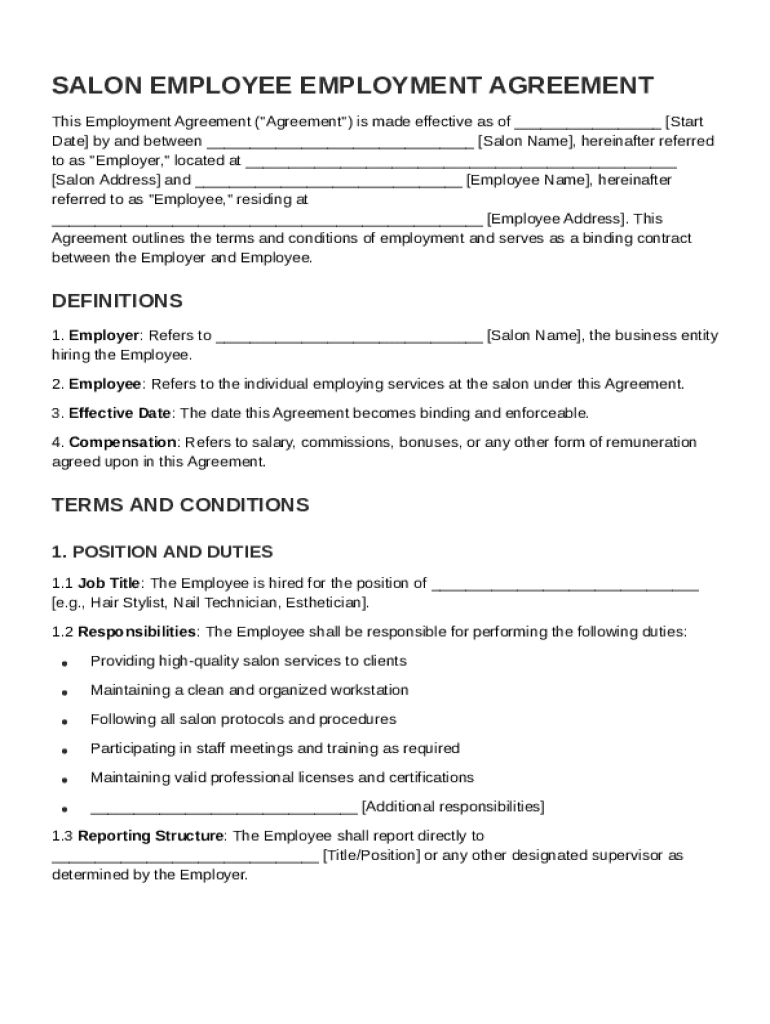
The Salon Employment Contract Template is a structured document that serves as a formal agreement between a salon owner (Employer) and an individual salon worker (Employee). This contract outlines the fundamental terms and conditions governing the employment relationship, such as job responsibilities, compensation, work hours, and conduct. By detailing these elements, the template provides a clear framework for both parties to understand their rights and obligations. It acts as a legally binding contract to prevent misunderstandings and disputes by clarifying expectations from the outset.
How to Use the Salon Employment Contract Template
To effectively use the Salon Employment Contract Template, salon owners should begin by customizing it to fit their specific needs. This involves:
- Reviewing Pre-Existing Clauses: Examine all sections, including job titles, roles, and compensation details, to ensure they match your business operations.
- Adding Specifics: Tailor the document by adding the names, addresses, and contact information of both the employer and employee.
- Adjusting Compensation Details: Clearly define how and when the employee will be paid, taking into account salary, hourly wages, or commissions.
- Outlining Policies: Include any salon-specific rules, such as dress code or confidentiality agreements.
- Final Review and Agreement: Both parties should thoroughly review the document. Consider legal counsel for further verification before signing.
This systematic approach ensures the template is both legally sound and tailored to the specific dynamics of the salon.
Steps to Complete the Salon Employment Contract Template
Completing the Salon Employment Contract Template involves several key steps:
- Enter Basic Information: Start with the full name, address, and contact information of both the employee and the salon.
- Detail Job Responsibilities: Clearly specify the duties expected of the employee, such as hairstyling, customer service, or product sales.
- Define Compensation Structure: Document the agreed-upon wage or commission plan, payment intervals, and methods.
- Outline Employment Terms: Specify the start date, work schedule, and any probationary period.
- Incorporate Conduct Expectations: Include codes of conduct, confidentiality clauses, and disciplinary processes.
- Set Termination Conditions: Define the circumstances under which the agreement can be terminated by either party.
- Finalize and Sign: Once both parties have reviewed and agreed to the terms, the contract should be signed and dated by both the employer and the employee.
Following these steps will result in a complete and enforceable document, establishing a clear employer-employee relationship.
Key Elements of the Salon Employment Contract Template
The Salon Employment Contract Template comprises several crucial elements that ensure a comprehensive agreement:
- Employee and Employer Details: Includes names, addresses, and roles within the salon.
- Job Description: Outlines specific duties and responsibilities expected from the employee.
- Compensation Package: Details regarding salary, wages, bonuses, and payment frequency.
- Confidentiality and Non-Disclosure Agreements: Protects sensitive salon business information.
- Work Schedule: Includes expected working hours, overtime policies, and break times.
- Termination Policies: Defines permissible reasons for ending the employment and required notices.
- Governing Law and Compliance: Establishes legal framework applicable to the contract, typically following state-specific labor laws.
These elements create a robust agreement that aligns with legal standards and covers essential aspects of salon employment.
Important Terms Related to Salon Employment Contract Template
Understanding the glossary of important terms can improve the clarity of the Salon Employment Contract Template:
- "Compensation": Refers to all earnings, including hourly wages, salaries, and potential bonuses.
- "Non-Disclosure Agreement (NDA)": A contract within the template that safeguards proprietary information.
- "Probationary Period": An initial employment phase during which performance is evaluated before permanent employment is confirmed.
- "Governing Law": The jurisdiction's legal guidelines that dictate the terms of the agreement.
- "Termination Clause": Conditions under which either party can end the agreement.
These terms guide both employers and employees in understanding the nuances of employment contracts.
Legal Use of the Salon Employment Contract Template
The Salon Employment Contract Template fulfills several legal functions:
- Compliance with Labor Laws: It reflects current legal standards within the salon industry and adheres to state-specific employment laws.
- Dispute Resolution: Provides a legal basis for resolving disputes by documenting agreed terms.
- Employee Protection: Ensures fair treatment of staff by transparently laying out job conditions, compensation, and rights.
- Employer Protection: Shields salon owners from potential legal claims arising from employment misunderstandings or claims for wrongful dismissal.
Adhering to these legal aspects within the template supports a fair working relationship and minimizes risks.
State-Specific Rules for the Salon Employment Contract Template
Certain elements of the Salon Employment Contract Template may need adjustment based on state-specific employment laws. Each state has unique regulations concerning:
- Minimum Wage Requirements: Ensure the compensation sections reflect local minimum wage laws.
- Overtime and Breaks: Know and incorporate state-specific rules regarding overtime pay and mandated breaks.
- Termination and At-Will Employment: Recognize that some states have specific requirements about notice periods and at-will employment conditions.
The template should be reviewed by a legal professional within the state to ensure compliance with these local laws, maintaining its validity and enforceability.
Examples of Using the Salon Employment Contract Template
Real-world scenarios illustrate how to apply the Salon Employment Contract Template effectively:
- Scenario 1: New Stylist Hiring: A salon owner hires a stylist and customizes the contract to detail expected services such as hairstyling, color treatments, and customer interactions.
- Scenario 2: Part-Time Receptionist: For a part-time receptionist, the template helps define flexible working hours and customer service responsibilities.
- Scenario 3: Salon Expansion: A growing salon hires multiple stylists; the contract standardizes terms across employees but individualizes the sections for compensation based on experience.
These examples show the versatility of the template to accommodate different positions and employment terms within a salon setting.