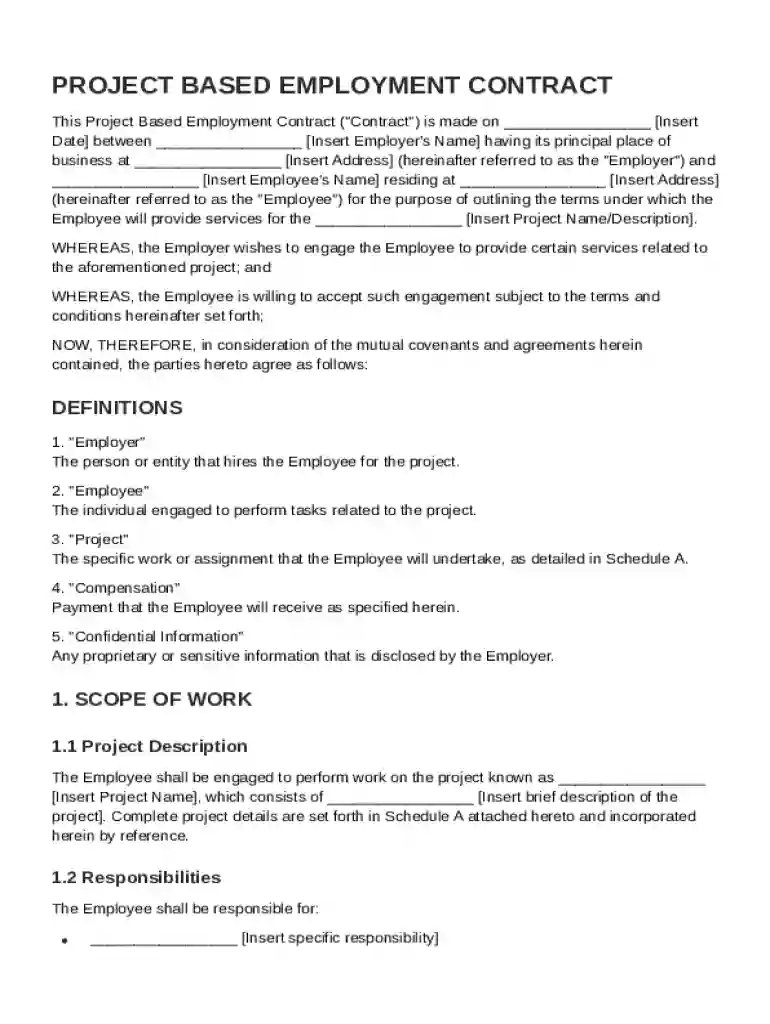
Key Elements of the Project Based Employment Contract Template
A Project Based Employment Contract Template outlines essential aspects of a specific employment arrangement tied to the completion of a project. These contracts often include key components such as:
- Scope of Work: Details the project's nature, goals, and deliverables, ensuring both parties clearly understand the expected outcomes.
- Responsibilities: Outlines duties for both the employer and employee, aligning expectations with the project's objectives.
- Compensation and Payment Terms: Specifies the remuneration structure, including payment schedules, bonuses, and any reimbursable expenses.
- Performance Standards: Sets criteria for evaluating the employee's work quality, ensuring alignment with project requirements.
These elements form the foundation of a project-based employment relationship, establishing mutual expectations and minimizing potential disputes by clearly defining each party’s commitments.
Definition & Meaning of the Project Based Employment Contract Template
This template serves as a formal agreement between an employer and an employee, focusing exclusively on a single project rather than an ongoing employment relationship. It's designed to:
- Clarify Employment Terms: Defines the temporary nature of the engagement, tied specifically to project completion.
- Ensure Legal Protection: Offers both parties legal certainty through precise terms related to work scope, compensation, and confidentiality.
- Facilitate Clear Communication: By outlining roles and responsibilities, both parties can prevent misunderstandings and maintain productive interactions throughout the project's duration.
Such contracts are crucial in environments where flexibility and clear deliverables are necessary to achieve project success.
Who Typically Uses the Project Based Employment Contract Template
The use of this contract type spans various sectors and settings. Common users include:
- Freelancers and Independent Contractors: Individuals who prefer project-based engagements or whose work inherently depends on specific project tasks.
- Creative Agencies and IT Companies: These often rely on temporary project teams to meet client demands, using the template to formalize terms.
- Startups and Small Businesses: Entities that might need to quickly scale their workforce based on project needs without long-term commitments.
The template's versatility allows it to serve diverse professional settings where temporary and project-centric arrangements fulfill business goals.

Steps to Complete the Project Based Employment Contract Template
Filling out this template requires a methodical approach to ensure completeness and accuracy:
- Gather Information: Collect essential details about the project, roles, and compensation specifics.
- Define the Project Scope: Clearly delineate the project's objectives, timelines, and expected outcomes.
- Outline Responsibilities: Specify each party’s roles and duties.
- Set Compensation Terms: Clearly define payment conditions, including method and frequency.
- Include Legal Clauses: Ensure terms regarding confidentiality, dispute resolution, and governing law are covered.
- Review and Revise: Double-check terms for accuracy and clarity before finalizing.
Following these steps meticulously helps create a robust contract that minimizes legal risks and promotes project success.
Important Terms Related to the Project Based Employment Contract Template
This contract involves several legal and professional terms vital for clarity and enforceability:
- Confidentiality Obligations: These stipulate the employee's duty to protect sensitive information related to the employer and project.
- Ownership of Work: Clarifies the employer’s right to the project's output and intellectual property created during the engagement.
- Governing Law and Dispute Resolution: Specifies jurisdiction and methods for resolving disagreements, such as mediation or arbitration.
Understanding these terms helps parties appreciate their rights and responsibilities, contributing to a smoother contractual relationship.
Legal Use of the Project Based Employment Contract Template
This template adheres to legal standards governing employment contracts, ensuring it provides:
- Compliance with Employment Laws: Aligns with state and federal employment regulations, covering aspects like wage and hour laws.
- ESIGN Act Adherence: When signed electronically, these contracts remain legally binding, ensuring enforceability and ease of handling.
Legal compliance ensures the contract’s validity, protecting both employer and employee rights throughout the project partnership.
State-by-State Differences in the Project Based Employment Contract Template
Though the core elements of the template remain consistent, specific terms may vary based on state jurisdiction. Factors potentially influencing variations include:
- State Labor Laws: Different states may impose additional requirements, such as minimum wage rates or specific contractor rights.
- Tax Implications: State-specific tax obligations could impact compensation and reporting requirements.
- Dispute Resolution Practices: Preferences for mediation, arbitration, or litigation can differ by state, affected by local legal cultures and practices.
Recognizing these differences is critical for ensuring that the contract is both compliant and effective in the specific legal context where it will be executed.
Examples of Using the Project Based Employment Contract Template
Practical scenarios demonstrate the template's application across industries:
- A Graphic Design Agency: Engages a freelance designer for a singular campaign, using the template to specify deliverables, timelines, and payment terms.
- A Tech Startup: Hires a software developer to build an app module, with the contract defining scope, intellectual property rights, and independent contractor status.
- An Event Planning Firm: Collaborates with a specialist to organize a corporate event, detailing responsibilities, performance expectations, and confidentiality requirements.
These examples illustrate the adaptability of the template in managing diverse projects effectively.