






Definition & Meaning
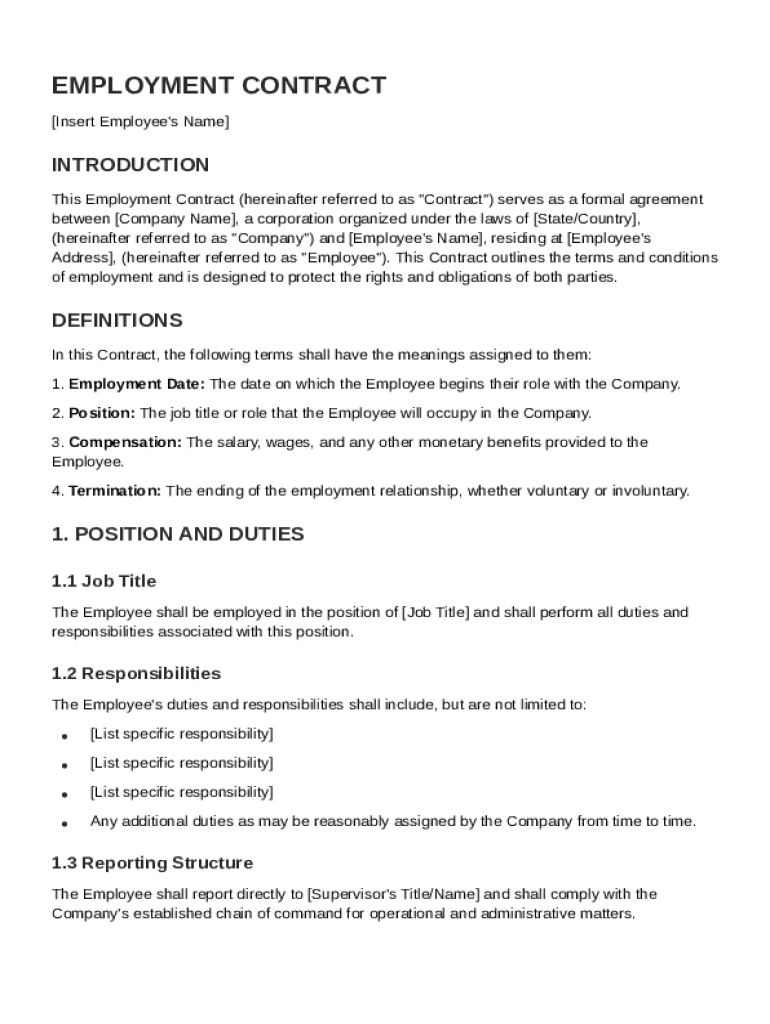
A Company Employment Contract Template is a comprehensive agreement drafted to formalize the relationship between an employer and employee. This document outlines critical components such as job role, responsibilities, compensation, and benefits, which are essential to establishing clear expectations and protecting the rights of both parties involved. This template serves as a foundational legal document that initiates the employment relationship and helps to resolve potential conflicts by setting predefined terms of employment.
Key Elements of the Company Employment Contract Template
The Company Employment Contract Template includes several key elements that ensure a well-rounded agreement. These components cover:
- Job Position and Responsibilities: Defines the specific role and duties the employee is expected to fulfill.
- Compensation Structure: Details on salary or wage, payment schedules, bonuses, and raises.
- Benefits Package: Includes health insurance, retirement plans, and any other perks.
- Work Hours and Schedules: Specifies regular working hours and conditions for overtime.
- Confidentiality Clauses: Protects sensitive company information from unauthorized disclosure.
- Termination Conditions: Lists circumstances under which the contract can be terminated and the procedures involved.
- Dispute Resolution Procedures: Outlines methods for resolving disagreements, promoting a harmonious working environment.
Steps to Complete the Company Employment Contract Template
Completing a Company Employment Contract Template involves several systematic steps to ensure accuracy and compliance:
- Gather Required Information: Collect all necessary details about the employee, job position, and company.
- Input Specifics: Enter job duties, salary details, work schedule, and other terms as per the mutual agreement.
- Review Legal Requirements: Ensure all mandatory legal clauses are included according to jurisdiction.
- Amend for Particular Needs: Customize the template to suit specific circumstances or industry standards.
- Finalize and Sign: Secure signatures from both the employer and employee to validate the contract.
Legal Use of the Company Employment Contract Template
The legal use of an employment contract template must comply with federal and state employment laws:
- Adherence to Labor Laws: Ensures the contract aligns with state labor regulations concerning wages and working conditions.
- Inclusion of Mandatory Clauses: Such as non-discrimination policies and workers' compensation benefits.
- Verification of Employment Eligibility: Proper documentation to verify employees' legal right to work in the United States.
- Safeguarding Worker Rights: Protects employee rights regarding fair treatment, safe working environments, and lawful termination processes.
State-specific Rules for the Company Employment Contract Template
Employment contracts may be subject to state-specific variations and requirements:
- Minimum Wage Differences: Different states have varying minimum pay standards.
- Overtime Policies: Requirements for overtime pay, which might differ in calculation and applicability by state.
- Right-to-Work Laws: Variations in the enforceability of union memberships or dues.
- Criminal Background Checks: Differences in permissible scope and timing across states.
Software Compatibility with the Company Employment Contract Template
Ensuring that your Company Employment Contract Template is compatible with various digital formats can improve efficiency:
- Integration with DocHub: Facilitates editing, signing, and sharing digital documents seamlessly.
- Collaboration with Cloud Services: Easily store and exchange contracts using Google Drive, Dropbox, or OneDrive.
- Export Options: Convert and export your contracts into various formats like PDF, DOCX, or TXT for specific user needs.
Examples of Using the Company Employment Contract Template
Practical applications of a Company Employment Contract Template can help illustrate its utility:
- Startups and Small Businesses: Simplifies the hiring process by providing a solid framework for employment agreements.
- Freelance and Project Work: Ensures clarity and agreement on temporary positions or contract work.
- Remote Workers: Establishes explicit conditions for telecommuting or hybrid roles, detailing expectations for remote engagement.
Penalties for Non-Compliance with Employment Contracts
Failure to comply with the terms of an employment contract or statutory employment laws can result in significant penalties:
- Legal Action: Employees might seek legal redress if contract terms are violated or disputes arise.
- Financial Penalties: Violations of employment laws can lead to fines imposed by labor departments.
- Reputational Damage: Mismanagement of employment agreements can tarnish a company's public image and trustworthiness.
Business Types That Benefit Most from Company Employment Contract Template
Specific business categories can significantly benefit from standardized employment contracts:
- Tech Companies: With a need to rapidly onboard skilled workers with clear job roles and IP protection measures.
- Hospitality Services: Managing a diverse workforce with defined service expectations and scheduling requirements.
- Healthcare Providers: Handling credential verification, patient confidentiality, and complex shift arrangements effectively.