






Definition & Meaning
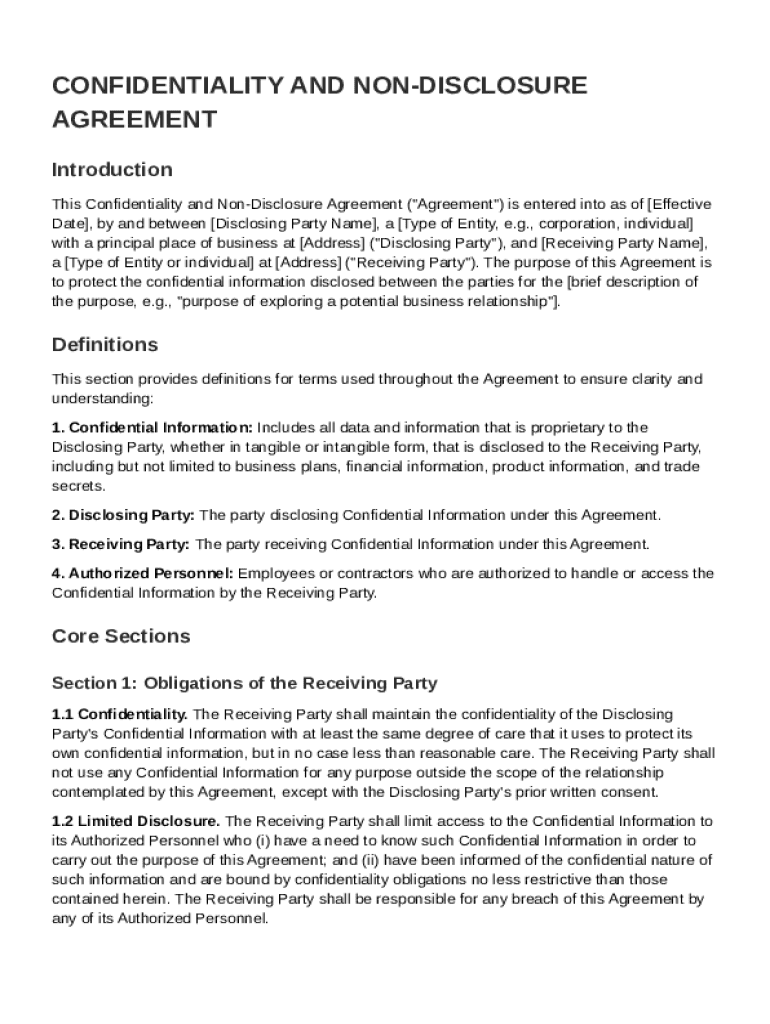
A Confidentiality and Non-Disclosure Agreement (NDA) is a legally binding contract that establishes the terms under which one party (the Disclosing Party) conveys confidential information to another party (the Receiving Party). The agreement is pivotal for protecting sensitive information and outlining the obligations of both parties. Commonly used to safeguard intellectual property and proprietary information, an NDA prevents unauthorized disclosure or misuse.
- Confidential Information: This refers to any data, documents, discussions, or proprietary knowledge shared under the protection of the NDA.
- Legal Binding: An NDA is enforceable by law and can lead to legal action if breached.
- Non-Transferable Rights: Typically, these agreements do not confer ownership or use rights of the confidential information to the Receiving Party.
Key Elements of the Confidentiality and Non-Disclosure Agreement Template
A standard NDA includes specific components crucial for maintaining confidentiality and legal compliance:
- Identification of Parties: Clear identification of the Disclosing and Receiving Parties.
- Definition of Confidential Information: Precise description of what constitutes confidential information.
- Obligations of the Receiving Party: Includes measures the Receiving Party must take to protect the information.
- Exclusions from Confidentiality: Specifies information that is not covered by the NDA, such as information already publicly available.
- Duration: The time period during which the NDA is in effect, including both the term of confidentiality and the duration of the obligations.
- Governing Law: The legal jurisdiction that will manage disputes arising from the NDA.
How to Use the Confidentiality and Non-Disclosure Agreement Template
Using an NDA template involves several steps to ensure that the agreement accurately reflects the transaction and adequately protects sensitive information:
- Customize the Template: Tailor terms to your specific needs by editing sections, adjusting legal jurisdiction, and specifying confidential information types.
- Review Legal Components: Ensure all legal categories, such as "Exclusions" and "Obligations," align with your requirements and comply with applicable laws.
- Seek Legal Advice: Before finalizing, consult with legal professionals to verify that the NDA meets legal standards and adequately protects your interests.
- Distribute for Signatures: Once finalized, send the NDA to all involved parties for their signatures, ensuring that electronic signatures are legally binding and compliant.
Who Typically Uses the Confidentiality and Non-Disclosure Agreement Template
NDAs are versatile and can be utilized across different industries and situations:
- Businesses: Companies engaging in mergers, partnerships, or sharing intellectual property with vendors.
- Startups: Protecting innovative ideas or technology before seeking investment.
- Freelancers and Contractors: When accessing or creating sensitive client data and projects.
- Research and Development: Institutions and researchers ensuring data confidentiality when collaborating on scientific advancements.


Steps to Complete the Confidentiality and Non-Disclosure Agreement Template
Effectively completing an NDA involves a structured process:
- Identify the Parties: Clearly state the names and addresses of all parties involved.
- Specify Confidential Information: Define what qualifies as confidential, referencing any unique identifiers or classifications.
- Set Terms and Conditions: Outline specific obligations, including information security measures and permissible disclosures.
- Clarify Exclusions: Identify exclusions to candidly acknowledge any prior public knowledge.
- Include Duration and Termination Clauses: Specify how long the agreement lasts and the procedures for termination.
- Sign and Date: Ensure all parties provide their signatures, confirming acceptance of terms.
Legal Use of the Confidentiality and Non-Disclosure Agreement Template
An NDA serves various legal functions by providing:
- Intellectual Property Protection: Preventing unauthorized use or sharing of intellectual creations.
- Legal Recourse: Establishes grounds for legal action in case of information leakage.
- Business Integrity: Maintains competitive advantage by protecting key strategic information.
State-Specific Rules for the Confidentiality and Non-Disclosure Agreement Template
While an NDA is applicable throughout the U.S., state laws may impact its enforceability:
- California: Emphasizes public policy considerations and protects employee rights regarding mobility and information.
- New York: Permits strict confidentiality obligations but requires reasonable definitions.
- Texas: Requires NDAs to be considered reasonable in scope and duration to be enforceable.
Practical Examples of Using the Confidentiality and Non-Disclosure Agreement Template
NDAs are deployed in numerous scenarios to secure sensitive interactions:
- Job Interviews: To prevent leaks during the recruitment process, NDAs may be signed by candidates handling sensitive projects.
- Acquisitions: Used by companies to protect financial data and strategic plans when engaging in sale negotiations.
- Venture Capital: When startups pitch to investors, NDAs safeguard innovative ideas and business models.
NDAs are critical in many sectors, primarily where information is a key asset, ensuring that business dealings and partnerships maintain integrity and confidentiality.