Definition & Meaning
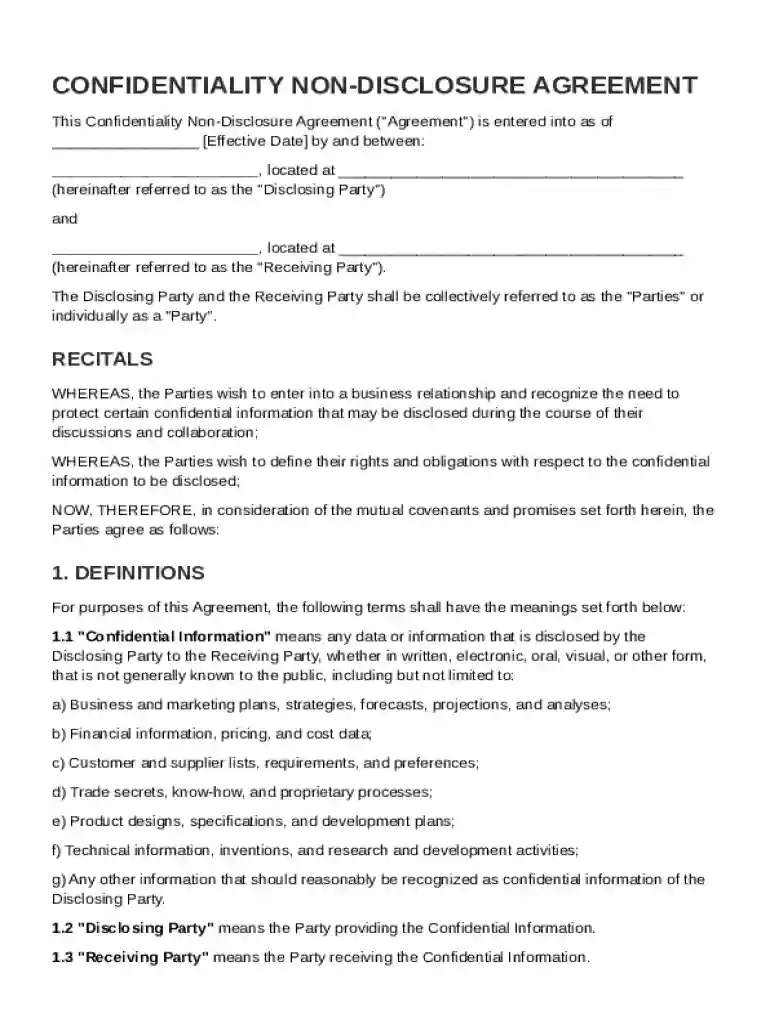
A Confidentiality Non-Disclosure Agreement (NDA) is a legal contract between two or more parties, often referred to as the Disclosing Party and the Receiving Party, that establishes a confidential relationship. This agreement is used to protect sensitive information that is shared between parties during business negotiations or relationships. 'Confidential Information' typically includes trade secrets, proprietary data, business plans, and other non-public information deemed valuable to the parties involved.
- Parties Involved: The Disclosing Party shares the confidential information, while the Receiving Party agrees to protect that information.
- Purpose: Ensures that sensitive information is not disclosed to unauthorized parties or the public domain.
Key Elements of the Confidentiality Non-Disclosure Agreement Template
The NDA template includes several critical components that outline the responsibilities and rights of both parties involved.
- Definition of Confidential Information: Specifies what information is considered confidential and protected under the agreement.
- Obligations of the Receiving Party: Details the responsibilities of the Receiving Party to maintain the confidentiality of the information.
- Exclusions: Identifies information that is not covered by the NDA, such as information already known to the Receiving Party before the agreement, public domain information, or information disclosed by another party without breach of the agreement.
- Term and Termination: Describes the duration of the agreement and conditions under which it may be terminated.
- Legal Provisions: Includes governing law, dispute resolution methods, and remedies in case of a breach.
How to Use the Confidentiality Non-Disclosure Agreement Template
Using the NDA template involves several steps to ensure that it serves its purpose effectively.
- Identify the Parties: Clearly define all parties involved and their roles (Disclosing Party and Receiving Party).
- Define the Scope: Clearly outline the type of information considered confidential.
- Custom Tailor to Specific Needs: Amend and adjust clauses to fit the specific requirements and legal stipulations of both parties.
- Sign and Execute: Ensure both parties review and understand the document and sign it to put it into effect.
Steps to Complete the Confidentiality Non-Disclosure Agreement Template
To ensure comprehensive protection, consider these steps when completing an NDA template:
- Download the Template: Obtain the NDA template and review all terms.
- Fill in Party Details: Insert the names and contact information of the Disclosing Party and Receiving Party.
- Specify Confidential Information: Clearly describe the information considered confidential.
- Set Duration and Protection Measures: Establish how long the information remains protected.
- Finalize and Sign: Get actual signatures from authorized representatives of both parties.
Important Terms Related to Confidentiality Non-Disclosure Agreement Template
Certain terms are critical to understanding and executing an NDA.
- Confidential Information: Any non-public information disclosed by the Disclosing Party to the Receiving Party under this agreement.
- Breach of Agreement: Occurs when any party violates the terms of the NDA by disclosing confidential information without authorization.
- Governing Law: The jurisdiction whose laws will be applied in interpreting the NDA.
- Remedies for Breach: Legal actions that the Disclosing Party can take in the event of a breach.
Legal Use of the Confidentiality Non-Disclosure Agreement Template
Understanding the legal nuances ensures the NDA is enforceable and meets all requirements.
- Enforceability: For the NDA to be enforceable, it must clearly define the confidential information and include mutual agreement terms.
- Governing Laws: The NDA should comply with the laws of the state where it will be enforced.
- Legal Remedies: The template should include possible legal actions in the case of a breach, such as seeking injunctive relief or monetary damages.
State-Specific Rules for the Confidentiality Non-Disclosure Agreement Template
It's crucial to acknowledge that NDAs can be subject to state-specific rules and interpretations.
- Varying Legal Standards: Some states might have more stringent requirements for what constitutes a legally binding NDA.
- Duration Limits: Certain jurisdictions may impose limits on how long confidentiality obligations can last.
- Specific Clauses: Different states may require specific language or clauses to address local legal standards.
Business Types That Benefit Most from Confidentiality Non-Disclosure Agreement Template
Understanding which business types benefit can guide customization.
- Tech Companies: Protect innovative technologies and software developments.
- Manufacturers: Safeguard production processes and design blueprints.
- Healthcare Providers: Secure patient data and proprietary treatment methods.