






Definition and Meaning
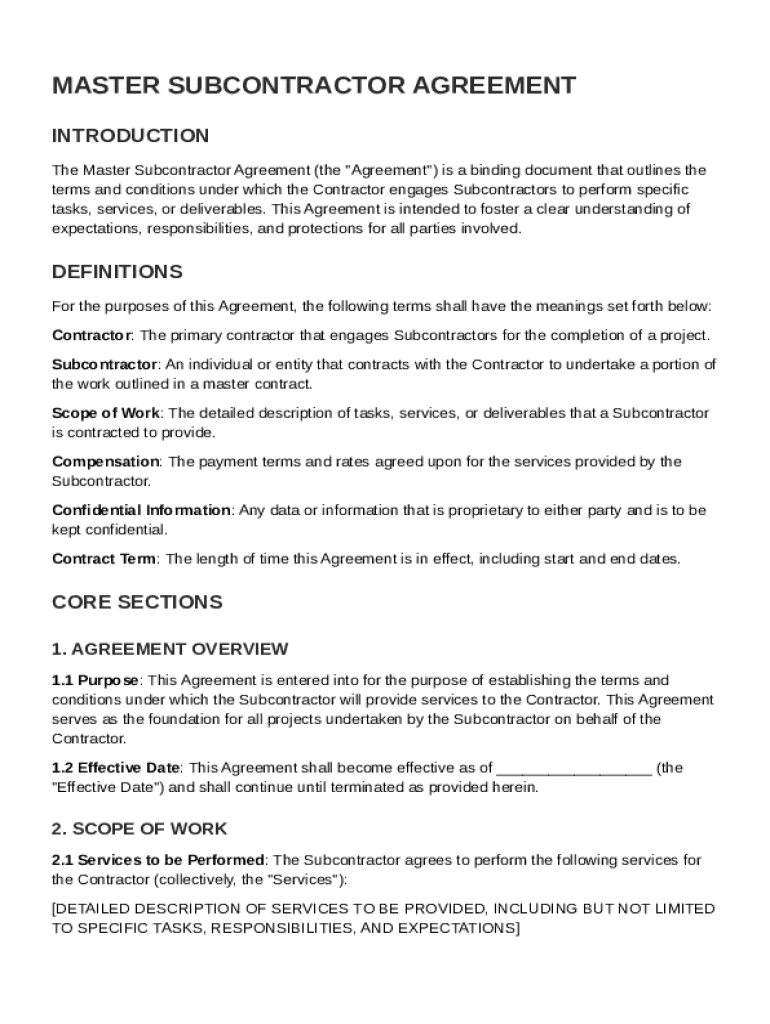
The Master Subcontractor Agreement is a comprehensive legal framework that governs the relationship between a contractor and subcontractors. It meticulously outlines duties, obligations, and responsibilities to ensure a smooth and transparent working environment. Key provisions typically include the scope of work, performance expectations, compensation terms, confidentiality agreements, and dispute resolution processes. This document is vital in preventing potential conflicts by meticulously detailing mutual expectations and liabilities.
Scope of Work and Compensation
The agreement specifies in detail the tasks subcontractors are expected to perform. This includes timelines, milestones, and deliverables, ensuring both parties have a clear understanding of what is expected. Compensation terms are also clearly defined, outlining payment schedules, invoicing procedures, and any contingencies for additional work or changes in scope.
Confidentiality and Security
Confidentiality clauses protect sensitive information disclosed between parties. These provisions typically require subcontractors to keep proprietary and business-sensitive information confidential both during and after the agreement term. Such clauses may also extend to any subcontractor personnel engaged.
Key Elements of the Master Subcontractor Agreement Template
A well-structured template encompasses several critical components. Some of the essential elements include:
- Definitions: Clear definitions of key terms used throughout the agreement.
- Performance Standards: Criteria against which subcontractor performance will be measured.
- Indemnification: Provisions for protecting parties against certain legal liabilities.
- Termination Clauses: Conditions under which the agreement can be prematurely ended.
- Dispute Resolution: Mechanisms for resolving conflicts, including mediation and arbitration options.
Steps to Complete the Master Subcontractor Agreement Template
Completing the Master Subcontractor Agreement involves several deliberate steps to ensure accuracy and completeness:
- Review the Template: Familiarize yourself with each section of the template to understand its relevance.
- Fill in Basic Information: Input the names and contact details of all parties involved.
- Detail the Scope of Work: Clearly define the tasks and responsibilities of the subcontractor.
- Specify Compensation Terms: Outline payment schedules and conditions for invoicing.
- Draft Confidentiality Clauses: Establish confidentiality obligations relevant to the scope of work.
- Outline Dispute Resolution: Choose appropriate mechanisms for resolving potential disputes.
- Finalize and Review: Thoroughly review the completed document for accuracy and completeness before signing.
Common Pitfalls
- Ambiguous Terms: Ensure terms are clearly defined to prevent misunderstandings.
- Incomplete Sections: Double-check that all relevant sections are filled out.
- Lack of Legal Review: Whenever possible, have a legal professional review the agreement for compliance and comprehensiveness.
Importance of the Master Subcontractor Agreement Template
Using a Master Subcontractor Agreement Template is crucial for several reasons:
- Clarity: Provides clear expectations, reducing the likelihood of disputes.
- Legal Protection: Offers legal safeguards for both contractors and subcontractors.
- Efficiency: Streamlines negotiation processes by providing a ready-made framework.
- Customization: Allows customization to suit specific project needs and circumstances.
Who Typically Uses the Master Subcontractor Agreement Template
This template is primarily utilized by contractors who engage subcontractors for various projects. It is particularly beneficial in industries where multiple subcontractors are involved, such as:
- Construction: Commonly used in projects involving architects, engineers, and builders.
- IT Services: Utilized by firms subcontracting software development tasks.
- Consultancy: Employed when independent consultants are contracted for specific expertise.


Legal Use of the Master Subcontractor Agreement Template
The template is designed to comply with legal standards for contractual agreements in the United States. It accounts for:
- Compliance with Federal Laws: Aligns with national standards for contract law.
- State-Specific Regulations: May require tailoring to accommodate specific state laws or industry regulations.
- Adherence to Contractual Obligations: Ensures all elements are enforceable under U.S. contract law.
Versions or Alternatives to the Master Subcontractor Agreement Template
While the Master Subcontractor Agreement Template serves a broad range of needs, alternatives might include:
- Industry-Specific Agreements: Tailored to meet the unique requirements of specific industries.
- Simplified Agreements: For projects where a full template might be overly complex.
- Modular Agreements: Allow for addition or removal of sections based on project requirements.
Digital vs. Paper Version
In today's digital landscape, many opt for electronic versions of the agreement. Electronic agreements offer:
- Enhanced Accessibility: Easy access and modifications via digital platforms such as DocHub.
- Secure Storage and Transfer: Simplified management of documents with encryption and secure sharing options.
- Legally Binding Electronic Signatures: Compliance with laws such as the ESIGN Act for validity.
State-Specific Rules for the Master Subcontractor Agreement Template
While the Master Subcontractor Agreement Template is broadly applicable, it is important to consider state-specific requirements, which might include:
- Licensing Requirements: Ensuring subcontractors hold necessary licenses or permits specific to state laws.
- Worker's Compensation Laws: Compliance with state-mandated insurance requirements.
- State-Specific Termination Clauses: Adjustments in language to comply with state contract law doctrines.
Understanding these nuances enhances the enforceability and operational effectiveness of the agreement, providing a robust foundation for successful contractor-subcontractor relationships.