






Definition and Meaning
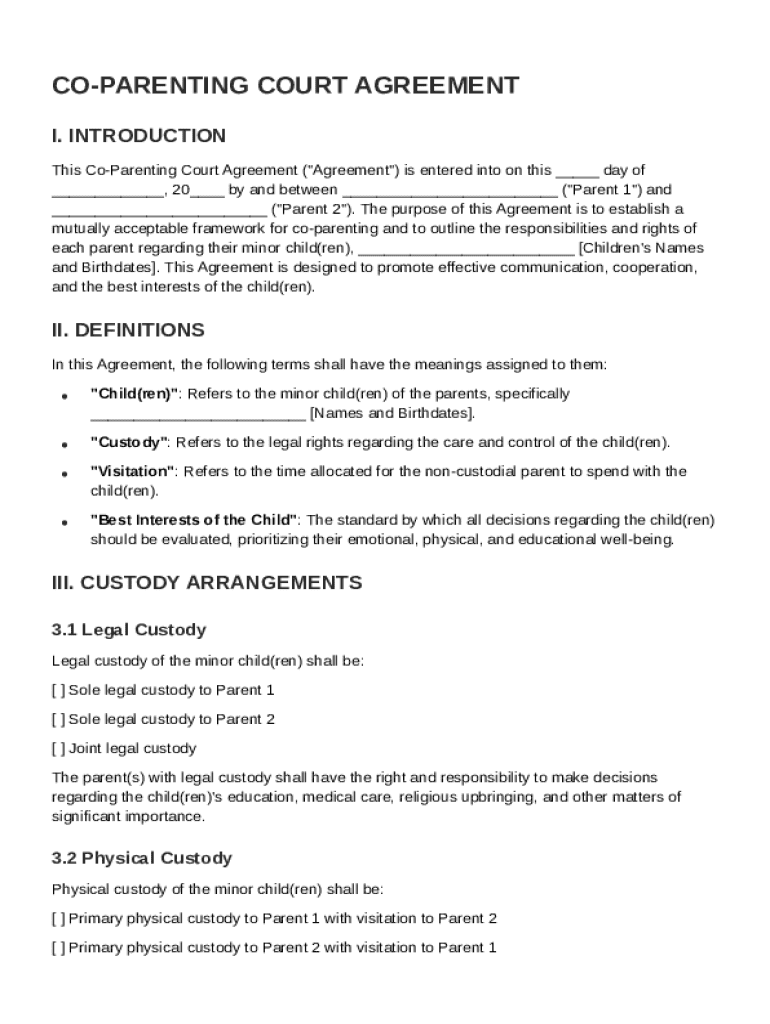
A Co-Parenting Court Agreement Template is a structured document outlining the responsibilities and rights of two parents in managing their roles and duties toward their minor children following separation or divorce. This template serves as a blueprint for co-parenting, detailing custody arrangements, visitation schedules, and other essential elements to ensure the well-being of children. The agreement facilitates effective communication and cooperation between parents, aiming to avoid conflicts and prioritize the best interests of the children involved.
How to Use the Co-Parenting Court Agreement Template
-
Review the Template: Begin by thoroughly reading the template to understand each section's purpose and specific details. Examine how visitation schedules, custody arrangements, and communication protocols are defined.
-
Customize the Document: Adapt the template to fit the unique needs of your family's situation. This may involve adjusting visitation times, detailing specific responsibilities, or including additional clauses relevant to your needs.
-
Consult with Legal Advisors: Consider discussing the agreement with a legal advisor or family law expert to guarantee that it adheres to state laws and accurately reflects both parties' intentions.
-
Negotiation and Agreement: Both parents should communicate openly to negotiate any changes or additions, ensuring that the document aligns with their expectations and legal obligations.
-
Finalization and Signing: After reaching a consensus on the content, finalize the document. Both parties should sign it to indicate agreement and consideration for the children's welfare.
-
Court Approval: In most cases, especially where the original separation was court-involved, it's crucial to submit the finalized agreement for court approval to give it legal standing.
Steps to Complete the Co-Parenting Court Agreement Template
-
Gather Information: Collect all necessary personal details such as names, addresses, and contact details of both parents and children.
-
Draft Custody Arrangements: Outline whether the custody is joint or sole and specify who has physical and legal custody.
-
Establish Visitation Schedules:
- Weekdays and weekends visitation plans.
- Holiday and vacation schedules.
- Special considerations for birthdays or school events.
-
Define Communication Protocols: Establish how parents will communicate about the children’s needs, including methods and frequency of contact.
-
Include Conflict Resolution Methods: Provide procedures for resolving disputes, such as mediation or counseling options.
-
Outline Child Support Obligations: Document any agreements concerning financial support, specifying amounts, payment dates, and duration.
-
Finalize and Review: Ensure all sections are accurately filled and reflect the parents' mutual decisions.
-
Obtain Signatures and Notarization (if required): Secure signatures from both parents and have the document notarized if required by local laws.
Key Elements of the Co-Parenting Court Agreement Template
- Custody Arrangements: Clarifies the type of custody and who is responsible for major decisions regarding the children.
- Visitation Schedule: Details specific times and conditions under which the non-custodial parent can visit the children.
- Communication Protocol: Establishes guidelines for communication between parents regarding the child’s welfare.
- Child Support: Specifies financial responsibilities and obligations for the support of the children.
- Conflict Resolution: Defines mechanisms to resolve disputes without resorting to court intervention.
- Additional Provisions: Includes any further details such as religious upbringing, education decisions, or extracurricular activities.
Legal Use of the Co-Parenting Court Agreement Template
The use of a Co-Parenting Court Agreement Template is contingent on adhering to state laws in the United States. Once finalized and approved by a court, the document becomes legally binding for both parents. This binding nature ensures that both parties fulfill their obligations, providing a structured environment for the children. Since laws can vary by state, consulting with a legal professional can help tailor the agreement to comply with specific state regulations and ensure it holds up in court.
State-Specific Rules for the Co-Parenting Court Agreement Template
- Varied Requirements: Each state may have different requirements concerning custody and visitation arrangements.
- Court Filing: Some states necessitate filing the agreement with the court, while others may offer more flexible informal agreements.
- Modification Procedures: States offer different processes and reasons for modifying existing agreements, often involving proof of significant change in circumstance.
Who Typically Uses the Co-Parenting Court Agreement Template
The Co-Parenting Court Agreement Template is generally used by separated or divorced parents seeking to clearly define parental responsibilities and streamline co-parenting arrangements. Legal professionals and family mediators can also utilize this template to guide discussions and help parents frame their agreements efficiently. The main users include:
- Parents navigating divorce or separation.
- Legal advisors specializing in family law.
- Family mediators or counselors assisting in negotiation.


Examples of Using the Co-Parenting Court Agreement Template
- Joint Custody Arrangements: A couple agrees on a shared custody schedule but requires a clear calendar specifying which parent the child resides with on given days.
- Holiday Planning: Parents use the template to elaborate a plan splitting vacations and holidays without clashing schedules or conflicts.
- Financial Responsibilities: The document solidifies an understanding regarding the proportionate sharing of expenses related to healthcare and education costs.