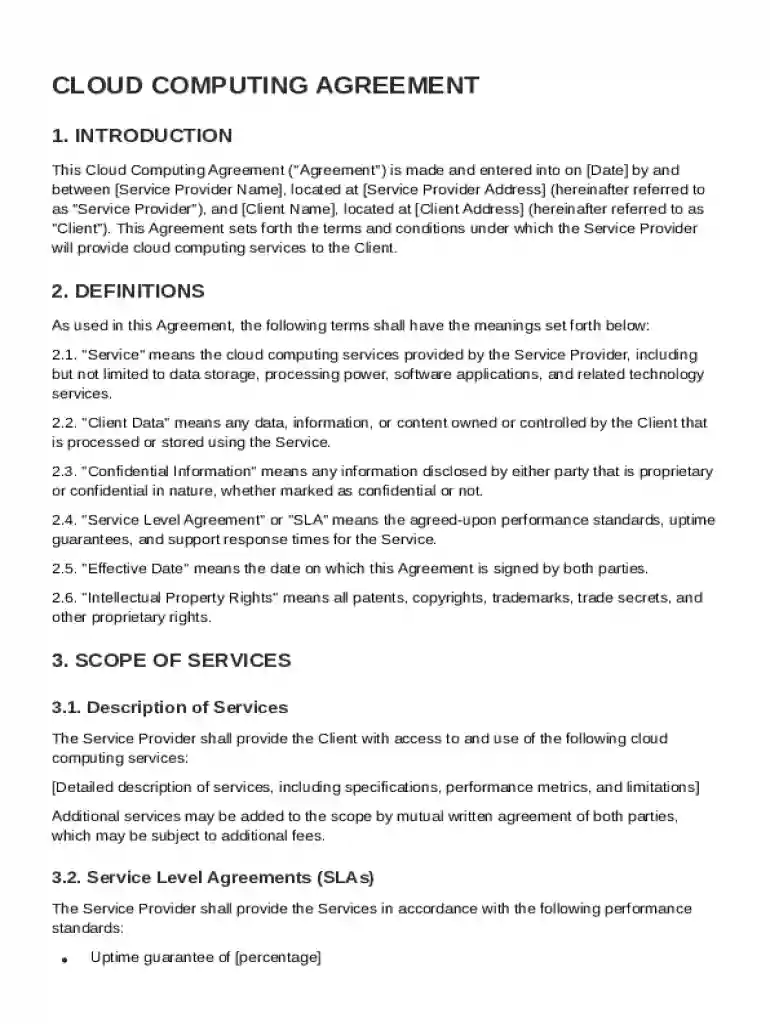
Definition and Purpose of a Cloud Computing Agreement Template
A Cloud Computing Agreement Template is a structured document used to establish terms and conditions between a service provider and a client for delivering cloud computing services. This agreement typically details the responsibilities and obligations of each party, ensuring clarity and protection of interests. Key elements addressed include service descriptions, data security measures, payment terms, confidentiality obligations, and dispute resolution processes. Such templates are essential for both parties to define expectations and ensure compliance with legal standards, reducing the risk of misunderstandings or litigation.
Key Components of the Cloud Computing Agreement Template
The Cloud Computing Agreement Template covers several critical areas:
- Service Scope and Objectives: Description of the services provided, including any specific goals or performance indicators that must be met.
- Data Security Measures: Detailed protocols for protecting sensitive information, including encryption standards, access controls, and data breach notification procedures.
- Fee Structure and Payment Terms: Clear explanation of pricing models, payment schedules, and any applicable penalties for late payments or service level failures.
- Ownership Rights: Establishes who owns the data and any intellectual property created, including conditions for data retrieval and usage rights after the agreement ends.
- Confidentiality Clauses: Provisions to protect proprietary information, ensuring that both parties handle shared data responsibly and legally.
- Liability Limitations: Specifies the limits of liability for each party, often capping financial responsibility to reduce risk exposure.
- Resolution of Disputes: Outlines mechanisms for handling disagreements, such as mediation, arbitration, or litigation.
How to Use the Cloud Computing Agreement Template
Users can effectively employ the template by following these steps:
- Initial Review: Examine the entire template to ensure it aligns with the specific needs and goals of your cloud services arrangement.
- Customization: Modify sections to reflect the particular terms, conditions, and service levels consented to by both parties. This may involve altering language to comply with industry-specific standards or regulatory requirements.
- Consultation with Legal Counsel: Seek advice from legal professionals to confirm that the terms comply with applicable laws and effectively protect your interests.
- Review by Stakeholders: Share the modified template with relevant internal teams and the opposing party to ensure clarity and mutual agreement.
- Finalization and Signature: Once reviewed, execute the agreement through electronic signatures, ensuring all parties have access to the finalized document.
Advantages of Using a Cloud Computing Agreement Template
Adopting this template offers numerous benefits:
- Clarity: Provides a clear framework for understanding and managing expectations on both sides.
- Risk Mitigation: Reduces the likelihood of disputes by establishing clear terms for service delivery and responsibilities.
- Efficiency: Speeds up the contract negotiation process, enabling quicker implementation of cloud services.
- Legal Compliance: Helps ensure that agreements align with industry standards and regulatory requirements, minimizing the risk of legal issues.
- Adaptability: Allows for tailored agreements that meet specific business needs and industry requirements, providing flexibility across various sectors.
Legal Considerations in Cloud Computing Agreements
Legal considerations central to these agreements include:
- Compliance with Data Protection Laws: Adherence to regulations like the General Data Protection Regulation (GDPR) or the California Consumer Privacy Act (CCPA) to protect client data.
- Intellectual Property Rights: Clarification of ownership and usage rights concerning any developed technologies or data exchanged.
- Jurisdiction and Governing Law: Specification of which jurisdiction's laws govern the agreement, particularly important for international contracts.
- Liability and Indemnification: Defining the extent of liability for each party and outlining indemnification procedures for any losses or damages arising from the agreement.
Steps to Complete the Cloud Computing Agreement Template
Completing the template involves several crucial steps:
- Collect Relevant Information: Gather all necessary data, including contact information for both parties, service descriptions, pricing details, and performance criteria.
- Template Population: Insert information into the template sections, ensuring accuracy and relevance to the cloud services in question.
- Legal Review and Adjustment: Conduct a review to ensure all legal aspects are satisfactorily covered, making adjustments as needed.
- Final Validation: Secure final approval from all parties' representatives, confirming agreement on all terms.
- Signing and Distribution: Facilitate signing, share copies with all stakeholders, and store the agreement securely for future reference.
Different Business Types Benefiting from the Template
The template is particularly beneficial for:
- Startups and SMEs: Gain access to scalable cloud solutions with defined service levels and costs.
- Large Enterprises: Manage complex vendor relationships with multiple cloud providers effectively.
- Legal and Compliance Departments: Ensure that agreements meet regulatory standards and mitigate risk efficiently.
- Technology and SaaS Companies: Establish clear service expectations and legal protections for offered cloud-based solutions.