
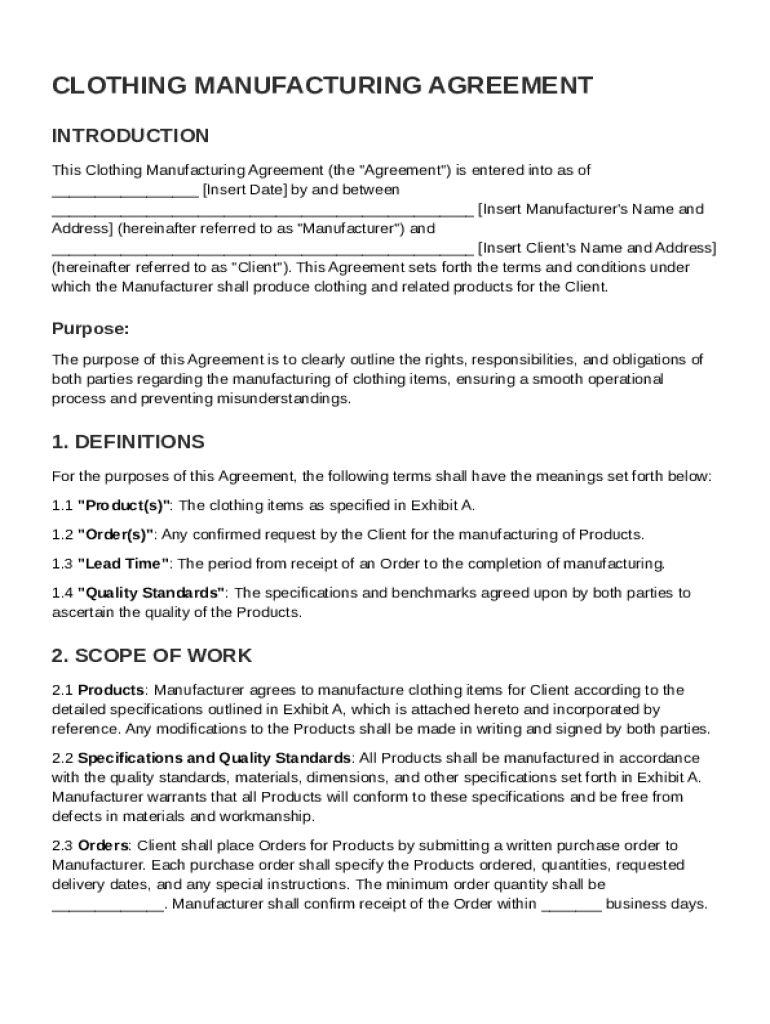







Definition & Key Elements of the Clothing Manufacturing Agreement Template
The Clothing Manufacturing Agreement Template is a legal document designed to outline the terms and conditions between a manufacturer and a client for clothing production. This template defines the roles, responsibilities, and obligations of each party, ensuring a clear understanding to facilitate a successful partnership. Essential elements include the scope of work, pricing, payment terms, lead times, quality standards, intellectual property rights, confidentiality obligations, and termination clauses.
Core Sections of the Agreement
-
Scope of Work: Details regarding the specific clothing items to be produced, including design, materials, and quantities.
-
Pricing and Payment Terms: Information about cost per item or batch, payment schedules, and any deposit requirements.
-
Lead Times and Delivery: Agreed timelines for production and delivery, including any penalties for delays.
-
Quality Control Measures: Standards and procedures to ensure that clothing items meet predetermined quality levels.
-
Intellectual Property Rights: Definition of who owns the designs and how they can be used or reproduced.
-
Confidentiality Clauses: Ensures that sensitive information shared during the production process remains confidential.
-
Termination Clauses: Conditions under which the agreement can be prematurely terminated by either party.
How to Use the Clothing Manufacturing Agreement Template
Users can employ this template to streamline negotiations and establish clear expectations between manufacturers and clients. Here are the key steps for using the template effectively:
-
Customizing the Template: Tailor the template to reflect specific project details and company requirements.
-
Understanding Legal Terminology: Familiarize yourself with the terms used throughout the agreement to avoid misunderstandings.
-
Collaboration and Review: Work with legal counsel to review the template, ensuring all clauses protect your interests.
-
Finalization and Signing: Once all parties agree on the terms, proceed with signing to make the contract legally binding.
-
Storage and Access: Securely store the signed document for future reference, making sure all parties have access to a copy.
Important Terms Related to Clothing Manufacturing Agreement Template
Several terms within the template carry significant weight and should be clearly understood:
- "Manufacturer": The party responsible for producing the clothing items.
- "Client": The individual or company commissioning the clothing production.
- "Lead Time": The time frame from when the order is placed to when it is delivered.
- "Force Majeure": Circumstances outside of control that may prevent either party from fulfilling contractual obligations, such as natural disasters.
Legal Use of the Clothing Manufacturing Agreement Template
Using this template aligns with legal standards and practices for contract creation within the United States, ensuring compliance with applicable laws, including fair trade and labor regulations.
Ensuring Compliance
- State Laws: Verify that the agreement adheres to state-specific contractual requirements.
- Intellectual Property Laws: Ensure that the template complies with relevant IP laws, protecting original designs and trademarks.
- Labor Laws: Make sure the template includes terms that respect labor rights and standards.
Steps to Complete the Clothing Manufacturing Agreement Template
Completing the template involves several careful steps to ensure accuracy and legal validity:
- Input Basic Information: Fill in the names and contact details of both parties.
- Outline Scope of Work: Specify the details of the clothing items to be manufactured.
- Set Payment and Pricing Terms: Define payment amounts, methods, and schedules.
- Establish Quality Standards: Agree on the quality measures and inspection processes.
- Review Legal Clauses: Check clauses for confidentiality, IP rights, and termination.
- Agree on Delivery Schedule: Confirm the logistics for transportation and timelines.
- Final Legal Review: Have a legal professional review the completed document.
- Sign and Date: Both parties should sign and date the agreement to execute it legally.
Who Typically Uses the Clothing Manufacturing Agreement Template
This template is instrumental for a wide range of businesses and individuals:
- Fashion Designers: Securing manufacturers for their clothing lines.
- Retail Companies: Sourcing products to sell in stores or online.
- Boutiques: Producing exclusive clothing items under their brand.
- Fashion Startups: Formalizing production partnerships.
- Clothing Wholesalers: Outsourcing garment production to meet supply demands.


Versions or Alternatives to the Clothing Manufacturing Agreement Template
The template may have variants and alternatives, offering flexibility according to specific needs:
- Industry-Specific Templates: Tailored agreements that cater to different sectors within the clothing industry, like sportswear or lingerie.
- Custom Templates: Modified versions to accommodate unique business needs or international partnerships.
- Online Agreements: Digital templates that integrate seamlessly with online contract management software.
Examples of Using the Clothing Manufacturing Agreement Template
Real-world scenarios illustrate how this template supports business operations:
- Scenario 1: A small startup uses the template to formalize a contract with a local manufacturer, ensuring their eco-friendly clothing line meets sustainability standards.
- Scenario 2: A fashion designer collaborates with an overseas manufacturer, using the template to bridge communication gaps and align expectations.
- Scenario 3: A retailer secures mass production of its private label line, leveraging the template to lock in cost-effective pricing and reliable delivery schedules.




