01. Edit your form online
Type text, add images, blackout confidential details, add comments, highlights and more.

Type text, add images, blackout confidential details, add comments, highlights and more.

Draw your signature, type it, upload its image, or use your mobile device as a signature pad.

Send it via email, link, or fax. You can also download it, export it or print it out.
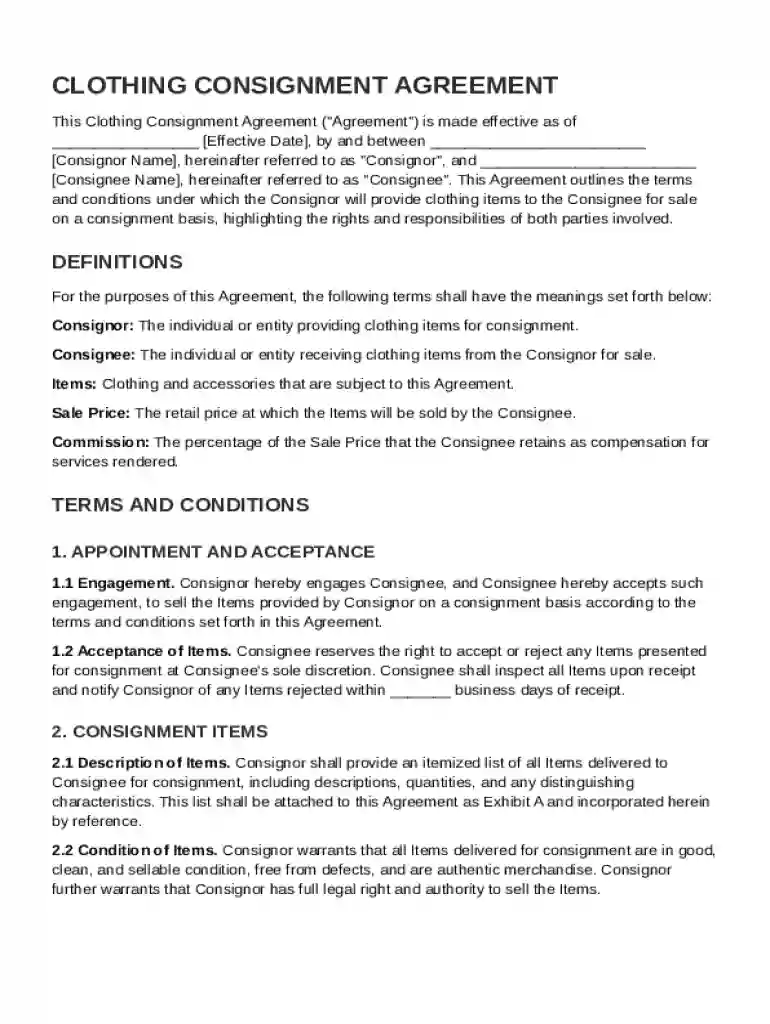
A "Clothing Consignment Agreement Template" is a legal document that sets forth the terms of a consignment arrangement between two parties: the consignor, who provides the clothing items for sale, and the consignee, who sells these items on behalf of the consignor. This template helps formalize the arrangement, clearly outlining the roles and responsibilities of both parties. Key aspects often detailed in this agreement include item acceptance, pricing strategy, commission rates, and payment schedules. By using this template, both parties can ensure clarity and fairness, minimizing disputes and enhancing their business collaboration.
The template typically includes essential components that govern the consignment relationship. These elements ensure both parties understand and agree to specific terms before entering into any transactions.
Parties Involved: Clearly identifies the consignor and consignee, including contact details and business addresses, fostering trust and accountability.
Description of Items: Details the clothing items being consigned, such as quantity, type, and condition, to prevent misunderstandings.
Pricing and Commission Structure: Outlines the pricing methodology for the items and the commission percentage the consignee will deduct for their services.
Payment Terms: Specifies when and how the consignor will receive payment after items are sold, ensuring cash flow clarity.
Liability and Insurance: Includes provisions for instances of loss or damage, detailing how responsibility is allocated between the parties.
Termination Conditions: Provides conditions under which the agreement may be terminated by either party, facilitating orderly contract resolution.
Completing the Clothing Consignment Agreement Template involves several critical steps to ensure all necessary details are captured, and both parties' interests are protected.
Identify the Parties: Clearly fill in the names and addresses of the consignor and consignee.
List Clothing Items: Provide an exhaustive list of the items, including specifics like brand, style, and condition.
Negotiate Terms: Discuss and record terms regarding pricing, commission, and payment schedules, ensuring mutual agreement.
Discuss Liability: Agree on how to handle losses or damages and include relevant insurance details.
Execute the Agreement: Both parties should carefully review the document, then sign and date it, making it legally binding.
Distribute Copies: Ensure both parties retain a copy of the signed agreement for their records.
Understanding certain terms is crucial for effective use of the Clothing Consignment Agreement Template, as they outline the specific rights and responsibilities of the involved parties.
Consignor: The owner of the clothing who gives them to the consignee to sell.
Consignee: The party responsible for selling the clothing on behalf of the consignor.
Commission: A fee or percentage of sales that the consignee retains as payment for their services.
Consignment Period: The duration for which the consignee will attempt to sell the consignor's clothing items.
Reserve Price: The minimum price at which the consignor agrees to sell each clothing item.
The template serves as a legally binding agreement and must comply with applicable laws to ensure enforceability. It is crucial that the document is prepared and executed correctly to protect the interests of both parties. Users must ensure:
Compliance with State Laws: Understand any state-specific regulations that may affect the consignment of goods, such as taxation or consumer protection laws.
Clear Liability Terms: The document should clearly define liability for theft, damage, or loss during the consignment, which not only safeguards property but also avoids legal disputes.
Enforcement of Provisions: Specify penalties for breaching the agreement, giving the document legal weight and encouraging adherence.
Different states have varying rules about consignment agreements, making it essential to customize the template to comply with local regulations.
Sales Tax: Some states require consignees to collect sales tax on consigned goods, while others exempt such sales.
Consumer Protection Laws: Regulations may differ concerning return policies and warranty requirements depending on the state.
Licensing Requirements: Certain states mandate that businesses dealing with consignment goods obtain specific licenses or permits.
Real-world applications of the Clothing Consignment Agreement Template highlight its utility in various scenarios.
Boutique Marketing: A designer consigns their garments to a local boutique to increase exposure and sales, using the template to define commission rates and protect their merchandise.
Secondhand Stores: A thrift shop uses the template to accept designer clothing from individuals, clearly outlining sales and payment terms to facilitate a seamless operation.
Pop-Up Shops: Entrepreneurs organizing temporary sales events employ the template to consign clothes from multiple designers, ensuring each party is compensated fairly and within agreed terms.
The template is widely beneficial across various industries and user groups, playing a crucial role in streamlining business operations.
Fashion Designers: Use the template to distribute their products while minimizing upfront retail costs and expanding their market reach.
Retail Store Owners: Employ the document to manage relationships with multiple consignors, optimizing inventory diversity without substantial investment.
Entrepreneurs: Utilize the agreement in pop-up events or secondhand markets, providing a structured framework for consignment sales activities.


Modern users often seek to integrate templates into their existing digital workflows, so compatibility with software is paramount.
Online Document Platforms: The template can be seamlessly imported into systems like DocHub, enabling digital editing, sharing, and signing.
Cloud Services: Storing and sharing the template through cloud services such as Google Drive, Dropbox, and OneDrive ensures easy access and collaboration.
Editing Tools: Users can modify the document using various software suites, including Microsoft Word and Google Docs, which support essential functions like text editing and formatting.
At DocHub, your data security is our priority. We follow HIPAA, SOC2, GDPR, and other standards, so you can work on your documents with confidence.