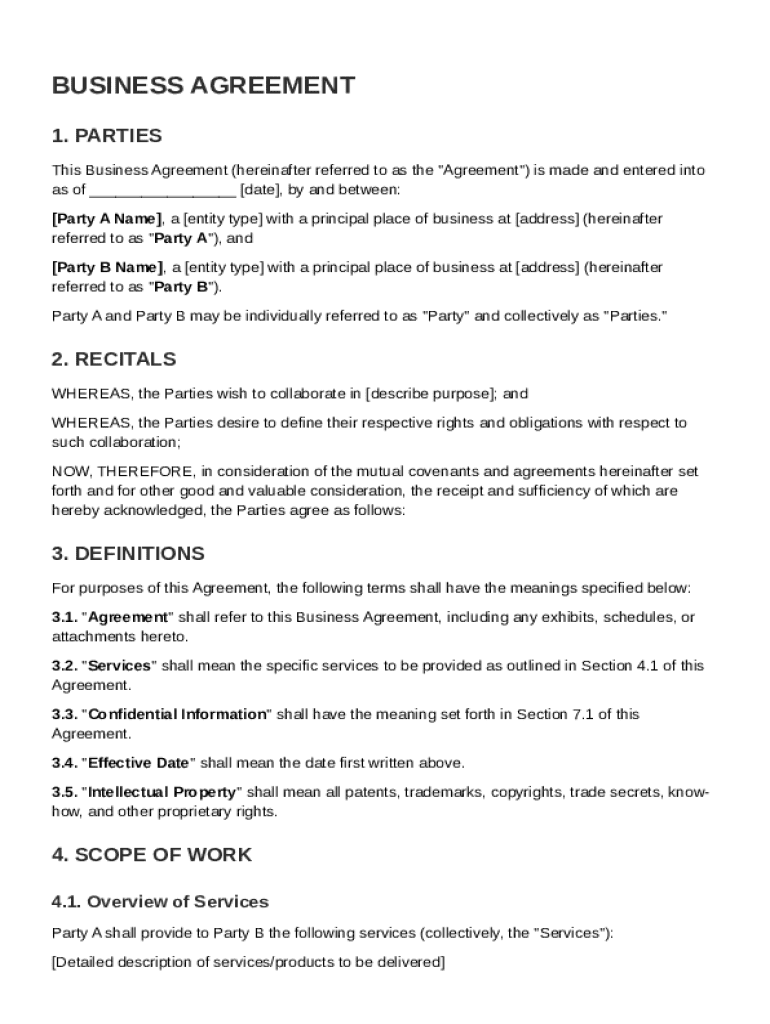







Definition and Meaning of a Business Agreement Template
A Business Agreement Template serves as a foundational document outlining the framework for collaboration between two or more parties. This template is designed to establish clear terms and conditions for mutual engagements, ensuring that all participants have a shared understanding of their roles and responsibilities. Typically, it includes key areas such as scope of work, compensation, confidentiality, intellectual property rights, and dispute resolution. By using a template, businesses can save time in document preparation and ensure that important details are not overlooked.
Scope of Work and Responsibilities
The scope of work section defines the specific tasks and activities each party will undertake. This is essential for setting expectations and measuring performance. Responsibilities are often detailed in this section to avoid any ambiguity in what each party is accountable for. Examples might include delivery timelines, quality standards, and specific services to be provided. Clearly delineating these elements helps prevent disputes and ensures that all parties are aligned toward the same objectives.
Compensation and Payment Terms
Compensation is a critical component of any business agreement, as it details how and when parties will be paid for their services. This section typically outlines payment schedules, methods of compensation, and conditions for invoicing and reimbursements. For instance, payments may be structured as a lump sum, on a milestone basis, or as recurring fees. Payment terms should also address potential penalties for late payments or other breaches of the financial agreement.
How to Use the Business Agreement Template
To effectively use a Business Agreement Template, it's important to tailor it to the specific needs of the involved parties. Start by reviewing the template in its entirety to ensure it covers all necessary aspects of your business arrangement. Make adjustments to any sections that require specific details unique to your business relationship.
Customizing for Specific Needs
Modify the template to reflect the unique requirements of the agreement at hand. This might involve changing terms related to the scope of work, altering compensation structures, or adding clauses pertinent to the industry. Practical examples include introducing new deliverables or adjusting timelines to accommodate specific project phases. Personalizing the template ensures it remains relevant and comprehensive for its intended purpose.
Ensuring Legal Compliance
Legal compliance is paramount when using a Business Agreement Template. Verify that all legal terms align with current laws and regulations pertinent to your industry and location. Consulting with a legal professional might be necessary to ensure that all provisions comply with applicable legislation and protect the interests of all parties. Legal compliance minimizes the risk of disputes and provides a robust framework for resolving them should they arise.
Steps to Complete the Business Agreement Template
Completing a Business Agreement Template involves several methodical steps to ensure all essential details and legal requirements are met.
Detailed Instructions for Completion
- Identification of Parties: Clearly name all parties involved in the agreement, including their comprehensive contact information.
- Scope Definition: Elaborate on the tasks, responsibilities, and services that each party will provide within the agreement.
- Financial Terms: Specify all payment details, including schedules, terms, and methods of payment.
- Confidentiality and IP Rights: Detail how confidential information and intellectual property will be protected during and after the agreement term.
- Dispute Resolution: Establish how parties will handle disputes, potentially including arbitration or mediation guidelines.
- Termination Clauses: Define the conditions under which the agreement can be terminated by either party.
Completing the template thoroughly ensures that the agreement is robust and minimizes the likelihood of misunderstandings.
Legal Use of the Business Agreement Template
Legal use of the Business Agreement Template is essential in ensuring that the final document serves as a valid and enforceable contract under the law.
Conditions for Enforceability
For an agreement to be legally binding, it must include the offer, acceptance, and consideration, besides clear terms and mutual consent from all involved parties. Each of these elements needs to be clearly articulated in the template. Furthermore, all parties must have the legal capacity to enter into the agreement, meaning they are of sound mind, not minors, and legally capable of engaging in a contractual relationship.
Protecting Business Interests
The agreement should effectively protect each party's interests by detailing confidentiality agreements and intellectual property rights. For example, parties can include non-disclosure agreements (NDAs) to ensure sensitive information is adequately safeguarded. Addressing these aspects thoroughly in the template helps prevent legal infringements and protects the proprietary information of all stakeholders.
Key Elements of the Business Agreement Template
The core components of the Business Agreement Template provide a comprehensive framework for formalizing business collaborations.
Essential Clauses and Provisions
- Definitions and Interpretations: Begin with a glossary of terms to clarify any potential ambiguities.
- Amendment Procedures: Outline how any modifications to the agreement will be made and communicated.
- Notices: Specify the procedure for delivering official communications between parties.
- Force Majeure: Define how unforeseen events, such as natural disasters, will affect the agreement's obligations.
- Execution Procedures: Explain how the agreement will be signed and delivered, physically or electronically.
Including these elements ensures the template is comprehensive and adaptable to various business situations.
Examples of Using the Business Agreement Template
Real-world Scenarios
- Partnerships: Businesses entering into partnerships often use such templates to define their roles, contributions, and profit-sharing ratios.
- Vendor Agreements: Companies engaging with suppliers for goods or services outline delivery schedules and payment terms within this framework.
- Service Agreements: Service providers like consultants or IT professionals use these templates to establish clear service deliverables and client expectations.
These examples illustrate how versatile the Business Agreement Template is in facilitating a wide range of business arrangements.
State-specific Rules for the Business Agreement Template
Different states may have specific requirements and considerations for business agreements.
Adapting to State Regulations
Businesses must ensure their templates comply with state-specific regulations related to contracts. Some states have unique stipulations for enforceability, requiring specific language or provisions. For instance, the enforceability of non-compete clauses or limitations on certain types of indemnity can vary widely from one state to another. Adapting these elements to coincide with local laws is crucial for the legal soundness of the agreement.
Software Compatibility and Digital Use
The digital landscape offers numerous tools that can enhance the efficiency of drafting and managing business agreements.
Platforms and Integration
DocHub integrates seamlessly with platforms like Google Workspace, making it easier to manage, edit, and sign Business Agreement Templates digitally. The template's compatibility with various software enhances collaboration and streamlines document management, allowing real-time edits and secure online signatures. Compatibility with cloud services ensures secure storage and accessibility from any device, enhancing organizational efficiency and document security.