






Key Elements of the One Page Rental Agreement Template
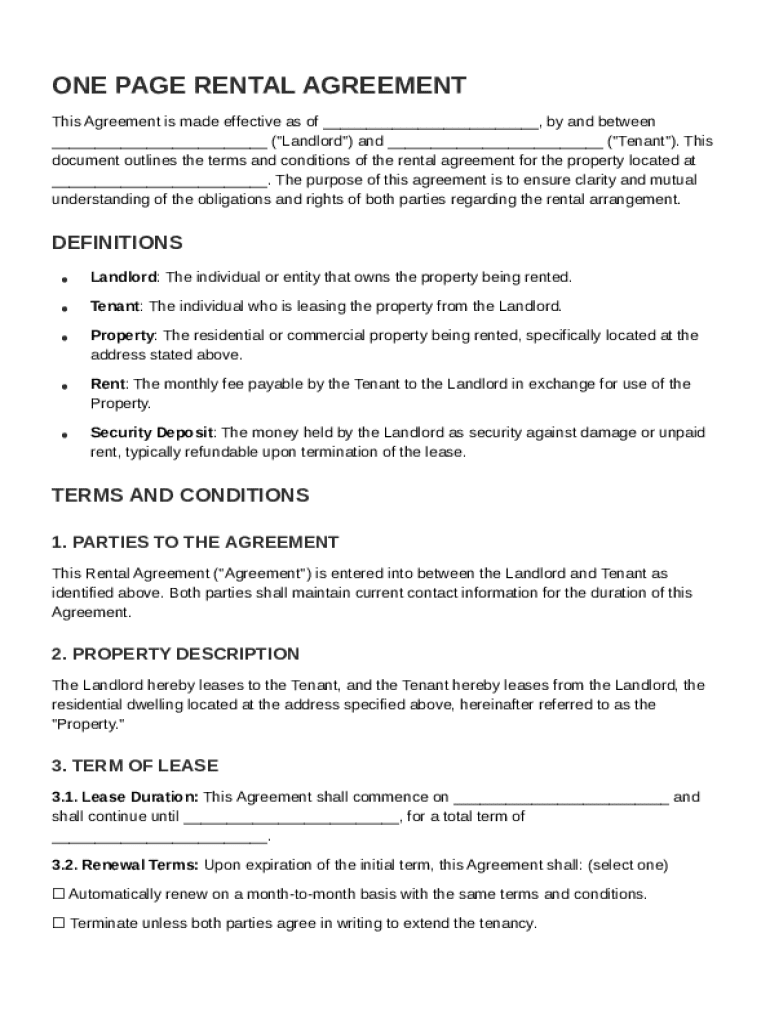
A one-page rental agreement template is a concise legal document designed to outline the terms and conditions of a rental arrangement between a landlord and tenant. The main components typically include:
-
Lease Duration: Specifies the length of the rental period, including start and end dates. This provides clarity on the time frame for both parties and helps avoid misunderstandings.
-
Rent Payment Details: Outlines the amount of rent, the due date, and the acceptable payment methods. Clear instructions ensure timely payments and prevent disputes.
-
Security Deposit Requirements: Details the amount required for a security deposit, conditions for its return, and situations that may warrant deductions. This fosters transparency regarding the tenant's responsibilities and the landlord's expectations.
-
Responsibilities for Utilities and Maintenance: Defines which party is responsible for paying utilities and handling maintenance tasks. This section helps assign responsibilities and manage expectations.
-
Termination Clauses: Explains the conditions under which the lease can be terminated by either party, including notice periods. This information is crucial to understand the process and requirements for ending the rental agreement.
-
Governing Law: Identifies the jurisdiction that dictates the legal framework for the agreement, ensuring it complies with state and local laws. This is essential for resolving any legal disputes that may arise.
Important Terms Related to the One Page Rental Agreement Template
Understanding the terminology used in rental agreements is essential for both landlords and tenants. Key terms often include:
-
Landlord: The property owner or authorized party renting out their property.
-
Tenant: The individual or group renting and occupying the property.
-
Premises: The physical property being rented, including any land or buildings.
-
Default: A failure to meet one or more of the terms of the agreement, such as late rent payments.
-
Habitability: The property’s compliance with local living standards, ensuring it is suitable for occupancy.
-
Subletting: Renting out the property (or a part of it) by the tenant to a third party, typically requiring landlord approval.
Steps to Complete the One Page Rental Agreement Template
Completing a one-page rental agreement involves several straightforward steps, ensuring all necessary details are covered:
-
Enter Basic Information: Fill in the parties' names, contact information, and the property address. This identifies who is involved and the property in question.
-
Specify Lease Terms: Clearly state the duration, including precise start and end dates. This part prevents any ambiguities about the length of the tenancy.
-
Detail Financial Obligations: Include rent amount, due date, payment method, and security deposit details. These terms establish the financial responsibilities of the tenant.
-
Outline Responsibilities: Define which party is responsible for utilities and property maintenance, ensuring all obligations are clear from the outset.
-
Add Termination Conditions: Include notice periods and acceptable termination conditions for both parties. This section provides guidance on how to lawfully end the lease.
-
Sign and Date: Both parties should review the agreement, make any necessary modifications, and sign and date the document, making it legally binding.
Legal Use of the One Page Rental Agreement Template
The legal validity of a rental agreement hinges on several factors:
-
Compliance with Local Laws: The agreement must conform to state and local regulations to be enforceable.
-
Clarity and Completeness: The document should precisely outline the terms and conditions without ambiguity.
-
Mutual Consent: Both landlord and tenant must voluntarily agree to the terms, indicated by their signatures.
-
Legally Binding Clauses: Key clauses, such as rent, lease duration, and termination conditions, must be legally acceptable.
State-Specific Rules for the One Page Rental Agreement Template
Rental laws can vary significantly by state, influencing how rental agreements are drafted and enforced:
-
Deposit Limits: States often regulate the maximum security deposit that can be charged.
-
Notice Requirements: Different states have varying requirements for how much notice must be given to end a tenancy.
-
Repair and Maintenance: Laws dictating landlord and tenant responsibilities for property maintenance can differ from state to state.
-
Lease Term Limits: Some states may have specific rules about the maximum or minimum lease durations.
Being aware of these variations ensures the rental agreement is legally compliant and enforceable.
Examples of Using the One Page Rental Agreement Template
Real-world scenarios highlight the practical use of one-page rental agreements:
-
Short-Term Rentals: Perfect for vacation properties or short-term leases, where simplicity aids in quick turnovers.
-
College Housing: Ideal for student housing, where lease terms often align with academic semesters.
-
Small Properties: Beneficial for landlords managing single-family homes or small units, requiring less complex agreements.
-
First-Time Landlords: Provides an easy-to-use format for those new to property management.
These examples illustrate the flexibility and utility of a shortened rental document.
Software Compatibility
Modern solutions like DocHub provide excellent tools for handling rental agreements digitally:
-
Integration with Google Workspace: Easily import, edit, and export rental agreements using Google Drive.
-
Mobile and Desktop Access: Allow landlords and tenants to access and sign documents from anywhere.
-
Interactive Templates: Create fillable fields within the agreement for essential details, streamlining the documentation process.
Such digital solutions offer efficiency and convenience, making rental agreements accessible and manageable online.
Who Typically Uses the One Page Rental Agreement Template
The one-page rental agreement is versatile, catering to diverse users:
-
Private Landlords: Those managing a few rental properties prefer the simplicity of a one-page document for ease and clarity.
-
Tenants: Individuals seeking straightforward terms and quick transactions benefit from this type of agreement.
-
Property Management Companies: When managing multiple leases, the brevity of a one-page template improves administrative efficiency.
-
Real Estate Agents: Professionals often use these agreements for temporary or transitional housing arrangements.
These varied applications demonstrate the widespread applicability and usefulness of the one-page rental agreement for different stakeholders in the rental market.