
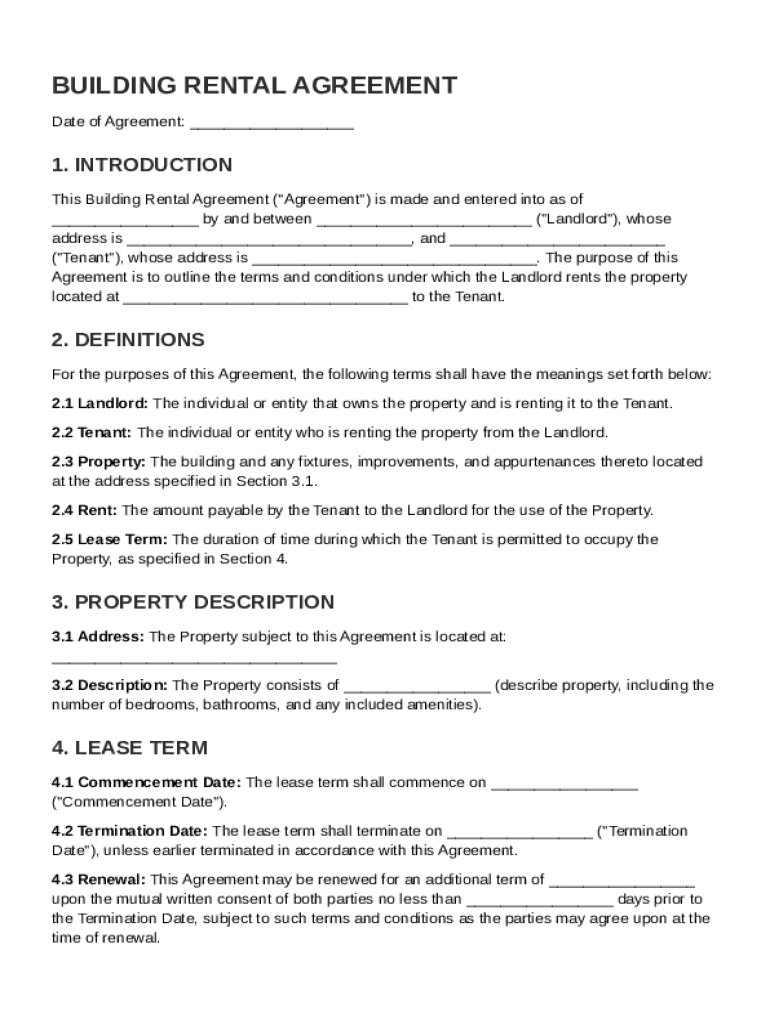







Definition & Meaning
A Building Rental Agreement Template is a standardized form that outlines the terms and conditions under which a property will be rented between a landlord and a tenant. This document serves as a legal contract that helps protect the rights and responsibilities of both parties throughout the rental period. It typically includes details such as rent payment obligations, duration of the lease, and property maintenance requirements. By structuring these essentials, the template ensures clarity and minimizes disputes.
Key Terms Defined
- Landlord: The owner of the property who is renting out space.
- Tenant: The individual or entity renting the property from the landlord.
- Lease Term: The duration of time for which the rental agreement is valid, often defined in months or years.
Key Elements of the Building Rental Agreement Template
A comprehensive Building Rental Agreement Template includes several crucial components to ensure legal protection and clear expectations for both parties.
Essential Clauses to Include
- Property Description: Details of the rental property, such as location, size, and permitted use.
- Rent and Payment Details: Amount of rent, due dates, acceptable payment methods, and any late fees.
- Security Deposit: Amount required upfront, conditions for its return, and situations leading to forfeiture.
- Maintenance and Repairs: Responsibilities of both landlord and tenant regarding upkeep and repair obligations.
Additional Considerations
- Alteration Restrictions: Specifies any limitations on modifications that tenants can make to the property.
- Termination Conditions: Conditions under which either party can terminate the agreement prior to the expiration of the lease term.
- Governing Law: Identifies the state laws that will govern the agreement.
Legal Use of the Building Rental Agreement Template
The legal enforceability of a Building Rental Agreement Template is a critical consideration for prospective landlords and tenants.
Ensuring Compliance
- Legally Binding Nature: When executed properly, the template creates a binding contract under the ESIGN Act, ensuring obligations are upheld.
- Authentication: Parties may utilize electronic signature solutions to secure agreements, keeping them compliant with applicable legal standards.
Additional Legal Safeguards
- Review by Legal Counsel: Consulting with a lawyer can ensure the agreement adheres to state-specific laws and includes necessary legal coverages.
- Use of Digital Platforms: Services like DocHub provide a secure and simple environment to edit and execute these agreements digitally.
How to Use the Building Rental Agreement Template
Using a Building Rental Agreement Template effectively involves several key steps, from preparation to execution.
Step-by-Step Instructions
- Gather Information: Assemble details about the property, lease term, rent amount, and specific terms you want to include.
- Edit the Template: Insert the gathered information into the placeholder sections of the template, ensuring all fields reflect the current arrangement.
- Review for Accuracy: Double-check all entries for accuracy and completeness to prevent future disputes.
- Share for e-Signatures: Use DocHub to send the finalized document to all parties for electronic signing, verifying authentication through OAuth 2.0.
- Store the Agreement: Once signed, store copies securely on cloud storage like Google Drive or hard drive for easy access.
State-Specific Rules for the Building Rental Agreement Template
Different states in the U.S. have varying regulations governing rental agreements and tenant-landlord laws.
Examples of State Variations
- Security Deposit Limits: Some states cap the amount a landlord can charge as a security deposit.
- Notice Period for Termination: The required notice period for ending a lease can vary significantly between jurisdictions.
- Late Fee Regulations: Certain states have strict rules about how much can be charged for late rent payments.
Navigating Local Regulations
- Refer to State Law: Ensure compliance with local regulations by consulting state-specific landlord-tenant laws.
- Template Modifications: Consider making state-specific alterations to the standard template or consulting a legal professional for guidance.
How to Obtain the Building Rental Agreement Template
Acquiring a Building Rental Agreement Template can be done through multiple channels, ensuring ease of access for landlords and tenants alike.
Acquisition Methods
- Online Platforms: Websites like DocHub offer downloadable templates that can be edited directly online.
- Legal Stationers: Office supply stores may provide physical copies of standard rental agreements.
- Legal Professionals: Lawyers specializing in real estate can provide customized templates.
Benefits of Digital Templates
- Ease of Modification: Digital versions allow for seamless customization and updating as required.
- Electronic Distribution: Facilitates easy sharing and signing through email or cloud-based services.
Examples of Using the Building Rental Agreement Template
The practical application of a Building Rental Agreement Template can vary by the nature of the rental scenario and parties involved.
Practical Scenarios
- Residential Rentals: Used for leasing apartments or houses to individual tenants or families.
- Commercial Leases: Tailored for businesses renting office space or retail locations.
- Vacation Rentals: Adjusted agreements for short-term property rentals on a seasonal basis.
Case Study Insight
- Urban Leasing: In metropolitan areas, landlords may include clauses about subletting and rent control considerations.
- Suburban Use: In less densely populated areas, agreements might emphasize landscaping and garden maintenance responsibilities.


