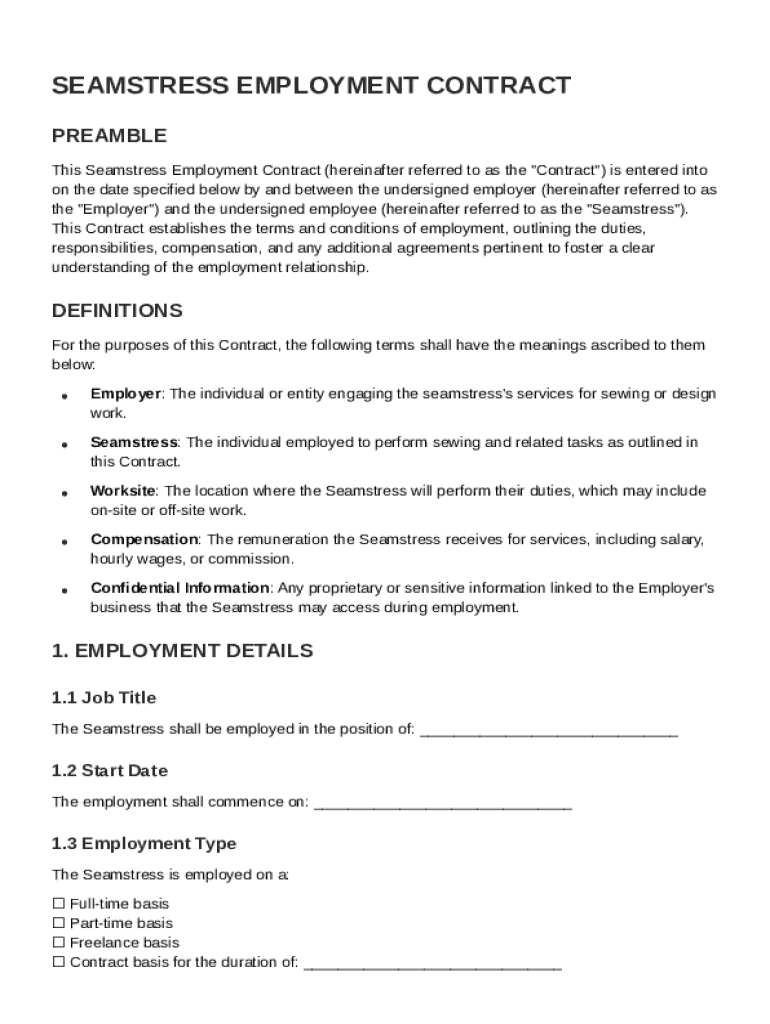







Definition & Meaning
A Seamstress Employment Contract Template is a formal document that outlines the terms and conditions of employment between a seamstress and their employer. This contract serves to establish clear expectations and responsibilities for both parties. Critical components of the template typically include the scope of work, salary and benefits, working hours, confidentiality clauses, intellectual property rights, termination conditions, dispute resolution mechanisms, and applicable governing laws.
Importance of Clearly Defined Terms
Having clearly defined terms in the contract is essential for preventing misunderstandings and disputes. It ensures that both the employer and the seamstress are aware of their obligations and rights. In the U.S., this contractual agreement can help mitigate legal issues by providing a reference point for employment-related disputes.
Legal Framework
Employers in the United States must ensure that the contract complies with federal and state labor laws. This includes adhering to regulations about minimum wage, overtime pay, and specific local laws that may affect the terms within the contract. The template must be adaptable to ensure compliance with varying state legislations.
Key Elements of the Seamstress Employment Contract Template
The Seamstress Employment Contract Template encompasses several vital components necessary for a comprehensive agreement.
Job Responsibilities
Detailing the seamstress's job responsibilities helps set clear expectations for daily tasks. This section should encompass all duties the seamstress is expected to perform, whether they pertain to repairs, alterations, or creating new garments.
Compensation and Benefits
This section should articulate the monthly or hourly rate, payment frequency, and any additional benefits such as health insurance or paid time off. Clear financial terms are crucial for maintaining a transparent compensation system between the employer and the employee.
Confidentiality Obligations
Since seamstresses may work with proprietary designs and client information, confidentiality clauses protect the employer's business interests. This clause should outline what constitutes confidential information and the consequences of breaches.
Steps to Complete the Seamstress Employment Contract Template
Creating a complete and accurate employment contract involves several steps to ensure all necessary information is included.
-
Initial Meeting: Both parties should meet to discuss and negotiate the terms and conditions. It's important to understand each other's expectations and reach a mutual agreement on key points.
-
Drafting the Contract: Using the employment contract template, fill out each section based on the negotiated terms. Be meticulous about details to avoid ambiguities.
-
Review by Legal Counsel: Employers should have the draft reviewed by a legal professional to ensure compliance with state and federal laws. This step is crucial for identifying any legal oversights.
-
Final Review and Signing: Both parties should review the final draft together to confirm all terms are accurately represented. Once agreed upon, both the employer and the seamstress should sign the contract to make it legally binding.
Legal Use of the Seamstress Employment Contract Template
The contract must be used within the boundaries of U.S. employment law to ensure validity.
Compliance with Employment Laws
Employers should adhere to regulations stipulated by the Fair Labor Standards Act (FLSA) regarding wage standards, child labor laws, and overtime pay. Ensuring the template complies with these regulations helps prevent future legal complications.
Protection of Intellectual Property
For employers, including clauses on intellectual property can secure their designs and creative assets from unauthorized use. Seamstresses, by signing, agree not to replicate or use these designs outside the scope of their employment.
Who Typically Uses the Seamstress Employment Contract Template
Different entities might utilize this template based on their hiring needs.


Tailoring and Fashion Businesses
Small tailoring shops and larger fashion houses frequently employ seamstresses and therefore have a steady need for such contracts. These businesses benefit from clear contract terms to ensure consistency in production and service quality.
Freelancers and Independent Contractors
Independent seamstresses who work on a freelance basis or take on short-term projects with various clients can use these contracts to formalize the details of each engagement. This structure helps protect against discrepancies in payment and workload distribution.
Important Terms Related to Seamstress Employment Contract
Several essential terms are frequently encountered in the Seamstress Employment Contract Template.
- Non-Compete Clause: Prevents the seamstress from working with competing businesses within a defined timeframe post-employment.
- Probationary Period: An introductory phase of employment where the employer assesses the seamstress's skills and suitability for the position.
- Termination Clause: Outlines the conditions under which either party can terminate the employment contract, including required notice periods and severance packages.
Variations in Terms
Different states might impose varying interpretations of these terms. For instance, certain locations may limit the enforceability of non-compete clauses due to their impact on employment opportunities.
Business Types that Benefit Most from Seamstress Employment Contract Template
Several types of businesses stand to benefit significantly from utilizing the Seamstress Employment Contract Template.
Startup Fashion Boutiques
Emerging fashion businesses can leverage these contracts to outline clear expectations from the start, allowing them to scale operations efficiently with a stable workforce.
Costume and Uniform Production Companies
Companies specializing in costume or uniform production can consistently maintain high standards and efficiency through clear employment contracts, leading to smoother project execution and client satisfaction.
By structuring the contract around these elements, both parties can achieve a balanced and transparent professional relationship, safeguarding their respective interests.