







Definition and Meaning
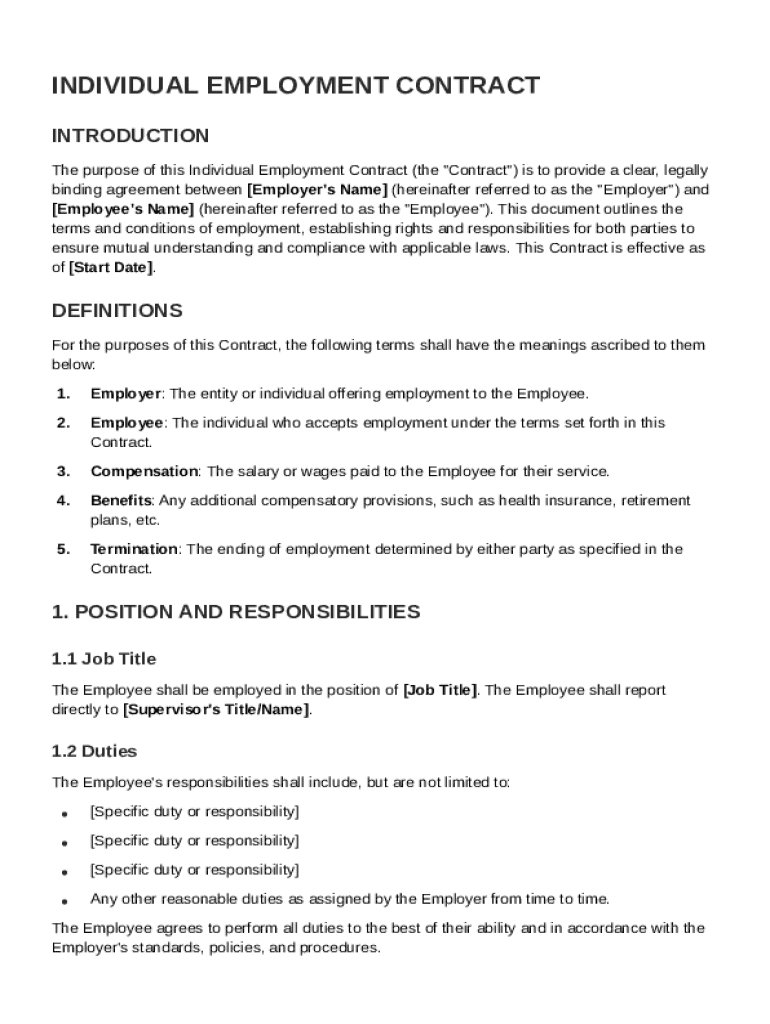
The Individual Employment Contract Template is a formal document that establishes a legally binding agreement between an employer and an employee. It outlines all the critical aspects of the employment relationship, such as job responsibilities, compensation, benefits, work schedules, confidentiality obligations, and intellectual property rights. By defining these terms, the contract ensures mutual understanding and compliance with applicable laws between both parties.
Key considerations in understanding this document include its role in detailing the terms of employment, which helps in preventing misunderstandings and potential disputes. It serves as a reference point for both parties, thereby ensuring transparency and fairness. This template is especially significant in formalizing the employment arrangement, thus ensuring both parties are fully aware of their rights and responsibilities.
Key Elements of the Individual Employment Contract Template
An effective Individual Employment Contract Template comprises several essential components that clearly outline the terms and conditions of the employment relationship.
- Job Responsibilities: Details the tasks and duties that the employee is expected to perform, helping to establish performance standards.
- Compensation and Benefits: Specifies the salary structure, bonuses, and additional benefits such as health insurance, retirement plans, and other perks.
- Work Schedule: Outlines the expected working hours, including any flexibilities or overtime arrangements.
- Confidentiality and Intellectual Property: Includes clauses that protect company information and establish ownership of any work or inventions created by the employee.
- Termination Conditions: Describes the conditions under which either party can terminate the employment, including notice periods and severance terms.
- Dispute Resolution Process: Provides mechanisms for resolving any disputes that may arise, often including arbitration or mediation clauses.
- Governing Law: States which jurisdiction's laws will govern the contract, which is crucial for interpreting contract terms and handling disputes.
This detailed breakdown is essential to ensure that both parties have clear expectations and legal protections.
How to Use the Individual Employment Contract Template
Utilizing the Individual Employment Contract Template effectively requires understanding each section's intent and filling it out accurately to reflect the agreed-upon terms.
- Review All Sections: Begin by carefully reading through the entire template to understand the required information.
- Customizing for Specific Roles: Adjust sections such as job responsibilities and compensation to suit the particular role and individual.
- Legal Consultation: It can be beneficial to consult with a legal expert to ensure compliance with employment laws and to incorporate any necessary clauses.
- Mutual Agreement: Discuss the terms with the employee to ensure mutual understanding and agreement on all aspects.
- Finalization: Upon reaching an agreement, both parties should sign the document to formalize the contract.
By following these steps, employers and employees can ensure the Individual Employment Contract accurately represents their agreement, thereby providing clarity and legal protection.
Legal Use of the Individual Employment Contract Template
The Individual Employment Contract Template must adhere to legal standards to be enforceable. It is crucial to include specific legal language to protect the rights of both the employer and employee.
- Compliance with Employment Laws: Ensure that the contract complies with both federal and state labor laws, which can affect elements such as minimum wage and working conditions.
- Non-Discrimination Clauses: Include language that complies with anti-discrimination laws, protecting against hiring and employment discrimination.
- At-Will Employment Statements: Often, contracts are structured to reflect at-will employment, allowing either party to terminate the employment for any lawful reason.
Proper legal usage of the template mitigates the risk of disputes and ensures that the employment agreement is both fair and lawful.
Steps to Complete the Individual Employment Contract Template
Filling out the Individual Employment Contract Template involves a systematic approach to ensure that all required information is captured correctly.
- Gather Necessary Information: Collect personal details of both the employer and employee, job title, and start date.
- Define Job Scope and Duties: Precisely detail the role and responsibilities to avoid ambiguity.
- Outline Compensation Package: Clearly state salary details, payment frequency, and any bonuses or incentives.
- Draft Key Policy Clauses: Develop clauses related to confidentiality, IP rights, and any additional company policies that must be adhered to.
- Pen Down Termination Provisions: Describe the conditions and processes associated with ending the employment relationship.
- Review and Revise: Ensure all sections align with company policy and legal requirements. Review for clarity and consistency.
- Final Discussion with Employee: Go over the contract with the employee to ensure understanding and agreement.
- Signature and Storage: Once completed, both parties should sign the contract, and a copy should be securely stored by both the employer and employee.
Completing these steps ensures that the contract is comprehensive and legally sound.
Who Typically Uses the Individual Employment Contract Template
The Individual Employment Contract Template is utilized across a variety of settings to formalize employment agreements.
- Businesses and Corporations: Companies often use this template when hiring to ensure a clear understanding of the employment terms.
- HR Departments: Human Resources professionals employ these contracts to standardize the hiring process and manage compliance.
- Legal Advisers: Attorneys might use the template as a basis for creating personalized employment contracts for clients.
- Small Business Owners: Entrepreneurs and startups find this template particularly useful for formalizing employment terms with new hires.
Understanding who uses these templates can help contextualize its application and importance within different organizational structures.


Examples of Using the Individual Employment Contract Template
Real-world application of the Individual Employment Contract Template provides invaluable insight into its flexibility and utility.
- Tech Startups: In rapidly growing industries, such as technology, companies utilize these contracts to clearly delineate roles in fast-paced work environments.
- Healthcare Sector: Hospitals and clinics employ detailed contract templates to ensure compliance with specific regulatory standards and clearly defined job roles.
- Educational Institutions: Schools and universities use contracts to outline academic, administrative roles, and ensure alignment with educational policy.
- Freelancers and Consultants: Even for non-traditional employment relationships, simplified versions of this template can clearly define project terms and expectations.
Each example underscores the adaptability of the contract template to different employment contexts, from traditional office roles to complex industry-specific positions.


