






Definition & Meaning
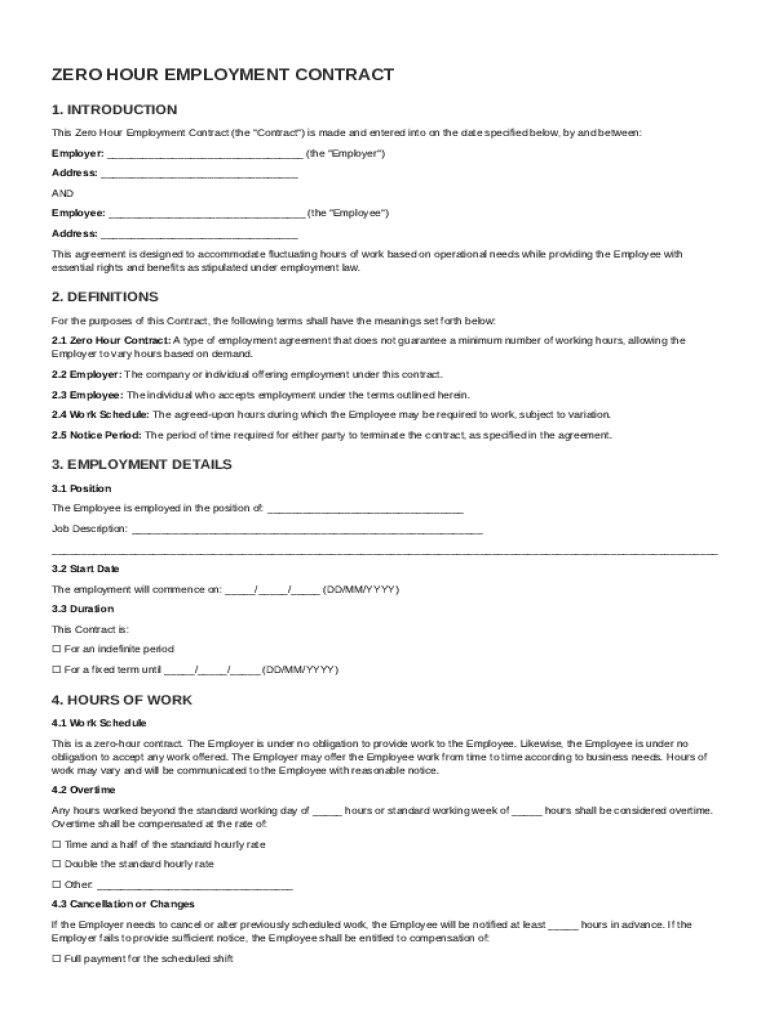
A Zero Hour Employment Contract Template is a legal document that establishes an employment relationship between an employer and a worker where there are no guaranteed minimum working hours. This type of employment contract is particularly designed to offer maximum flexibility to both parties, allowing employers to adjust hours based on workload and labor requirements. In return, employees have the freedom to accept or decline shifts as they prefer, aligning their availability with personal commitments.
Key Features
- Variable Working Hours: Employees under a zero hour contract may not have regular or predictable working hours. Instead, work is offered as needed, and employees can choose whether to accept it.
- Flexibility: Provides significant adaptability for businesses that experience fluctuating demand, as well as for employees seeking non-traditional work schedules.
- Non-Exclusivity: Employees can work for multiple employers since there are no guaranteed hours or exclusivity requirements.
How to Use the Zero Hour Employment Contract Template
Using a Zero Hour Employment Contract Template involves several crucial steps to ensure it is properly customized and legally sound. The template can be adapted to meet the specific needs of the employer and employee, covering essential provisions and clauses.
Customization Steps
- Download the Template: Obtain a reliable and legally sound template that can be modified to meet your specific requirements.
- Insert Employer and Employee Details: Provide complete details about the employer and employee to ensure clarity on the parties involved.
- Define Job Role and Responsibilities: Clearly outline the duties and tasks expected of the employee to avoid ambiguity.
- Specify Compensation Details: Include information on pay rates, including any potential bonuses or overtime rates.
- Outline Work Conditions: Address conditions such as place of work, any required trainings, and availability expectations.
Key Elements of the Zero Hour Employment Contract Template
Several core components must be carefully included in a Zero Hour Employment Contract to protect the interests of both parties and prevent future disputes.
Core Sections
- Definitions: Clarifying key terms used within the document to avoid misinterpretations.
- Employment Details: General information regarding the start date, position, and probationary period.
- Compensation and Benefits: Specifics on the hourly wage, payment frequency, and any benefits provided.
- Termination Process: Guidelines and notice requirements if either party decides to end the contract.
- Confidentiality and Non-Disclosure: Provisions to protect sensitive company information from unauthorized dissemination.
How to Obtain the Zero Hour Employment Contract Template
Acquiring a Zero Hour Employment Contract Template requires accessing reliable legal resources or platforms that provide customizable templates specifically designed for employment contracts.
Sources
- Legal Service Providers: Many online platforms offer downloadable contract templates that can be tailored to meet your company's requirements.
- Human Resource Software: Some HR management software includes standard legal templates as part of their service offerings.
- Professional Legal Advice: Engaging with an employment lawyer to draft a custom template designed to fit specific business needs.
Important Terms Related to Zero Hour Employment Contract Template
Understanding the terminology used in a Zero Hour Employment Contract is crucial for both drafting and comprehending the legalities involved.
Common Terms
- Gig Economy: The system of employment characterized by short-term, flexible work arrangements, often seen in zero hour contracts.
- On-Call Work: A situation where the employee is only required to work when specifically called upon by the employer.
- Non-Exclusivity Clause: Allows employees to work for other employers without breaching the contract terms.
Legal Use of the Zero Hour Employment Contract Template
Legal compliance is essential when utilizing a Zero Hour Employment Contract Template. Both federal and state laws impact how these contracts can be used and enforced.
Compliance Considerations
- Fair Labor Standards Act (FLSA): Ensure adherence to minimum wage, overtime, and recordkeeping standards under U.S. law.
- Anti-Discrimination Laws: Contracts must comply with federal laws prohibiting employment discrimination based on race, color, religion, sex, or national origin.
- State-Specific Regulations: Each state may have additional rules regarding at-will employment and notification requirements.
Examples of Using the Zero Hour Employment Contract Template
Zero Hour Employment Contracts are utilized across various industries, especially where workloads are unpredictable or seasonal.
Industry Applications
- Retail and Hospitality: Businesses may use zero hour contracts to align staffing levels with variable customer demand.
- Event Management: Companies requiring flexibility during peak event seasons or festivals.
- Healthcare: Employing support staff that can be called in on short notice due to varying patient volumes.
State-Specific Rules for the Zero Hour Employment Contract Template
Labor laws vary significantly across states, impacting the enforceability and legal requirements of Zero Hour Employment Contracts.
Regional Considerations
- California: Stringent worker protection laws may impose restrictions on zero hour employment practices, requiring careful contract drafting.
- New York: Employers should ensure compliance with predictive scheduling legislation affecting certain sectors.
- Texas: Generally allows greater flexibility for employers, although federal standards still apply.
Versions or Alternatives to the Zero Hour Employment Contract Template
While Zero Hour Employment Contracts may be suitable for some scenarios, there are alternative employment arrangements that businesses might consider.
Alternatives
- Fixed-Term Contracts: Offer a set duration of employment, ideal for projects or seasonal work with a clear end date.
- Part-Time Contracts: Provide employees with regular hours, albeit fewer than full-time standards, offering more predictability than zero hour contracts.
- Freelancer Agreements: Useful in the gig economy for workers providing services on a freelance basis, emphasizing deliverables over hours worked.