






Definition and Meaning
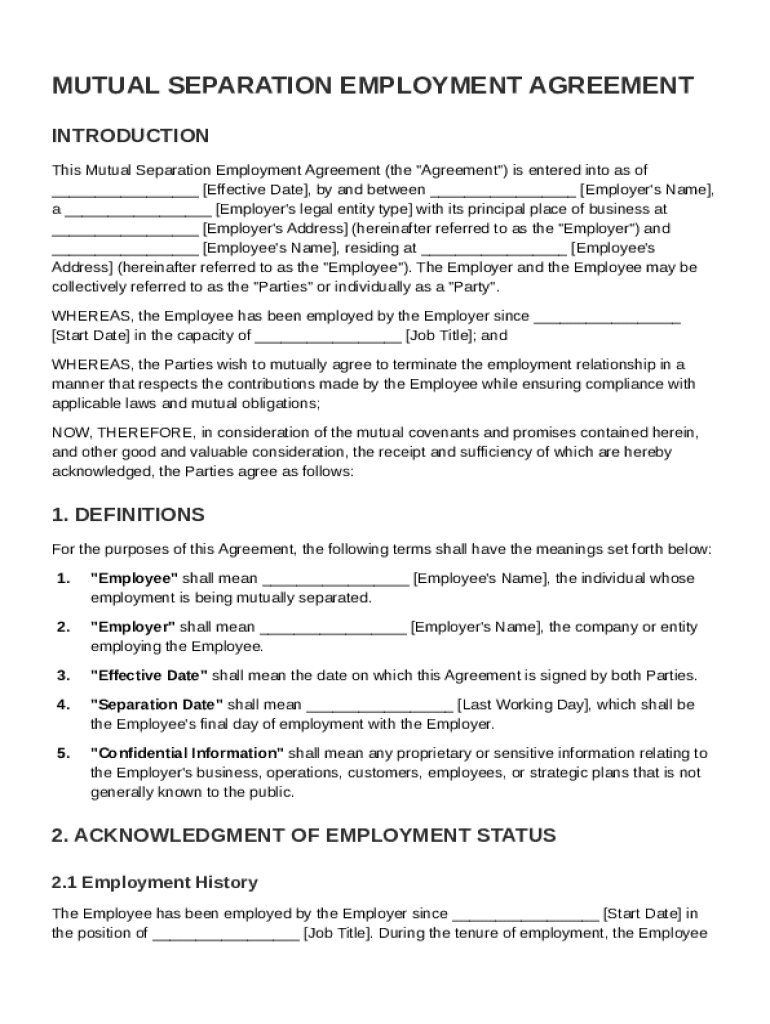
A Mutual Separation Employment Agreement Template is a formal document that outlines the terms and conditions under which both an employer and an employee agree to end their professional relationship amicably. This agreement aims to ensure that the termination is mutually beneficial, reducing the risk of future disputes or claims. It typically includes details on final compensation, benefits, confidentiality obligations, and the return of company property. The intent is to facilitate a smooth transition for both parties without attributing the separation to misconduct or performance issues.
Key Elements of the Mutual Separation Employment Agreement Template
The Mutual Separation Employment Agreement Template consists of several critical elements that ensure a comprehensive understanding and agreement between the employer and employee:
- Definitions and Acknowledgments: Clarifies the employment status and roles of the parties involved.
- Terms of Separation: Specifies final pay details, benefits, and any severance packages.
- Confidentiality Obligations: Ensures both parties maintain discretion regarding company information.
- Release of Claims: Outlines any waivers of potential future legal claims against the other party.
- Return of Company Property: Details the items that must be returned to the employer upon separation.
- Non-Disparagement Clauses: Agreements not to make harmful or defamatory statements about each other post-separation.
- Governing Law and Miscellaneous Provisions: Specifies the legal jurisdiction and other terms guiding the agreement.
Steps to Complete the Mutual Separation Employment Agreement Template
Completing the agreement involves several steps to ensure all terms are agreed upon and documented accurately:
- Gather Necessary Information: Collect essential details such as employment history, compensation, and benefits.
- Draft Initial Agreement: Complete a draft of the mutual separation terms including financial components and confidentiality clauses.
- Review and Negotiate: Both parties should review the draft to ensure it reflects the agreed terms and negotiate any changes if necessary.
- Final Review by Legal Counsel: Have legal professionals review the document to ensure compliance with employment laws.
- Signatures and Finalization: Both parties sign the agreement, making it legally binding once executed.
Legal Use of the Mutual Separation Employment Agreement Template
The agreement serves as a legal document that protects both the employer and the employee by clearly defining the terms of the separation:
- Ensures Compliance: Adheres to federal and state employment laws, mitigating legal risks.
- Protects Confidentiality: Legally binds both parties to maintain confidentiality of sensitive information.
- Prevents Future Claims: By outlining a waiver of claims, the agreement can prevent potential future lawsuits related to the termination.
- Facilitates Dispute Resolution: With clear terms outlined, any future disputes are easier to resolve under the guidance of the agreement.
Important Terms Related to the Mutual Separation Employment Agreement Template
Understanding specific terms within the agreement is crucial for accurate interpretation and enforcement:
- Amicable Termination: Indicates the separation is consensual and not due to negative performance or misconduct.
- Severance Package: A financial compensation provided to the employee upon leaving the company.
- Non-Disclosure Agreement (NDA): A clause that restricts sharing proprietary or confidential company information.
- Waiver of Claims: An agreement where the employee relinquishes the right to sue the employer over employment-related issues.
- Jurisdiction: Refers to the legal authority under which the agreement is governed.
Who Typically Uses the Mutual Separation Employment Agreement Template
The primary users of this template are parties involved in the employer-employee relationship looking to end their employment terms amicably:
- Human Resources Professionals: Facilitate the creation and execution of these agreements in alignment with company policy and legal standards.
- Legal Counsel: Provide advice on the legal implications and ensure the agreement is comprehensive and enforceable.
- Employees and Employers: Direct parties to the agreement seeking a structured and formal resolution to end their relationship.


Examples of Using the Mutual Separation Employment Agreement Template
Real-world scenarios illustrate how the template provides a structured approach to employment termination:
- Redundancy Scenarios: Companies reorganizing or facing financial difficulties may use the agreement to fairly conclude employment.
- Mutual Benefit Termination: When both parties agree that ending the relationship is in their best interests for career advancements or personal reasons.
- Avoiding Litigation: Employing the agreement to clear up misunderstandings related to employment termination and prevent legal disputes.
State-Specific Rules for the Mutual Separation Employment Agreement Template
State regulations influence the content and enforceability of the agreement:
- California Protections: Certain terms, such as non-compete clauses, may be unenforceable, requiring specific adjustments to agreements.
- Right-to-Work States: In regions that emphasize employment-at-will, the agreement must consider state-specific rights to terminate employment.
- State Tax Implications: How severance is taxed can vary by state, affecting the final terms of financial compensation in the agreement.
Software Compatibility
Ensuring that the template is compatible with document processing software facilitates ease of use:
- DocHub Compatibility: The template can be edited, shared, and signed using DocHub, which supports various file formats, enhancing accessibility and convenience.
- Integration with Google Workplace: Seamless import and export options with Google Drive and Gmail streamline workflow and document sharing.
This in-depth exploration outlines how the Mutual Separation Employment Agreement Template can address all essential aspects of ending an employment relationship effectively. Each section serves a key purpose, fostering understanding and agreement between both employer and employee.