






Definition and Meaning of a Rental Contract Template
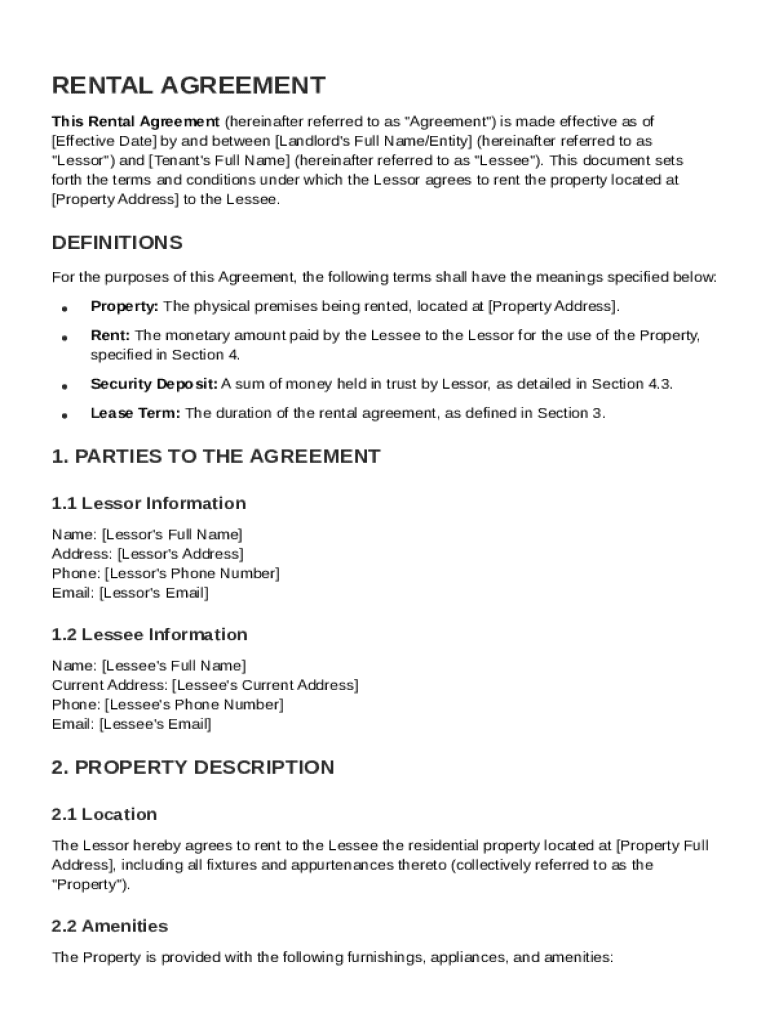
A rental contract template is a pre-formatted document designed to outline the terms and conditions of a rental agreement between a property owner (lessor) and a tenant (lessee). This template serves as a foundational document, ensuring all necessary components are present for a legally binding agreement. The template typically includes sections defining rent amounts, payment schedules, security deposits, maintenance responsibilities, lease duration, and termination conditions. By using a standardized template, both parties can ensure that their rights and obligations are clearly communicated and understood.
How to Use the Rental Contract Template
Using a rental contract template involves several crucial steps to ensure that the final document accurately reflects the agreed-upon terms between the lessor and lessee. Begin by identifying all applicable sections within the template, ensuring each component is tailored to suit the specific rental situation. This might involve filling in specific dollar amounts for rent and security deposits or adjusting the maintenance responsibilities based on the property's condition and amenities. Additionally, make sure to include any specific clauses that might be relevant to local regulations or the unique aspects of the property.
Steps for Customization
- Review Standard Terms: Familiarize yourself with the terms provided in the template, such as late payment penalties or renewal options.
- Input Specific Details: Fill in specifics like the property's address, the lessor's and lessee's names, and the rent amount.
- Adjust Clauses: Modify any sections to reflect mutually agreed adjustments, such as pet policies or utilities responsibilities.
- Consult Legal Guidelines: Ensure compliance with local rental laws by consulting legal resources or a lawyer.
- Finalize and Sign: Both parties should review the completed contract and sign it to make it legally binding.
Importance of a Rental Contract Template
A rental contract template is essential for maintaining clarity and protecting the interests of both the landlord and tenant. It serves to minimize misunderstandings, clearly delineates rights and obligations, and provides a legal document that can be referenced in the event of disputes. This template also saves time and effort, as it provides a structured format that is easy to fill out and adapt to specific circumstances.
Key Elements of the Rental Contract Template
A comprehensive rental contract template should include several key elements to ensure it effectively outlines the rental agreement:
- Property Details: Description of the property being rented, including its address and any specific included amenities.
- Lease Term: Duration of the rental agreement, with start and end dates clearly specified.
- Payment Terms: Stipulations for the rent amount, due dates, and acceptable payment methods.
- Security Deposit: Details on the deposit amount, conditions for its return, and instances that might justify deductions.
- Maintenance and Repairs: Allocation of responsibilities for property upkeep and procedures for reporting and addressing issues.
- Termination and Renewal: Conditions under which the lease may be terminated or renewed and any notice periods required.
Legal Use of the Rental Contract Template
The rental contract template serves as a legal document that enforces terms and conditions agreed upon by both parties. Adhering to legal standards is crucial to ensure the contract is enforceable in a court of law. Each section of the template should comply with applicable local, state, and federal rental laws. This may include provisions about tenant rights, landlord responsibilities, and permissible reasons for eviction. Landlords should ensure the contract does not violate fair housing laws, and tenants should be aware of their rights under the rental agreement.
Who Typically Uses the Rental Contract Template
Rental contract templates are primarily used by landlords and property managers who lease residential or commercial properties. However, tenants can also utilize these templates to understand potential lease agreements and negotiate favorable terms. The template is particularly beneficial for small property owners who may not have the resources to craft agreements from scratch. Real estate agents and legal professionals may also recommend using rental contract templates to clients seeking to formalize rental agreements.


State-specific Rules for the Rental Contract Template
Rental agreements can be subject to specific rules and regulations that vary from state to state in the United States. To ensure compliance, it is essential for landlords and tenants to be aware of and adhere to these differences:
- Security Deposit Limits: Some states cap the amount that can be charged for security deposits.
- Notice Requirements: States may have different requirements for the amount of notice needed for termination or entry into the property.
- Specific Clauses: Certain states mandate inclusion of specific clauses, such as those regarding bed bugs or lead paint disclosures.
Landlords should modify the rental contract template to align with these state-specific mandates to avoid legal complications.
Examples of Using the Rental Contract Template
The rental contract template is versatile and can be adapted for various types of rental situations. For instance:
- Residential Leasing: The template can be adjusted to address the needs of apartment rentals, house leases, or shared housing arrangements.
- Commercial Properties: With modifications, the template can be suited for commercial leases, including retail spaces or office buildings.
- Short-term Rentals: Landlords managing vacation rentals or short-term accommodations can adjust duration clauses and payment terms to accommodate their unique needs.
Adjusting the template according to the type of property ensures that the agreement remains relevant and useful to both parties involved.
Steps to Complete the Rental Contract Template
Completing a rental contract template involves several methodical steps, ensuring all necessary details are adequately addressed:
- Gather Information: Collect all relevant information, including personal details of both parties, property address, and agreed-upon terms.
- Fill in the Template: Enter the gathered information in the appropriate sections of the template.
- Review and Revise: Check each section for accuracy and completeness, making any necessary revisions to terms or conditions.
- Seek Legal Advice: Consider consulting a legal professional to review the contract for compliance with applicable laws.
- Execute the Agreement: Once all parties are satisfied with the content, sign and date the contract to make it official.
By following these procedural steps, parties can ensure that the rental agreement is thorough, comprehensible, and enforceable.