






Definition and Meaning of a Land Rental Agreement Template
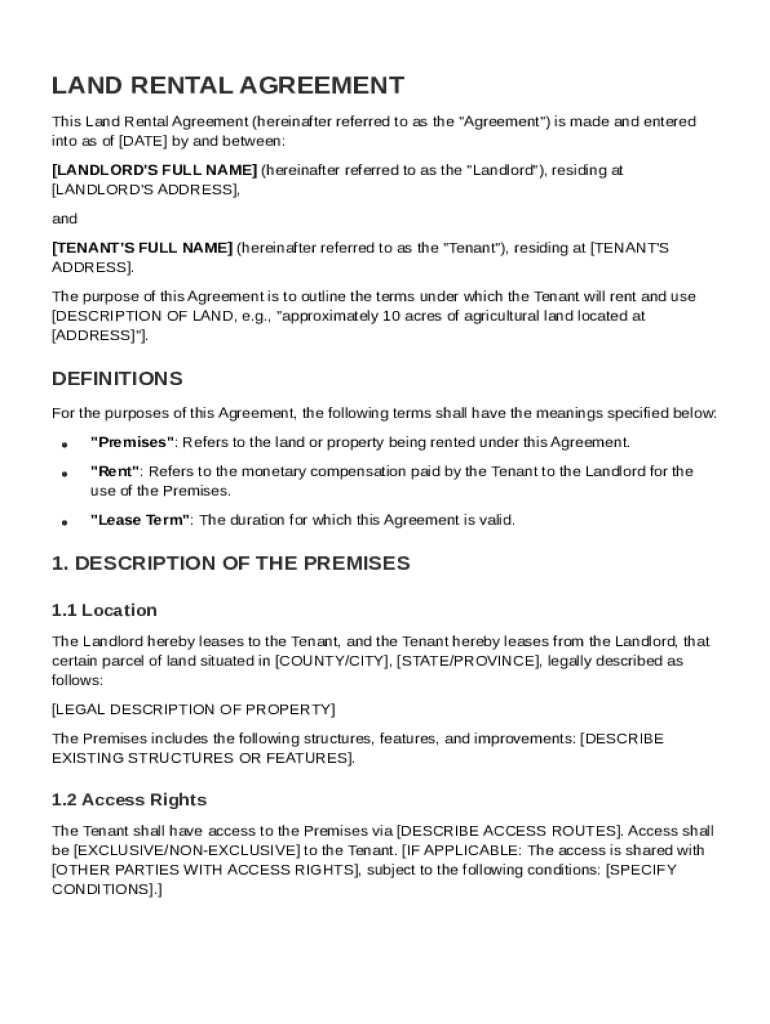
A Land Rental Agreement Template provides a standardized framework for drafting a lease agreement between a landlord and tenant for the use of land. This document defines key terms such as the rental duration, amount, payment structures, and permissible uses of the land, ensuring that both parties have a clear understanding of their responsibilities and rights. By utilizing a template, landlords and tenants can streamline the process of creating a legally sound agreement, reducing the need for costly legal assistance.
In practice, such templates often encompass detailed clauses covering maintenance obligations, security deposits, dispute resolution mechanisms, and termination conditions. Given the varied nature of land leasing, which can range from agriculture to the placement of temporary structures, the template can be customized to suit specific scenarios while maintaining adherence to relevant laws and regulations.
Key Elements of the Land Rental Agreement Template
Understanding the primary components of a land rental agreement is crucial for both landlords and tenants. The template typically includes:
- Identification of Parties: Clarity on the roles of the landlord and tenant, including contact information.
- Description of the Premises: Precise details about the location and size of the land being leased.
- Lease Terms: Specific duration of the lease, renewal options, and conditions for termination.
- Payment Details: Rent amount, due dates, and methods of payment, ensuring both parties agree on financial terms.
- Security Deposit: Requirements for deposits, including conditions under which it may be returned or forfeited.
- Permitted Use: Definition of allowable activities on the land, tailored to the type of lease and intended tenant usage.
- Maintenance Responsibilities: Outline of each party’s obligations to maintain the land and any structures present.
These elements provide the basis for a comprehensive agreement while allowing for flexibility to accommodate specific needs.
Steps to Complete the Land Rental Agreement Template
Filling out the Land Rental Agreement Template involves a series of methodical steps:
- Gather Necessary Information: Collect all relevant data about both parties, the property, and lease terms.
- Choose the Right Template: Select a template that best aligns with the intended use of the land.
- Fill Out Basic Details: Input information such as names, addresses, and contact numbers.
- Specify Lease Terms: Clearly state the start and end dates, as well as any options for renewal.
- Define Financial Arrangements: Detail the rent amount, deposit requirements, and payment schedule.
- Outline Usage and Responsibilities: Specify permitted activities, maintenance duties, and restrictions.
- Review and Customize: Evaluate the template for any jurisdiction-specific requirements or personal preferences, making necessary modifications.
- Consult a Legal Professional: Although templates can simplify the process, consulting with a legal expert can ensure legality and compliance.
- Sign and Execute: Once all parties have reviewed and agreed upon the terms, proceed to sign and date the document.
Following these steps ensures the creation of a well-drafted agreement that protects the interests of both parties.
State-Specific Rules for the Land Rental Agreement Template
The United States has diverse laws governing land rentals that can vary significantly from one state to another. Therefore, it is imperative to incorporate state-specific provisions into the template:
- Lease Terms: Certain states may impose limits on lease durations or automatic renewal provisions.
- Security Deposits: States often have specific regulations regarding the handling and return of security deposits, requiring adjustments in the agreement.
- Tenant Rights and Protections: Variations in tenant rights can affect clauses about eviction practices, disclosures, and notice periods.
- Maintenance and Repairs: Obligations surrounding maintenance can differ, impacting who must address specific types of repair or upkeep.
- Property Use Restrictions: Some states have stricter regulations on land use, affecting what tenants may legally do with the property.
Consulting state and local laws ensures the agreement remains enforceable and in compliance with regional legal mandates.
Legal Use of the Land Rental Agreement Template
The legal enforceability of a Land Rental Agreement Template derives from its adherence to contract law principles. In the context of U.S. law:
- Offer and Acceptance: Both parties must agree to the terms for the contract to be legally binding.
- Consideration: The rent payment serves as the consideration that validates the contract.
- Legal Purpose: The agreement must not contravene any state or federal laws, particularly in terms of land usage.
- Competency of Parties: Both the landlord and tenant must have the legal capacity to enter into a contract.
Misinterpretations and disputes can be minimized by ensuring that these elements are clearly defined and understood by both parties.
Examples of Using the Land Rental Agreement Template
Land Rental Agreement Templates are versatile tools used in a myriad of scenarios:
- Agricultural Leasing: Farmers may lease land for cultivation, requiring specific terms about crop rights and farming activities.
- Commercial Use: Businesses might lease land for temporary structures or events, necessitating clauses on commercial permits and liabilities.
- Residential Use: Some agreements are drafted for residential mobile homes or temporary dwellings placed on leased land.
- Recreational Purposes: Contracts can also cover recreational activities such as hunting or camping, focused on activity-specific terms and legal protections.
Illustrating these examples helps prospective users identify the utility of a template relative to their distinct needs.
Software Compatibility and Integration
DocHub’s Land Rental Agreement Template is designed to seamlessly integrate with various software tools, enhancing its usability:
- Format Support: Compatible with multiple file formats, including DOC and PDF, catering to a wide range of digital preferences.
- Cloud Integration: Direct import from and export to platforms like Google Drive, ensuring smooth transitions and document management.
- Electronic Signature Capability: Allowing for legally binding digital signatures, saving time and physical resources.
- Collaboration and Sharing Features: Support for sharing and joint editing, vital for discussions between landlords and tenants.
These features position the template as a key resource in digitizing and simplifying the documentation process.
Collaboration and Editing Features on DocHub
DocHub's platform enhances the use of the Land Rental Agreement Template with powerful collaboration tools:
- Real-Time Editing: Allows multiple stakeholders to make simultaneous changes, ensuring updates are mirrored to everyone involved.
- Comment and Permission Management: Grant specific permissions for viewing or editing, with the option to comment on sections for feedback.
- Audit Trail: Provides a chronological log of edits and access, enhancing transparency and accountability.
- Annotating Tools: Highlight, comment, or make notes directly on the document, facilitating easy communication and agreement revisions.
These features foster a collaborative environment, making it a practical choice for agreements requiring input from various parties.