






Definition and Purpose of the Shaker Heights City School District Board
The Shaker Heights City School District Board is a governing body responsible for overseeing the operation and management of public schools within the Shaker Heights area. This board plays a crucial role in shaping the educational landscape by setting policies, approving curriculum changes, managing budgets, and making decisions on personnel matters. Their decisions align with state and federal educational mandates, ensuring that schools provide quality education to students in the district.
How to Use the Shaker Heights City School District Board
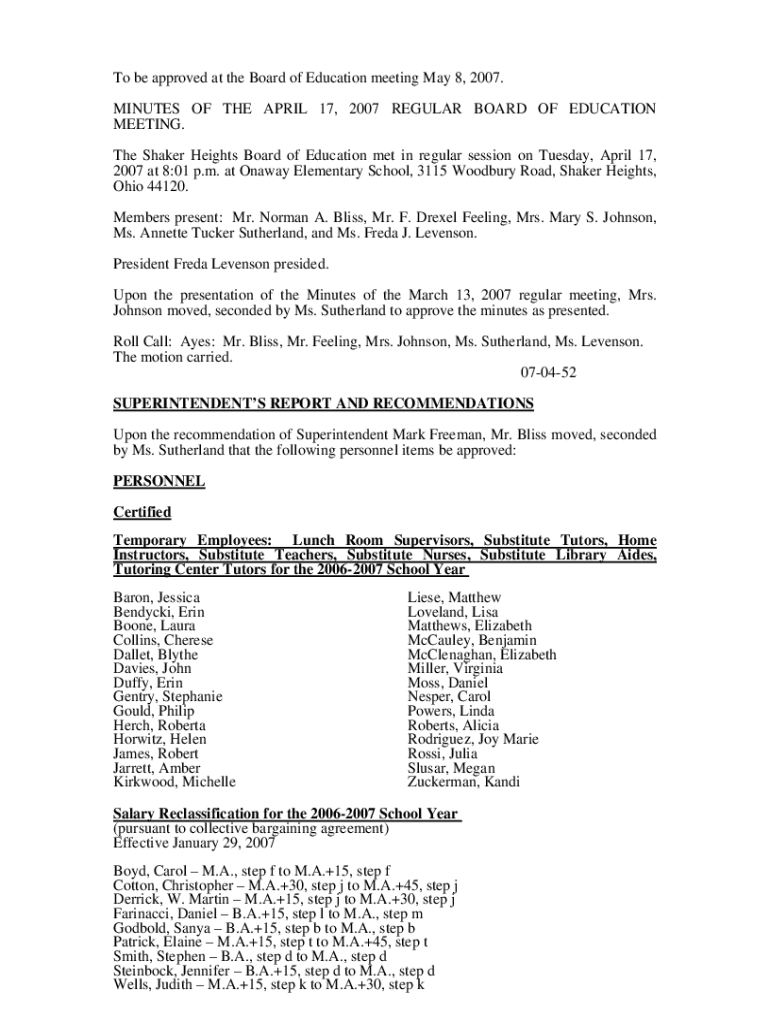
To effectively interact with the Shaker Heights City School District Board, stakeholders such as parents, staff, and community members can attend public meetings held regularly. During these sessions, attendees have the opportunity to voice concerns, offer suggestions, or gain insights into ongoing projects and decisions that impact the school district. The board's meeting minutes and agendas are available to the public for review, assisting in keeping the community informed and involved.
Steps to Engage with the Board
- Attend Meetings: Check the district’s website for the schedule of upcoming meetings.
- Review Agendas: Understand topics to be discussed and prepare any questions or statements.
- Engagement: Participate during the public comment period to express concerns or offer suggestions.
Important Terms Associated with the Board
- Reemployment Guidelines: Regulations that dictate the rehiring of staff, ensuring compliance with state employment laws.
- Tenure Recommendations: Proposals to grant permanent employment status to qualified teachers based on performance evaluations.
Legal Use and Compliance
The board operates under stringent legal frameworks set by Ohio law, which guides everything from personnel actions to fiscal management. Compliance with these laws ensures that all operations remain transparent and accountable. For instance, public discussions on employment and financial decisions must adhere to open meeting laws, allowing community oversight.
Key Elements of Board Meetings
Board meetings typically cover a variety of topics, such as:
- Personnel Actions: Decisions regarding hiring, tenure recommendations, and salary changes.
- Facility Management: Infrastructure projects like agreements for new developments or maintenance of existing properties.
- Student Achievements: Recognizing outstanding performance and progress in academics and extracurricular activities.
Obtain Access to Board Information
- Official Website: The primary source for agendas, minutes, and official statements.
- Public Records: Request access to documents for detailed insights on board decisions.
Community Impact and Scenarios
The board’s leadership significantly impacts various stakeholders:
- Parents: Engaging with the board can influence educational policies affecting their children's learning environment.
- Educators: Actions on tenure and reemployment affect career stability and growth.
- Residents: Decisions on fiscal matters impact local taxes and community resources.
Required Documentation for Interactions
When participating in or preparing for board meetings, it may be helpful to have:
- Notes and Questions: To articulate concerns during meetings effectively.
- Relevant Prior Documentation: Such as past meeting minutes, to reference ongoing issues or previous decisions.
Filing Deadlines and Important Dates
Staying informed about important dates is vital:
- Meeting Schedules: Regularly posted on the district's website, providing a timeline for participation.
- Public Comment Deadlines: Specific cutoffs for submitting comments or requests to address the board.
Form Submission Methods
To contribute formally to board proceedings, documents can be submitted through:
- Online Platforms: Via the district’s official website for digital submissions.
- Mail: Sending physical documents to the board's official mailing address for formal acknowledgment.
Who Issues and Manages the Board
The board itself, as an elected entity, oversees the management and administrative operations of its meetings and decisions. They ensure that their actions align with the policies set forth by educational authorities at both state and federal levels, with a commitment to fulfilling the educational needs of the community they serve.