







Definition and Meaning
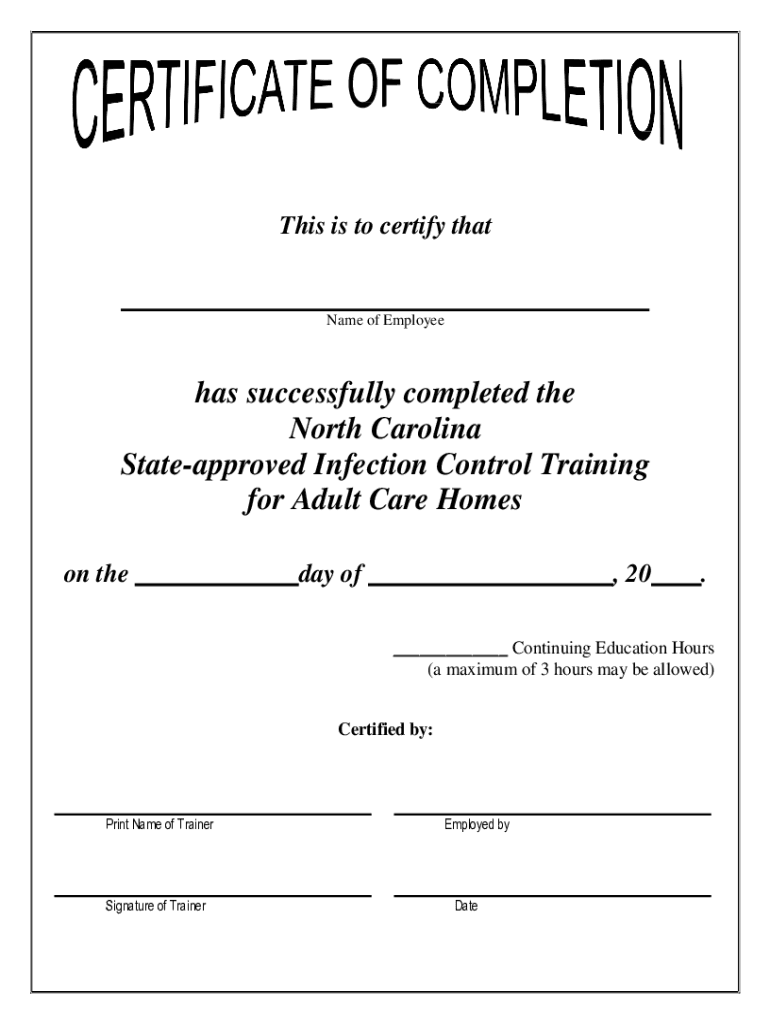
The NC DHSR ACLS: Infection Control Course Certificate of Completion - ncdhhs serves as an official document confirming that an individual has successfully completed the state-approved Infection Control Training for Adult Care Homes in North Carolina. This training is imperative for personnel working in environments where infection control practices are critical to ensure the health and safety of vulnerable populations, particularly in long-term care facilities.
- Purpose: The certificate validates that the holder has acquired the necessary knowledge and skills to implement effective infection control measures.
- Importance: It reflects compliance with North Carolina's regulatory requirements for infection control in adult care settings, which is essential for maintaining licensing and operational standards.
How to Obtain the Certificate
Acquiring the NC DHSR ACLS infection control certificate involves a structured process. It is crucial to follow these steps accurately to ensure timely receipt of your certification.
- Enroll in the Approved Course: Individuals must first enroll in a state-approved Infection Control Training program through recognized providers, such as community colleges or online education platforms offering tailored programs.
- Complete the Course: Attendees must participate in and successfully complete the entire training course, which typically includes modules on best practices, practical applications, and understanding regulatory compliance concerning infection control.
- Receive Evaluation: After completing the coursework, participants usually undergo an assessment to demonstrate their grasp of the subject matter.
- Issuance of Certificate: Upon successfully passing the assessment, the training provider issues the NC DHSR ACLS certificate, which may be delivered electronically or via standard mail.
Steps to Complete the Training
Completing the training necessary to earn the NC DHSR ACLS certificate involves specific, organized steps to ensure thorough understanding and compliance with infection control practices.
Course Enrollment
- Identify a state-approved training provider.
- Complete any required application or registration forms.
Participation Requirements
- Attend all sessions as mandated by the program.
- Engage in interactive elements, such as discussions or simulations, to enhance learning.
Assessment Completion
- Prepare for the final assessment by reviewing course materials.
- Take the assessment to evaluate your understanding and practical application of infection control methods.
Importance of the Certificate
The NC DHSR ACLS infection control certificate holds several key benefits for individuals working in adult care environments.
- Professional Credibility: It enhances the professional standing of care workers, demonstrating their commitment to maintaining high standards of infection control.
- Regulatory Compliance: Holding this certificate is often a requirement for employment in certain healthcare facilities, meeting state regulations.
- Improved Patient Outcomes: Knowledge of infection control practices contributes to better health outcomes and reduced transmission of infectious diseases among residents.
Key Elements of the Certificate
Understanding the key components associated with the NC DHSR ACLS certificate is crucial for effective completion and application.
- Training Date: The specific date when the training was completed is important for record-keeping and compliance verification.
- Trainer Information: Details about the certified trainer or institution that conducted the course are included, establishing authenticity.
- Certificate Format: The layout typically includes pertinent details like the participant's name, course completion confirmation, and any relevant registration numbers.
Legal Usage of the Certificate
The legal implications of the NC DHSR ACLS certificate should be understood by all holders to ensure proper usage and compliance.
- Employment Qualification: Many adult care homes require evidence of this training for hiring, aligning with state health mandates.
- Regulatory Inspection: Facilities may be subject to inspections where proof of infection control training is a focal point, underscoring the necessity of maintaining the certificate in a readily available format.
Examples of Certificate Utilization
The versatility of the NC DHSR ACLS infection control certificate extends to various scenarios, showcasing its practical application.
- Employment Applications: Candidates can present their certificate when applying for positions in adult care homes, enhancing their qualifications.
- Professional Development: It can be cited in resumes or professional profiles, highlighting the individual's ongoing commitment to education in infection control.
- Compliance Audits: Facilities can use the certificates for verifying compliance during audits or inspections conducted by health regulatory agencies.
Important Terms Related to the Certificate
Familiarization with specific terminology associated with the NC DHSR ACLS certificate is essential for understanding its context within the regulatory landscape.
- Infection Control Training: Refers to education focused on preventing the spread of infections within healthcare settings.
- Adult Care Homes: Residential facilities providing care for adults, especially those with health-related needs, where infection control is critical.
- Certification Compliance: The adherence to state regulations requiring such certificates for employment in specific roles within healthcare.
Adhering to proper training protocols and possessing the NC DHSR ACLS certificate significantly impacts individual employability and overall patient care quality within North Carolina's adult care facilities.




