






Definition & Meaning
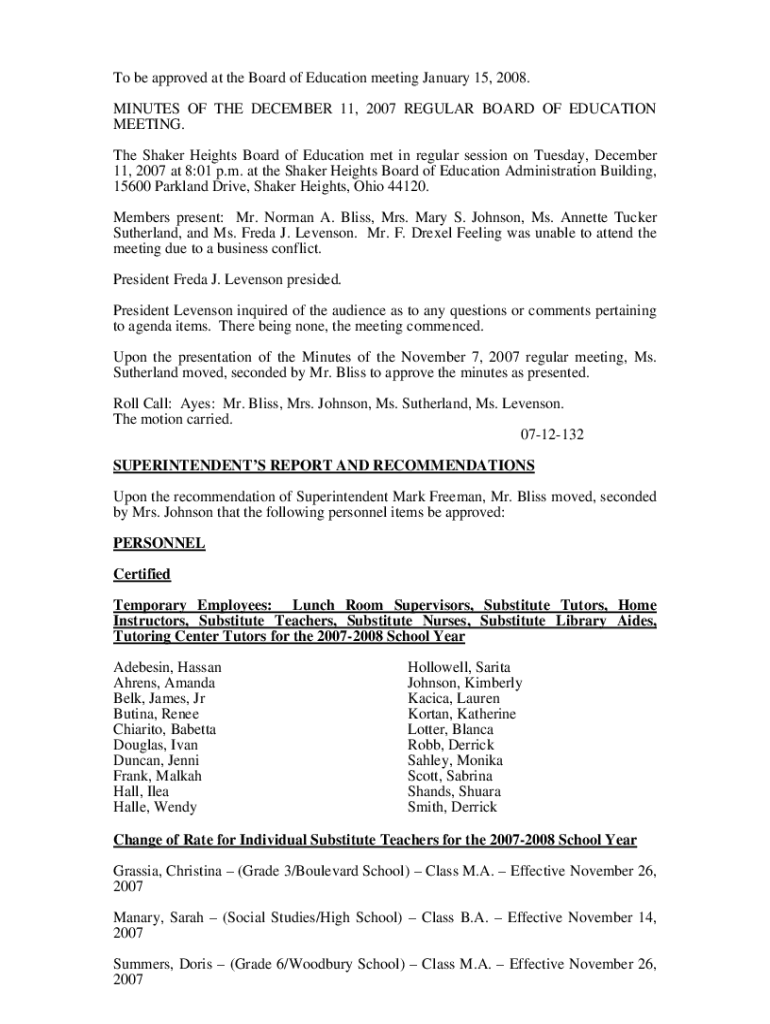
The "December 11, 2007 - Shaker Heights City School District" document refers to the minutes from a Shaker Heights Board of Education meeting held on this date. Minutes are official records documenting the discussions and decisions made during a meeting. They typically include attendance lists, notes on discussions, approvals, and official resolutions. In this context, the minutes likely cover policy decisions, financial matters, and administrative issues pertaining to the Shaker Heights City School District.
How to Use the December 11, 2007 - Shaker Heights City School District Document
- Review Board Decisions: Understand the decisions made by the Board of Education on various topics, such as financial allocations or personnel changes.
- Track Policy Changes: Keep updated on any policy changes or new resolutions passed that may affect school operations or guidelines.
- Verify Attendance and Participation: Check the attendance to ensure board members' and officials' participation in crucial decisions.
Steps to Complete the December 11, 2007 - Shaker Heights City School District Document Review
- Obtain the Document: Secure a copy from the school district's official channels or archives.
- Initial Overview: Begin with a broad review to get a general sense of the topics covered.
- Section Breakdown: Divide your focus among key areas – financials, policy changes, and resolutions.
- Highlight Decisions and Actions: Note any actionable decisions that may impact future district activities.
- Cross-Reference: Check against previous or subsequent meeting minutes for consistency and follow-up actions.
Key Elements of the December 11, 2007 - Shaker Heights City School District Document
- Attendance Records: Details of who was present and who was absent.
- Approval of Previous Minutes: Verification that prior meeting minutes were reviewed and accepted.
- Financial Reports: Information on the district’s finances, including budgets, expenditures, and financial planning.
- Resolutions and Recommendations: Decisions or suggestions made during the meeting regarding school operations.
- Policy Amendments: Changes to current policies, especially in areas like student harassment and acceleration.
Who Typically Uses the December 11, 2007 - Shaker Heights City School District Document
- District Administrators: For planning and decision-making processes.
- Teachers and Staff: To stay informed about changes that could affect their roles and classroom environment.
- Parents and Guardians: To be aware of decisions affecting their children’s education and school experience.
- Community Members: For insight into how the district is run and how their tax dollars are used.


Legal Use of the December 11, 2007 - Shaker Heights City School District Document
- Official Record: As an accurate record of the board’s actions, this document is legally recognized.
- Compliance Verification: To verify adherence to applicable laws and regulations.
- Public Access: Ensure compliance with transparency and public access laws regarding school district operations.
Important Terms Related to December 11, 2007 - Shaker Heights City School District
- Board of Education: Governing body responsible for making policy and financial decisions for the school district.
- Minutes: Written or typed documentation capturing the essence of meetings, noting who was in attendance and what was discussed and decided.
- Resolution: A formal expression of the decision or opinion of the board.
Examples of Using the December 11, 2007 - Shaker Heights City School District Document
- Policy Makers: Utilize the minutes to review past decisions when forming new policies.
- Auditors: Assess financial decisions against budgetary outcomes for accuracy and accountability.
- Historical Research: Examine past board meetings to understand long-term trends and strategies employed by the school board.
State-Specific Rules for the December 11, 2007 - Shaker Heights City School District Document
- Ohio Public Records Act: As a public record, these minutes must be accessible according to state law, ensuring transparency and public oversight.
- Education Laws and Guidelines: Must adhere to statewide educational laws, affecting topics like collective bargaining agreements and student policy changes.