






Definition & Meaning
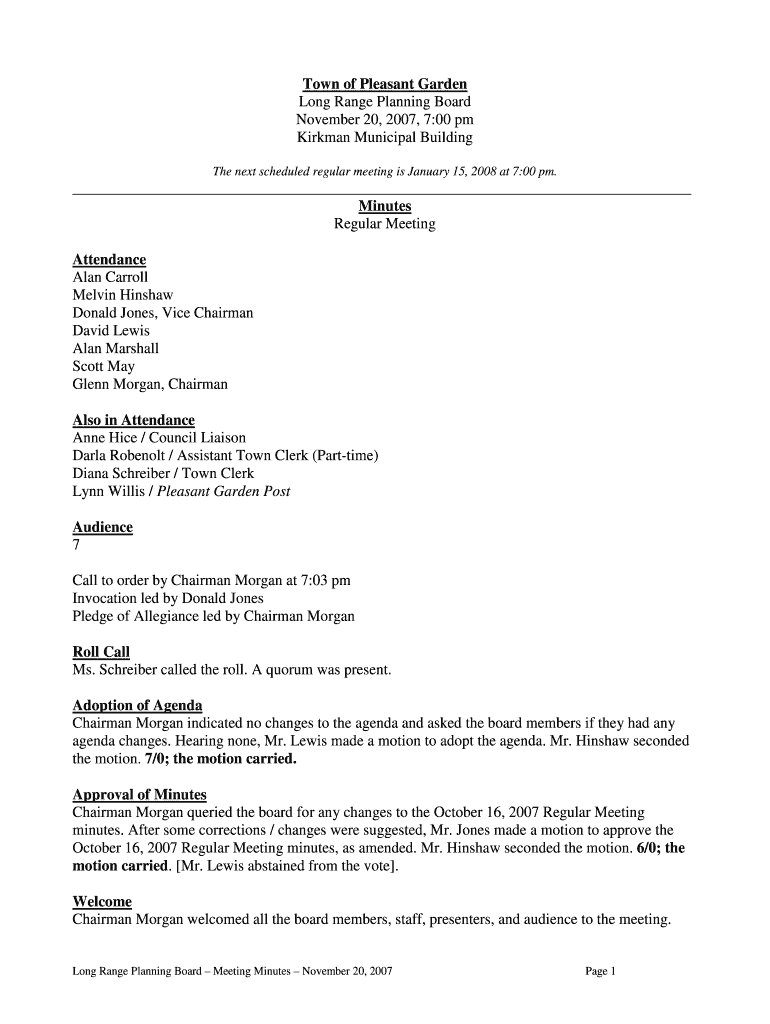
The Town of Pleasant Garden Long Range Planning Board's November session is a critical municipal event centered on discussing and planning future developmental activities within the community. This forum allows board members to deliberate on pressing issues such as property developments, infrastructure upgrades, and environmental management strategies. These meetings are instrumental in shaping sustainable growth models and ensuring that the town’s expansion aligns with both local and state regulations.
The main objective is to address and outline strategies for long-term development projects. Participants engage in conversations about urban planning, resource management, and safety measures. Additionally, the board emphasizes the importance of fostering effective communication between municipal departments and the town council to streamline decision-making processes.
Key Elements of the Meeting
The Long Range Planning Board meeting in November includes various elements crucial for efficient governance. Among these are the approval of prior meeting minutes, which ensures continuity and accountability. Updates on municipal property developments are also presented, providing transparency regarding ongoing projects.
Discussions further delve into environmental management practices, with presentations on stormwater management and wastewater treatment alternatives. These presentations by experts like Dr. Peter Rojeski offer insights into sustainable practices that the town may adopt. Attendees also address potential safety concerns in community areas, such as soccer fields, highlighting the need for risk assessments and preventative measures.
How to Use the Town of Pleasant Garden Long Range Planning Board November
Understanding the proceedings of the Long Range Planning Board meeting is essential for residents, municipal employees, and local businesses. Utilizing insights from these meetings involves actively participating in town hall discussions, offering feedback during public consultations, and staying informed about future development plans.
Residents can align their personal or business interests with the town’s strategic objectives by reviewing meeting notes and presentations. This proactive involvement not only empowers individuals but also enriches the feedback loop between the community and local government, ensuring the town's development reflects the collective vision and needs of its constituents.
Steps to Complete Any Necessary Documentation
For those required to submit documentation to the Long Range Planning Board, it is vital to adhere to outlined procedures to ensure submissions are considered valid and timely. This typically involves:
- Reviewing the meeting agenda and identifying any documents required.
- Preparing necessary reports or presentations in accordance with the topics scheduled for discussion.
- Submitting the documents electronically or in person before the deadline specified by the board.
- Confirming receipt of the submission and preparing to address any queries or follow-up questions the board may have during the meeting.
Important Terms Related to the Board Meeting
Understanding key terminologies used in the Long Range Planning Board meeting is vital for participants. Common terms include:
- Municipal Property Development: Refers to initiatives aimed at improving or expanding town-owned properties or facilities.
- Stormwater Management: Strategies implemented to control and use rainwater runoff to prevent flooding and maintain water quality.
- Wastewater Treatment: Methods employed to clean used water, making it safe for release into the environment.
Familiarity with these terms enables attendees to better comprehend discussions and contribute meaningfully to dialogues.
Legal Use of Meeting Outcomes
Outcomes from the Long Range Planning Board sessions have significant legal implications. Decisions made during these meetings can influence local ordinances, zoning laws, and environmental regulations. Understanding the legal ramifications of these outcomes is crucial for stakeholders, particularly those in real estate, construction, and environmental advocacy sectors.
Legal documents produced as a result of these meetings, such as new bylaws or amendments to existing regulations, must comply with state and federal standards. Misinterpretations or failure to comply can lead to legal disputes or penalties.
Who Typically Uses Information From the Meeting
Information extracted from the Town of Pleasant Garden Long Range Planning Board meeting serves multiple groups:
- Residents: To stay informed about upcoming changes in their community.
- Business Owners: To align business strategies with town developments and capitalize on new opportunities.
- Government Officials: For decision-making and policy formulation.
- Environmental Groups: To monitor ecological preservation efforts and advocate for sustainable practices.
Each group utilizes this information to better navigate the socio-economic landscape shaped by town planning decisions.
Examples of Using Meeting Outcomes
Stakeholders implement the findings and strategies from the planning board meetings in diverse ways. For instance, businesses may use insights on upcoming infrastructure projects to adjust their operations or marketing strategies to align with the developments. Residents might engage more actively in public hearings or volunteer for community projects that result from the meeting's outcomes.
Additionally, environmental groups can leverage detailed presentations on wastewater and stormwater management to advocate for or support specific sustainable initiatives, thereby furthering their organizational goals while benefiting the community.