
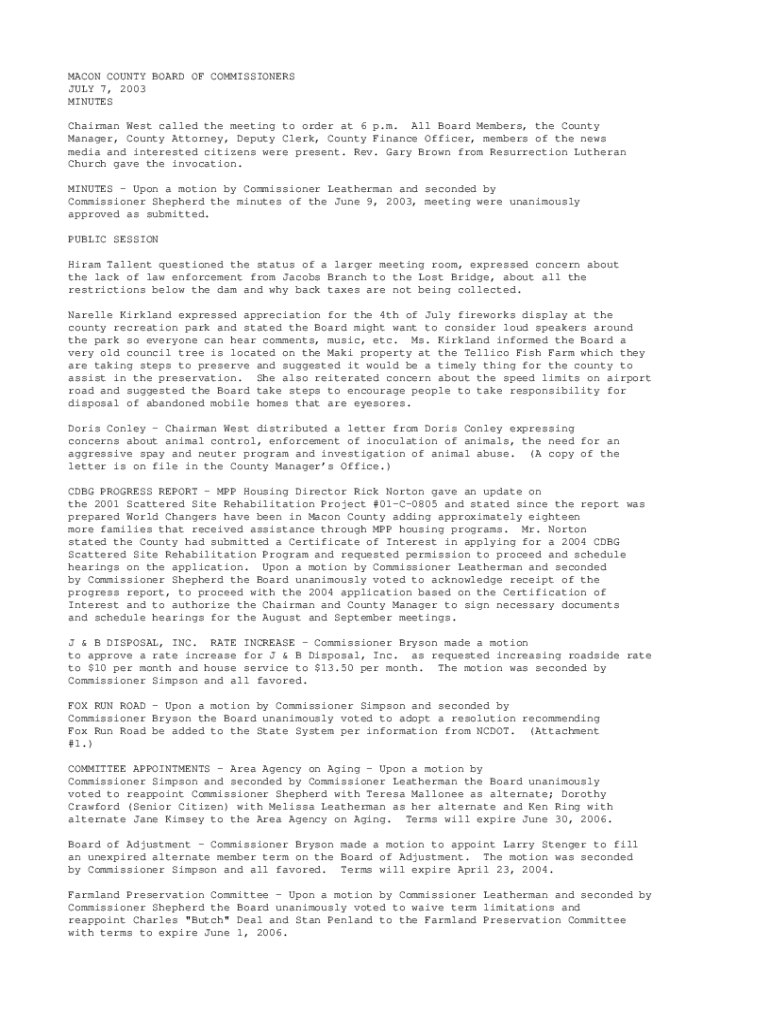







Definition & Meaning
The "Board of Commissioners - Macon County, GA" refers to the governing body in Macon County, Georgia, responsible for overseeing local government functions and making legislative decisions that impact the community. Comprised of elected officials, the board addresses issues ranging from public safety and infrastructure to budget allocations and community services. This entity serves as a legislative authority, working to ensure that the county operates efficiently and aligns with both state and federal regulations.
Key Elements of the Board of Commissioners - Macon County, GA
Key elements of the Board of Commissioners include its structure, roles, and responsibilities. The board typically consists of commissioners elected by the county's residents, each representing a district within Macon County. Responsibilities may include:
- Approving budgets: Ensuring financial resources are allocated appropriately to meet community needs.
- Policy development: Creating local laws and ordinances that align with state and national standards.
- Community oversight: Addressing concerns related to public safety, infrastructure, and government services.
- Coordination with other entities: Working with state agencies, local authorities, and community groups.
How to Use the Board of Commissioners - Macon County, GA
Residents and stakeholders can interact with the Board of Commissioners in various ways:
- Attend meetings: Public meetings provide opportunities to learn about ongoing initiatives and voice concerns.
- Submit proposals: Individuals and organizations can request the board's consideration of new projects or amendments to existing ordinances.
- Review agendas and minutes: Staying informed on past decisions and upcoming topics discussed by the board enhances community engagement.
Steps to Complete the Board of Commissioners - Macon County, GA
While completing tasks associated with the Board of Commissioners, individuals should follow these general steps:
- Identify the purpose: Determine what you aim to achieve, whether it’s registering a complaint or proposing a new ordinance.
- Prepare necessary documentation: Gather any relevant forms or documents to support your interaction with the board.
- Contact the board: Reach out via mail, email, or in person, as appropriate, to initiate your request or attendance.
- Participate: Engage in meetings or public hearings to discuss your agenda item.
- Follow-up: Stay in touch with board representatives to track the progress or results of your submission.
Important Terms Related to Board of Commissioners - Macon County, GA
Understanding key terms can help facilitate communication with or about the Board of Commissioners:
- Ordinance: A law or regulation enacted by the board.
- Resolution: A formal expression of opinion or intention voted on by the board.
- Quorum: Minimum number of board members required to conduct official business.
- Fiscal Year: The yearly budget cycle for government operations.
Legal Use of the Board of Commissioners - Macon County, GA
The board's operations are governed by legal frameworks ensuring compliance with state and federal laws. Legal uses include:
- Enacting local legislation: Drafting and implementing ordinances that abide by higher jurisdiction standards.
- Dispute resolution: Addressing and mediating community conflicts or legal issues.
- Regulation enforcement: Ensuring adherence to policies and codes within the county.
Who Typically Uses the Board of Commissioners - Macon County, GA
Typical users of the Board of Commissioners include:
- Residents: Seeking to voice concerns or support local initiatives.
- Businesses: Requesting permits or proposing commercial developments.
- Community organizations: Collaborating to promote social, educational, and cultural programs.
- Government agencies: Coordinating policy implementation and resource allocation.

Examples of Using the Board of Commissioners - Macon County, GA
Practical examples highlight the board's functions and impact:
- Infrastructure projects: A new road or park development proposal initiated by the board.
- Community safety measures: Implementing emergency services enhancements based on community feedback.
- Budget adjustments: Reallocating funds to support emerging needs, like disaster recovery efforts.




