
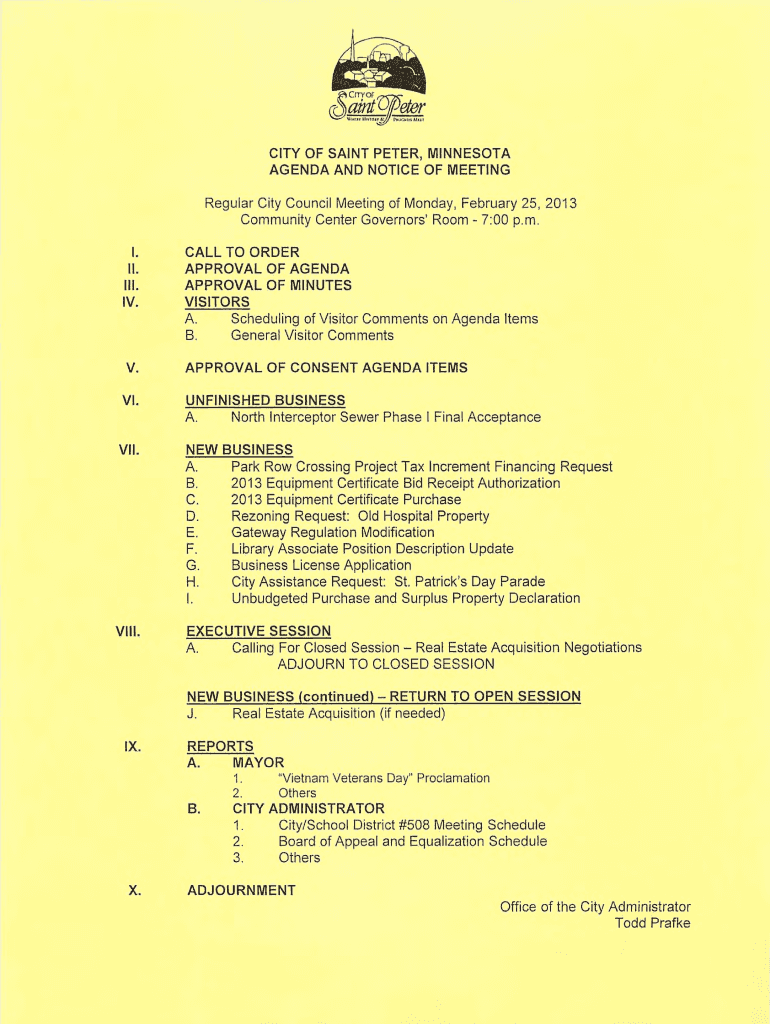







Definition and Purpose of the CITY OF SAINT PETER, MINNESOTA AGENDA AND NOTICE
The "City of Saint Peter, Minnesota Agenda and Notice" serves as an official document outlining the items to be discussed and decisions to be made during city council meetings. It provides a structured format for the meeting, which typically includes segments like approval of the agenda, consent items, public comments, new and unfinished business, and special proclamations. The agenda ensures transparency and public awareness of local government proceedings, allowing community members to understand the issues at hand and participate actively in municipal governance.
How to Use the CITY OF SAINT PETER, MINNESOTA AGENDA AND NOTICE
To effectively utilize this document, attendees should familiarize themselves with the structure and content of the agenda prior to the meeting:
- Review Agenda Items: Understand each item listed in the agenda to prepare any necessary questions or comments.
- Identify Key Issues: Focus on sections relevant to personal or community interests.
- Prepare Documentation: Gather any supporting documents related to agenda items where public input may be warranted.
- Take Notes: During meetings, annotate the agenda to track discussions and decisions made.
Example Scenario: A resident interested in new zoning laws should attend meetings where zoning discussions are on the agenda, equipped with knowledge of existing regulations and potential impacts.
Steps to Complete the CITY OF SAINT PETER, MINNESOTA AGENDA AND NOTICE
City officials responsible for preparing the agenda must follow these steps:
- Collate Items for Discussion: Gather agenda submissions from city council members, committees, and the public.
- Organize Chronologically: List items in a logical order, often starting with routine matters to more complex issues.
- Draft the Document: Create a draft document outlining each agenda item, including supporting documents or background information where necessary.
- Review and Approve: Send the draft to city council members for feedback and necessary revisions.
- Publish the Final Agenda: Release the agenda publicly, typically through official city channels, such as the website and local bulletin boards.
Key Elements of the CITY OF SAINT PETER, MINNESOTA AGENDA AND NOTICE
Key components typically include:
- Approval of Previous Minutes: Verification and acceptance of records from the last meeting.
- Public Comments: Time allocated for community input on listed and non-listed agenda items.
- Business Matters: Lists both new and unfinished business requiring council decisions.
- Proclamations and Announcements: Formal declarations, such as designating Vietnam Veterans Day.
Subsection: Business Matters
- Tax Increment Financing Requests: Proposals for economic development through financial incentives.
- Equipment Purchases: Review and approval of significant expenditures.
Subsection: Proclamations
- Community Recognitions: Special days or weeks declared to honor specific groups or causes.
How to Obtain the CITY OF SAINT PETER, MINNESOTA AGENDA AND NOTICE
The agenda can be accessed through several methods to ensure broad availability:
- Online Access: Visit the official City of Saint Peter website for downloadable versions.
- Physical Copies: Available at city hall or the local library for those without internet access.
- Email Subscription: Sign up via the city’s website to receive agendas directly to your inbox.
- Community Centers: Pick up printed copies in frequented community gathering spots.
Legal Use of the CITY OF SAINT PETER, MINNESOTA AGENDA AND NOTICE
Using this agenda involves legal and procedural adherence, primarily ensuring:
- Open Meeting Laws Compliance: Agendas must be posted in advance as per state transparency laws.
- Recording and Reporting: Meetings are documented, and any deviations from the agenda should be noted in official records.
State-Specific Rules for CITY OF SAINT PETER, MINNESOTA AGENDA AND NOTICE
In Minnesota, specific legal requirements dictate the structure and dissemination of the agenda:
- Advance Posting Requirement: Agendas should be publicly available at least three days before a meeting.
- Public Comment Protocols: Guidelines determine how and when community members can voice opinions during meetings.
Understanding these rules is crucial for compliance and effective engagement in local government meetings.
Examples of Using the CITY OF SAINT PETER, MINNESOTA AGENDA AND NOTICE
Real-world applications highlight the agenda’s function:
- Rezoning Case Study: A property owner attended a city council meeting where rezoning was discussed, using the agenda to present their case and understand potential impacts on their land value.
- Community Funding Proposals: Residents used the agenda to lobby for increased park funding, presenting data and suggestions during the allocated public comment period.
Comparison: Digital vs. Paper Version
Both digital and paper versions offer distinct advantages:
- Digital Version: Enables easy access and distribution, includes interactive elements such as hyperlinks to related documents.
- Paper Version: Preferred by individuals with limited internet access or those who prefer physical documents for annotation.
Each format serves stakeholders differently, ensuring inclusivity in local civic participation.
These sections equip users with a comprehensive understanding of the "City of Saint Peter, Minnesota Agenda and Notice," emphasizing practical utilization, compliance, and engagement within municipal processes.




