






Definition & Meaning
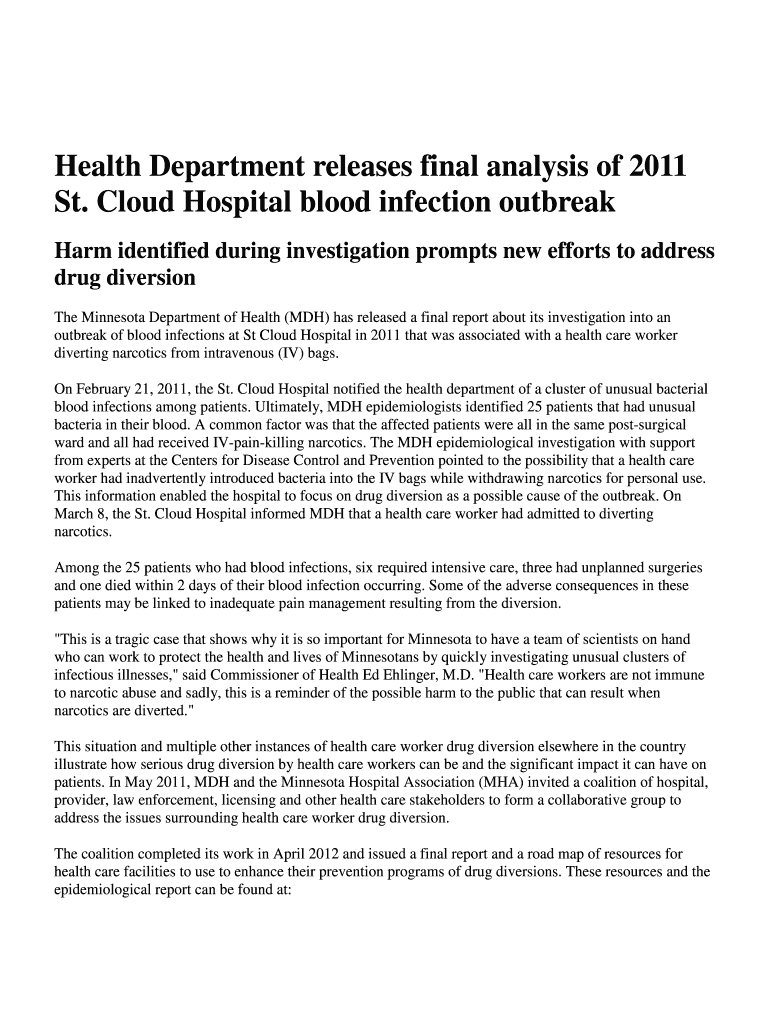
The "Health Department releases final analysis of 2011" pertains to the comprehensive examination and results disseminated by a health department regarding a significant health event or issue from 2011. In the context of public health, such an analysis typically entails detailed findings following an investigation or longitudinal study. This document is crucial for identifying underlying causes, consequences, and preventative measures related to health incidents. Such analyses are often used by public health officials, health care providers, researchers, and policymakers to understand the implications of past events and improve future responses.
How to Use the Health Department Releases Final Analysis of 2011
Using the final analysis effectively involves a systematic approach:
- Thorough Review: Begin by methodically reading the document to understand the context, purpose, and findings.
- Data Interpretation: Analyze the data presented to identify trends or areas of interest that may affect current health policies or practices.
- Comparative Analysis: Compare these findings with other data sets or reports to identify similarities or deviations from expected outcomes.
- Implementation of Recommendations: Apply any recommendations or conclusions drawn from the analysis to improve health care practices or policy formulation.
Consultation with experts or stakeholders who contributed to or will be impacted by the analysis can also enhance the application of the report's findings.
Key Elements of the Health Department Releases Final Analysis of 2011
The final analysis typically comprises several critical components:
- Executive Summary: A brief overview of the investigation and primary findings.
- Background Information: Contextual details regarding the health event or issue under study.
- Methodology: Explanation of the methods and approaches used during the investigation.
- Findings: Detailed data and results of the analysis, including any statistical interpretations.
- Conclusions: Insightful interpretations of the findings, highlighting key insights and inferences.
- Recommendations: Suggested actions or strategies for health care providers, policymakers, and the community.
These elements ensure that the document is comprehensive and actionable, providing a structured approach to understanding and addressing health issues.
Steps to Complete the Health Department Releases Final Analysis of 2011
Completing such an analysis requires a sequence of methodical steps:
- Data Collection: Gather relevant data connected to the 2011 health event through surveys, clinical data, and historical records.
- Engage Stakeholders: Collaborate with health care professionals, community leaders, and policy experts to gain multifaceted insights.
- Data Analysis: Utilize statistical tools to analyze data sets, looking for trends, correlations, and anomalies.
- Drafting the Report: Prepare a draft of the analysis document, structuring it with all essential components.
- Peer Review: Subject the draft to peer review to ensure accuracy and validity of the findings.
- Finalization: Incorporate feedback to polish the final report.
The process ensures that the analysis is exhaustive and credible, providing reliable information for public health decisions.
Who Typically Uses the Health Department Releases Final Analysis of 2011
This type of analysis is utilized by a variety of stakeholders:
- Public Health Officials: For planning and implementing health interventions and policies.
- Health Care Providers: To adapt clinical practices based on epidemiological findings.
- Researchers: For academic studies and further investigation into related health issues.
- Policy Makers: To inform legislative and regulatory changes.
- Community Leaders and Advocates: To drive community-focused health initiatives.
Understanding who uses the report can guide tailored communication and dissemination strategies, ensuring that insights are applied where they are most needed.


Examples of Using the Health Department Releases Final Analysis of 2011
Examples of practical applications of the analysis include:
- Case Study Implementation: A hospital implements enhanced infection control procedures based on identified lapses during a 2011 outbreak.
- Policy Formulation: A state health department introduces a new regulation requiring stricter drug monitoring to prevent narcotics diversion.
- Community Outreach: A non-profit organization uses the data to launch awareness campaigns to educate the public on risks of drug diversion.
These examples demonstrate the diverse applications of health analysis reports in improving public health systems and outcomes.
Legal Use of the Health Department Releases Final Analysis of 2011
Legal use of the analysis involves:
- Policy Compliance: Ensuring that health care practices align with updated legal standards derived from the findings.
- Legal Proceedings: Using documented evidence from the analysis in legal cases related to health incidents.
- Regulatory Alignment: Adjusting health care policies to meet the requirements set by health authorities post-analysis.
The legal implications underscore the importance of these reports in shaping enforceable health care standards and regulations.
Important Terms Related to Health Department Releases Final Analysis of 2011
Understanding specific terms is crucial for interpreting the document effectively:
- Drug Diversion: The illegal distribution or use of prescription drugs, commonly a focus in health investigations.
- Infection Control: Measures established to prevent and control the spread of infections.
- Epidemiology: The study of distribution and determinants of health-related states or events.
- Public Health Intervention: Actions taken to prevent or mitigate health issues in a community.
These terms provide a foundational understanding necessary for interpreting the report and its implications within the health care landscape.