






Definition and Meaning
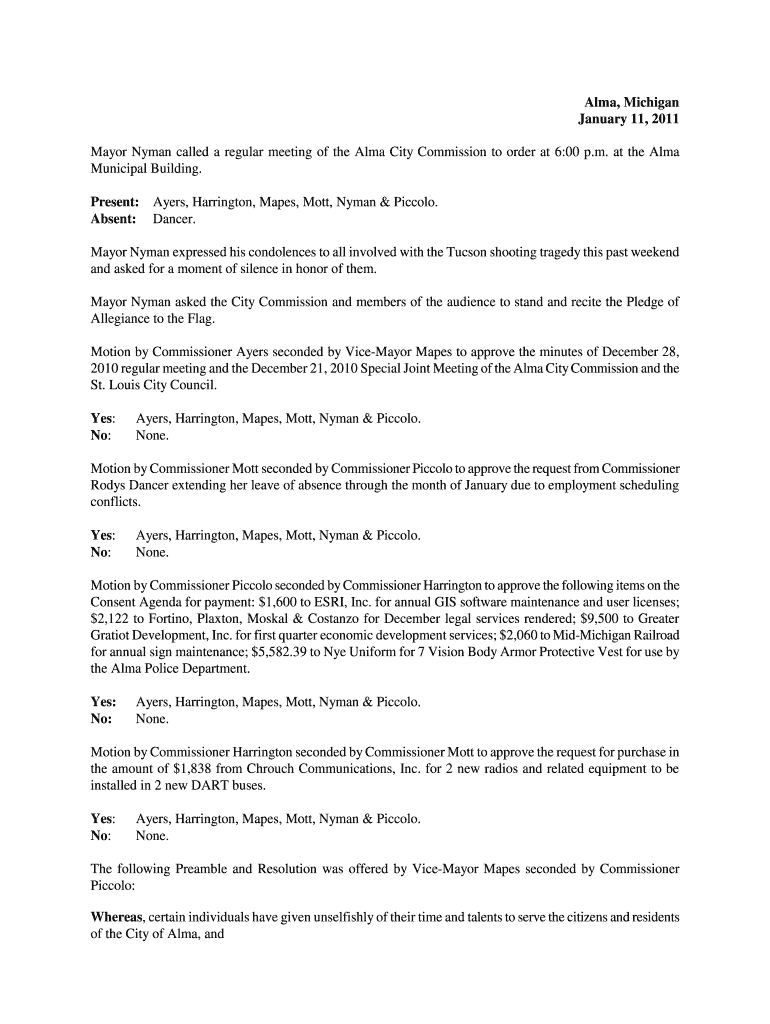
The document titled "Present: Ayers, Harrington, Mapes, Mott, Nyman, and Alma City Commission in Michigan" likely refers to a legal or official document, perhaps minutes from a city commission meeting held in the City of Alma, Michigan. This specific title suggests a list of individuals who were present at the meeting, possibly including commissioners or other key figures in a municipal context. These documents typically capture discussions, decisions, and records of proceedings and serve as official records for governance, policy-making, and administrative transparency.
Steps to Complete the Present: Ayers, Harrington, Mapes, Mott, Nyman, and Alma City Form
Completing such a form involves understanding the typical requirements of documenting the minutes for a commission meeting. The process generally includes:
- Preparation: Arrive with necessary materials such as an agenda and previous meeting minutes.
- Attendance Log: Record the full names of all members present, ensuring accuracy and correct representation.
- Discussion Documentation: Capture discussions, motions, and resolutions in a clear and unbiased manner, supported by direct quotes when applicable.
- Decision Recording: Take note of all decisions, approvals, and denials with precise language for future reference.
- Adjournment and Next Steps: Document the adjournment time and outline any follow-up actions required for the next meeting.
Who Typically Uses the Present: Ayers, Harrington, Mapes, Mott, Nyman, and Alma City Form
This form is primarily used by clerks and administrative staff within the city government responsible for maintaining accurate municipal records. It can also be utilized by council members, city managers, or other governmental officials who require a detailed account of meeting proceedings. In addition, it serves the public by providing transparency and accountability in local government operations.


Important Terms Related to Present: Ayers, Harrington, Mapes, Mott, Nyman, and Alma City
- Minutes: The written record of everything discussed and decided in the meeting.
- Resolution: Formal expressions of opinion or intention agreed upon by the members.
- Quorum: The minimum number of members needed to conduct valid proceedings.
- Motion: A proposal put to the assembly for discussion and decision.
- Adjournment: The suspension of proceedings to another time or place.
Legal Use of the Present: Ayers, Harrington, Mapes, Mott, Nyman, and Alma City
The legal aspect of such documents hinges on their role as official records of municipal activity. By law, these meeting minutes serve to:
- Maintain a transparent record of governmental activities and decisions.
- Support legal audits or challenges with documented evidence of processes and resolutions.
- Fulfill statutory requirements for public access to government records as specified under open meeting laws applicable in the U.S.
Key Elements of the Present: Ayers, Harrington, Mapes, Mott, Nyman, and Alma City
- Attendance Confirmation: Lists individuals present at the meeting.
- Agenda Items: Outlines topics discussed in the order of presentation.
- Discussion Summaries: Provides an unbiased summary of discussions, debates, and points raised.
- Resolutions Passed: Includes exact phrasing of resolutions agreed upon.
- Time Stamps: Essential for capturing the duration and specific times of key events during the meeting.
Examples of Using the Present: Ayers, Harrington, Mapes, Mott, Nyman, and Alma City
An example of usage includes recording a vote on local zoning changes where the presence and vote of each commissioner, such as Ayers, Harrington, and others, are documented for clarity. In another instance, approving a city budget amendment would be captured along with any discussions led by members like Nyman or Mott, providing a clear record for future financial audits.
Eligibility Criteria
Only authorized personnel, such as authorized clerks or secretaries, who maintain official records for city commissions and municipal meetings are permitted to complete or modify these forms. The eligibility is typically confirmed by the individual's role within the city administration and their access to the document systems of the municipality.