






Definition and Meaning
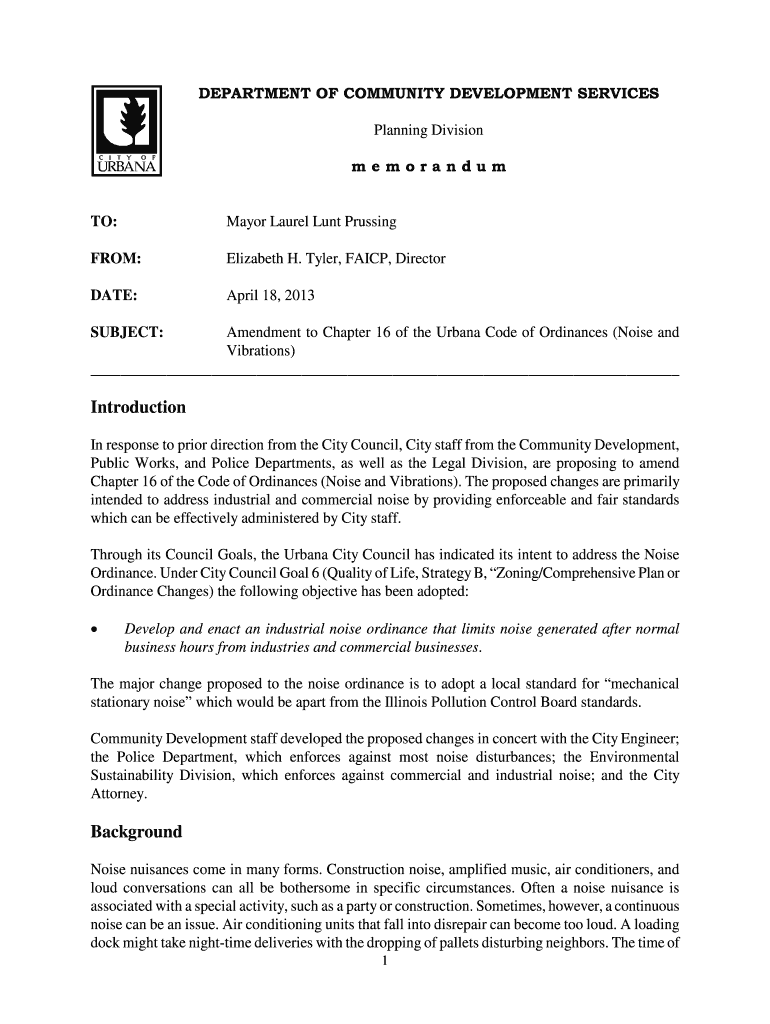
The Ordinance Amending Chapter Sixteen of the Urbana Code of Ordinances is a legal document issued by the City of Urbana, Illinois, aimed at updating existing regulations related to noise and vibrations within the city. This ordinance seeks to address disturbances caused by industrial and commercial activities, especially during non-business hours, by implementing enforceable noise standards.
How to Use the Ordinance
Residents and businesses in Urbana can utilize this ordinance to understand their rights and responsibilities concerning noise pollution. To use it effectively:
- Identify Affected Areas: Review the ordinance to determine if your property or business falls within the delineated zones subject to noise regulation.
- Examine Decibel Limits: Pay attention to the specified noise levels for different times of day and types of noise.
- Compliance Measures: Implement changes, such as installing noise barriers or adjusting operating hours to align with the ordinance.
How to Obtain the Ordinance
The ordinance is available through official city channels:
- City of Urbana Website: Download it directly from the city’s official webpage under the ordinances section.
- Urbana City Hall: Request a physical copy at the clerk’s office during business hours.
- Public Libraries: Access the document in the reference section of local libraries.
Steps to Complete Compliance with the Ordinance
To ensure compliance:
- Assess Current Noise Levels: Conduct a noise audit of your premises.
- Compare with Ordinance Standards: Match your findings against the ordinance requirements.
- Plan Adjustments: Design and implement noise reduction strategies as necessary.
- Regular Monitoring: Continuously monitor noise levels to ensure ongoing compliance.
Key Elements of the Ordinance
Several critical factors define this ordinance:
- Noise Definitions: Includes terms such as ‘mechanical stationary noise’ and specifies decibel limits.
- Permissible Hours: Details acceptable noise levels during business and non-business hours.
- Enforcement: Describes the penalties for non-compliance and the agencies responsible for enforcement.
Who Typically Uses the Ordinance
The ordinance primarily serves:
- Business Owners: Ensuring their activities do not violate noise regulations.
- Residents: Understanding rights related to noise disturbances and avenues for complaints.
- City Officials: Enforcing compliance across the city.


Examples of Using the Ordinance
- Industrial Adjustments: A factory reduces operations during night hours to comply with noise limits.
- Residential Complaints: A resident files a complaint against a neighboring business for excessive noise.
- Urban Planning: Developers reference the ordinance to design noise-compliant structures.
Legal Use of the Ordinance
Legally, this ordinance offers avenues for:
- Filing Complaints: Residents have the right to document and report violations.
- Defense in Noise Disputes: Businesses may use compliance evidence as a defense in disputes.
- City Enforcements: Empowers city officials to issue fines or orders for non-compliance.
Important Terms Related to the Ordinance
Understanding key terms is essential:
- Decibel (dB): The unit measuring sound intensity.
- Stationary Noise: Permanent sources like HVAC systems affecting noise levels.
- Noise Pollution: Unwanted or harmful outdoor sound interfering with normal activities.
State-Specific Rules
Illinois state laws complement this ordinance by setting broader environmental protection standards related to noise pollution, but the Urbana ordinance has localized specificity ensuring community requirements are met.