
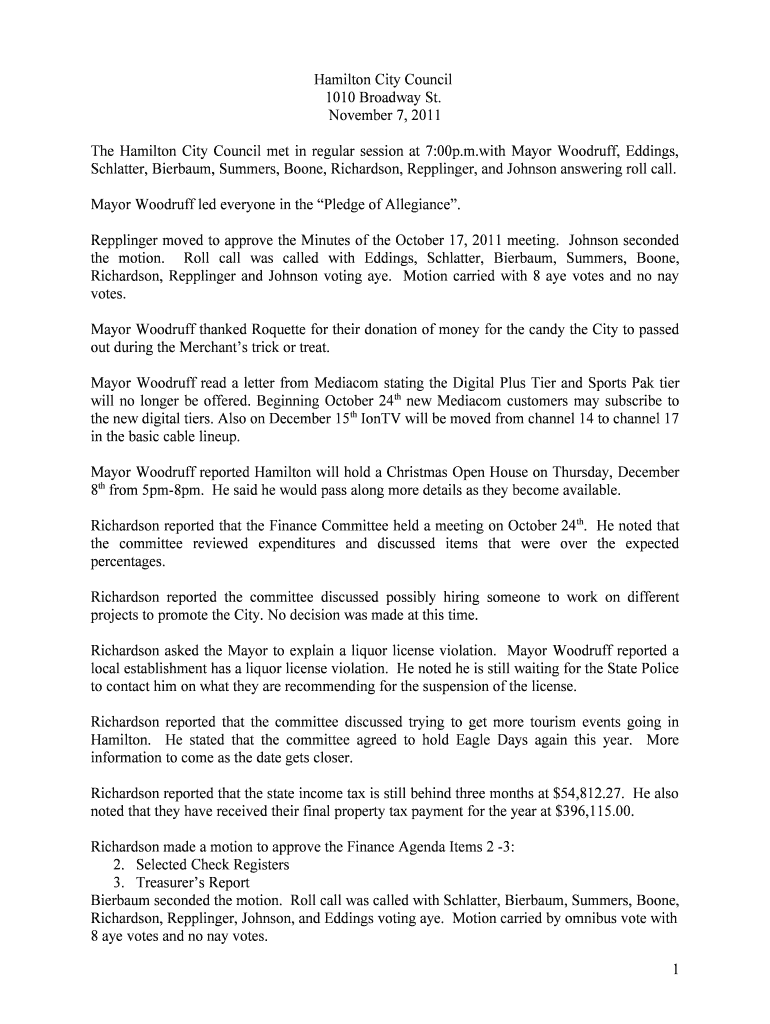







Definition & Meaning of The Motion - HamiltonIllinois
The motion known as "HamiltonIllinois" is a procedural request submitted to the Hamilton City Council for consideration during meetings. Motions are typically utilized to propose actions, allocate resources, or initiate municipal processes. These motions are integral to the governance and decision-making framework of city councils, allowing for structured debate and consensus-building among council members. Understanding its definition and meaning is crucial for those engaged in or affected by local government actions.
Key Elements of The Motion - HamiltonIllinois
The structure of the motion typically includes several essential elements that ensure its clarity and efficacy. Key components include:
- Title and Purpose: Clearly states the motion's name and its intended objective.
- Proposer: Identifies the individual or group submitting the motion.
- Details of the Proposal: Outlines what action is being requested, including any specific steps to be undertaken.
- Financial Implications: Describes any budgetary impacts or funding requirements.
- Supporting Information: Provides evidence or justification, such as statistical data or prior discussions, to support the motion.
Understanding these elements helps participants in council meetings follow proceedings and participate effectively.
How to Use The Motion - HamiltonIllinois
Utilizing the motion requires a clear understanding of municipal procedures and protocols. Here’s how to navigate the process:
- Drafting the Motion: Write a clear and concise statement of your proposal.
- Submitting to the Agenda: Ensure the motion is included in the upcoming meeting agenda by submitting it to the city clerk ahead of time.
- Presenting During Meetings: Clearly articulate the motion when called upon, providing justifications and responding to questions from council members.
- Participating in Deliberations: Engage in discussions, addressing concerns and amending the motion if necessary before a vote is taken.
Adhering to procedural rules ensures that the motion is considered systematically and democratically.
Steps to Complete The Motion - HamiltonIllinois
Completing and advancing a motion through the council involves several meticulous steps:
- Pre-Meeting Preparation: Gather all necessary materials and documentation that support the motion's objectives.
- Formal Proposal Submission: Ensure the motion is submitted correctly within the deadline to appear on the council agenda.
- Engage with Stakeholders: Reach out to other council members and community stakeholders to garner support.
- Presentation and Debate: Present the motion formally during the council meeting and engage in necessary deliberations.
- Vote and Implementation: If passed, follow up on the execution of tasks outlined in the motion.
Awareness of this process helps in understanding the intricacies of local government operations.
Legal Use of The Motion - HamiltonIllinois
Legal considerations are paramount in ensuring the motion complies with statutory requirements and governmental regulations. The following aspects are critical:
- Compliance with Local Laws: The motion must adhere to local ordinances, state laws, and federal regulations.
- Transparency and Public Access: All motions must be made available for public scrutiny, emphasizing the council's commitment to open governance.
- Ethical Standards: All actions proposed by the motion must align with ethical guidelines set forth by regulation bodies.
Legal advice may be sought to ensure the motion adequately satisfies all necessary legal criteria.
State-Specific Rules for The Motion - HamiltonIllinois
State laws can have significant implications for the motion's development and implementation. Key considerations include:
- State Legislature Requirements: State laws may influence procedural requirements and limitations on council motions.
- Funding Allocation Regulations: State-specific rules regarding budgetary provisions for motions must be thoroughly reviewed.
- Public Notification Mandates: All motions must comply with state laws regarding the notification of public meeting agendas.
Navigating these regulations requires a nuanced understanding of state legislative frameworks to ensure compliance.
Who Typically Uses The Motion - HamiltonIllinois
This motion is primarily utilized by:
- City Council Members: Elected officials use motions to propose municipal actions and legislative changes.
- Community Groups: Local organizations may influence or support motions aligning with their interests.
- City Officials and Administrators: These individuals use motions to facilitate necessary operational decisions and policy implementations.
Recognizing the users helps in understanding perspectives contributing to council deliberations.


Important Terms Related to The Motion - HamiltonIllinois
Familiarity with terminology related to the motion is essential:
- Resolution: A formal expression of opinion or intention by the council adopted by a vote.
- Amendment: A change proposed to the original motion to improve accuracy or detail.
- Quorum: The minimum number of council members required to be present for the meeting to proceed and a motion to be considered.
Understanding these terms facilitates more effective participation in municipal processes and discussions.




