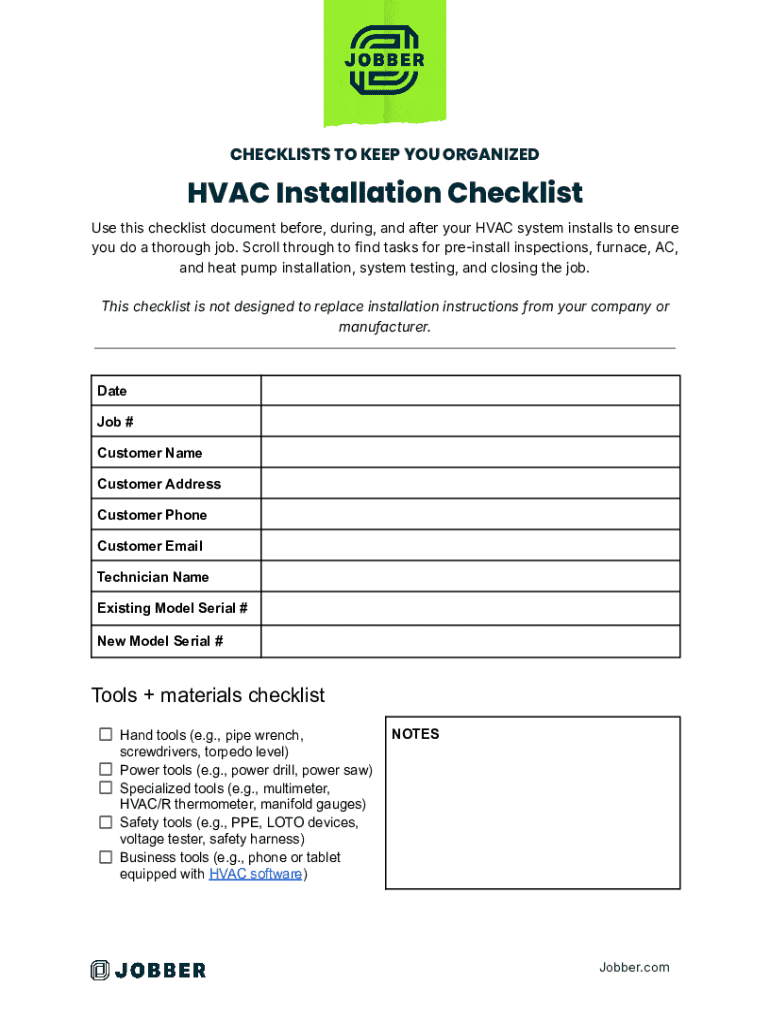







Definition and Purpose of the HVAC Installation Checklist
The HVAC Installation Checklist is a structured document used to guide professionals through the installation of heating, ventilation, and air conditioning systems. Its primary purpose is to ensure comprehensive inspections and tasks are carried out before, during, and after the installation process. This helps to confirm that installations adhere to safety protocols and manufacturer specifications, minimizing errors and ensuring optimal performance of the HVAC systems. The checklist includes sections for equipment checks, safety tasks, pre-install inspections, and system testing, focusing on components specific to furnaces, air conditioners, and heat pumps.
How to Use the HVAC Installation Checklist
Using the HVAC Installation Checklist involves a step-by-step approach to each phase of the installation. Initially, a technician would perform pre-installation inspections, documenting the existing conditions and infrastructure. Safety tasks include verifying electrical readiness and assessing workspace hazards. As installation progresses, the checklist guides the user through equipment placement and connection. Post-installation, tasks such as system testing and final inspections ensure all components are functioning correctly. By using the checklist throughout, technicians can systematically verify that each critical step is completed, reducing the likelihood of oversight.
Steps to Complete the HVAC Installation Checklist
- Pre-Install Inspections:
- Check for obstructions in air ducts and vents.
- Verify electrical capacity and safety.
- Confirm structural integrity where equipment will be mounted.
- Safety Precautions:
- Ensure workspace is clear and free of hazards.
- Use appropriate personal protective equipment.
- Equipment Checks:
- Match new parts with the manufacturer’s specifications.
- Verify that all tools and materials are available.
- Installation Process:
- Securely install and anchor HVAC units.
- Connect electrical and plumbing systems as per standards.
- System Testing:
- Evaluate airflow and temperature outputs.
- Conduct a trial run to check system stability.
- Final Review:
- Inspect for any missing components or connections.
- Document performance metrics and any exceptions.
Key Elements of the HVAC Installation Checklist
- Pre-Installation Evaluation: Assessment of site readiness and compliance with local codes and conditions.
- Safety Protocols: Comprehensive measures to protect personnel and property during the installation process.
- Equipment Specifications: Verification that all installed components meet necessary guidelines and specifications.
- System Functionality Tests: Procedures to confirm that the HVAC system performs to expected efficiency.
- Documentation and Reporting: Necessary paperwork to record installation details, including deviations and corrective actions taken.
Important Terms Related to HVAC Installation Checklist
- SEER (Seasonal Energy Efficiency Ratio): A measurement of air conditioning efficiency over a typical cooling season; important for energy compliance.
- BTU (British Thermal Unit): A unit of heat; helps in sizing equipment capacity for heating or cooling a given space.
- CFM (Cubic Feet per Minute): Measure of airflow; critical for determining ventilation effectiveness.
- Ductwork: Network of ducts providing a pathway for air flow; should meet specific sizing and material guidelines.
- Thermostat Calibration: Adjustment procedures to ensure accurate temperature regulation.
Legal Use of the HVAC Installation Checklist
In the United States, using an HVAC Installation Checklist aligns with local and federal regulations ensuring that installations meet industry standards. Technicians are required to follow the checklist as part of best practices, helping adhere to regulatory requirements from bodies like the Environmental Protection Agency (EPA) that mandate specific standards for refrigerant handling and energy efficiency. Proper use of the checklist can aid in maintaining a legal and safe operation environment, preventing legal issues associated with non-compliance.
Examples of Using the HVAC Installation Checklist
Consider a scenario where an HVAC contractor is installing a new heat pump in a residential property. By following the pre-defined inspection list, the contractor identifies that the existing electrical panel is insufficient for the new system’s power needs. The checklist helps to highlight this potential issue early, allowing for timely upgrades before proceeding. Another instance could involve a commercial installation where multiple air conditioning units are to be installed. The checklist ensures consistency across all installations, facilitating uniformity in functionality and safety validation.
State-Specific Rules for the HVAC Installation Checklist
Different states may have unique requirements for HVAC installations. For example, California has strict energy efficiency standards due to Title 24, which mandates minimum performance ratings for HVAC systems. Florida’s humid climate requires installations that emphasize moisture management capabilities. Therefore, the HVAC checklist may need adjustment to incorporate state-specific codes and guidelines, addressing variations in climate, building codes, and local regulations, ensuring compliance across different jurisdictions.
Who Typically Uses the HVAC Installation Checklist
The HVAC Installation Checklist is primarily utilized by HVAC technicians and contractors, providing them with a framework to ensure accurate and efficient installations. It may also be used by project managers overseeing large-scale installations in new building projects to ensure all phases of HVAC installation comply with project specifications and deadlines. Additionally, facility managers in commercial settings might use the checklist as a reference tool for regular maintenance and inspections, ensuring ongoing compliance and performance standards.