







Definition & Meaning
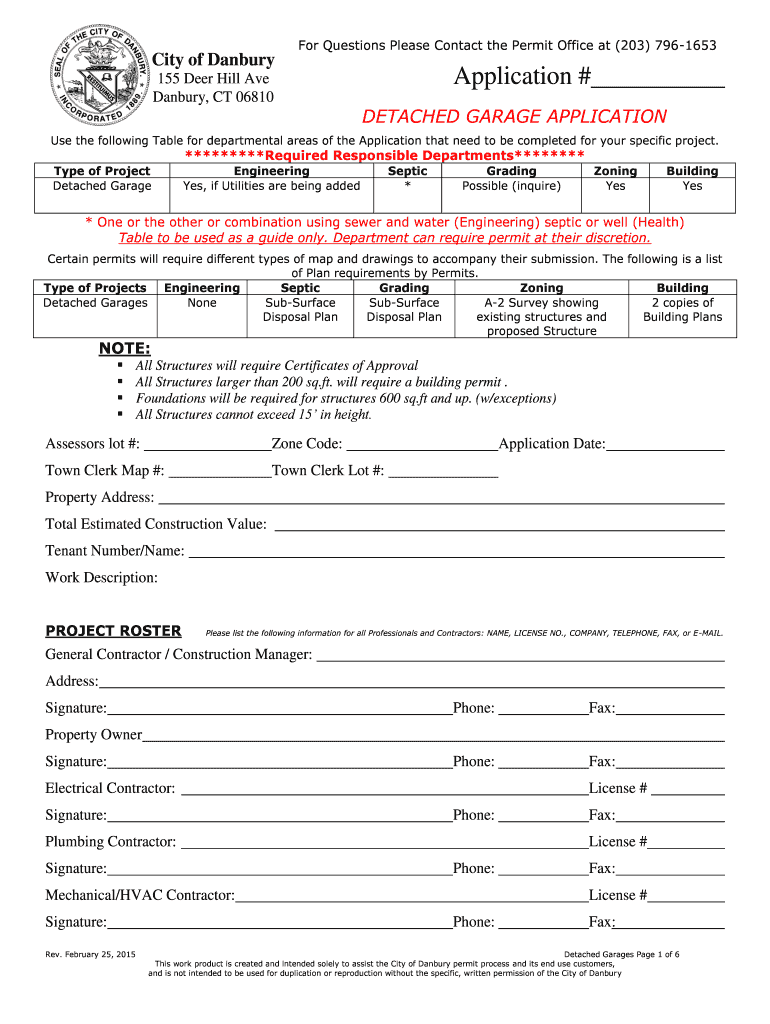
The term "Detached Garage Application" refers to the official form necessary for obtaining a permit to construct a detached garage on a property. This application typically requires the property owner to provide detailed plans and specifications of the proposed structure to ensure compliance with local building codes and zoning ordinances. Detached garages are standalone structures separate from the main residence, and the application process ensures that their construction meets safety, environmental, and aesthetic standards.
Detailed Specifications
- Construction Plans: Applicants must submit a detailed floor plan of the proposed garage, including dimensions, materials, and structural information.
- Zoning Compliance: Documents confirming that the garage location adheres to zoning regulations, such as setbacks from property lines and height restrictions.
- Environmental Considerations: Analysis of the garage's impact on local drainage and green space, often requiring a site plan showing existing and planned landscape changes.
How to Use the Detached Garage Application
Understanding how to correctly fill out and submit the Detached Garage Application is crucial for obtaining timely approval.
Filling Out the Application
- Applicant Information: Provide complete contact details, including name, address, phone number, and email.
- Property Description: Describe the property where the garage will be constructed, including the current use of the land and any existing structures.
- Project Details: Clearly specify the size, height, and purpose of the garage, along with any intended utility connections, such as electricity or water.
Supporting Documentation
- Proof of Ownership: A copy of the deed or title to verify ownership of the property.
- Contractor Information: If a contractor is involved, include their license number and contact details.
- Insurance Verification: Proof of workers' compensation and liability insurance covering the construction project.
Steps to Complete the Detached Garage Application
Completing this application involves various steps to ensure all necessary information and documentation are accounted for.
Step-by-Step Process
- Review Local Requirements: Before beginning, consult with local building authorities to understand specific requirements and guidelines.
- Gather Necessary Documents: Collect all required documentation, including permits, plans, and proof of insurance.
- Fill Out the Application: Follow the form instructions meticulously, ensuring accuracy in all entries.
- Submit the Form: Depending on your locality, this may be done online, by mail, or in person.
Why You Should Use the Detached Garage Application
Submitting a Detached Garage Application is vital for legally constructing a detached garage on your property.
Benefits of Compliance
- Avoid Legal Issues: Ensures compliance with local building codes and zoning laws, preventing fines or forced alterations.
- Property Value Enhancement: A well-constructed garage can significantly increase the property's market value.
- Structured Project Management: Having a formal application in place helps coordinate the construction process efficiently, from start to finish.
Key Elements of the Detached Garage Application
Understanding the core components of the Detached Garage Application can facilitate the completion process.
Essential Aspects
- Design Plans: Detailed drawings depicting architectural design and layout.
- Engineering Approval: Certification from a structural engineer verifying that the garage's design meets safety standards.
- Permit Fees: Confirmation of payment for all required fees associated with the application.
Required Documents
Compiling the necessary documents is a critical component of the application process.
Document Checklist
- Site Plans: Detailed mapping of the property showing existing and proposed structures.
- Structural Calculations: Engineering assessments of the garage's load-bearing capacity and stability.
- Environmental Impact Form: Evaluations of the project's potential effects on the surrounding environment.
Form Submission Methods
The Detached Garage Application can be submitted through various channels, depending on local regulations.
Submission Options
- Online: Many municipalities offer electronic submission portals for convenience.
- Mail: Traditional submission through postal service, typically requiring additional time for processing.
- In-Person: Direct submission allows for immediate feedback and clarification of any application issues.
State-Specific Rules for the Detached Garage Application
Understanding the specific requirements that vary by state can be crucial in the application process.
Regional Variations
- California Requirements: Often requires additional seismic and environmental considerations due to stringent building codes.
- Midwestern States: May focus more on weather-related design considerations, such as snow load capacity.
- Northeastern States: Often have historical considerations if the construction is near protected landmarks or within a historic district.




