






Definition & Meaning
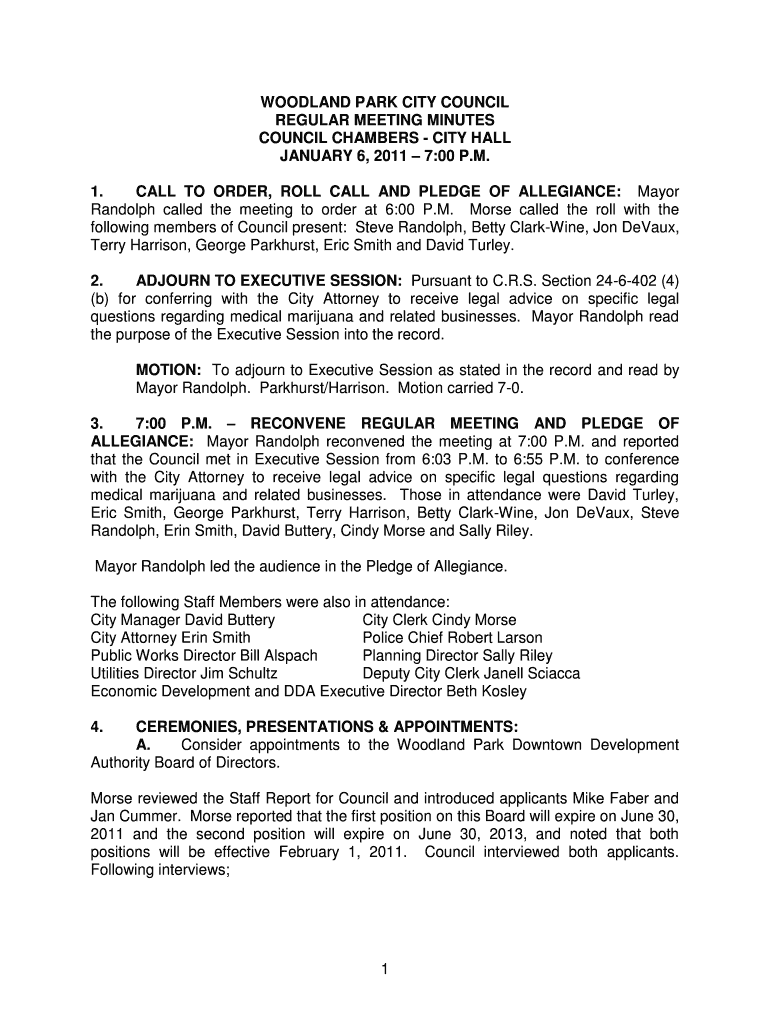
"CALL TO ORDER, ROLL CALL AND PLEDGE OF ALLEGIANCE Mayor" refers to the standard procedure that occurs at the beginning of city council meetings or other official public meetings in the United States. The "call to order" is the formal announcement that opens the meeting. The "roll call" involves recording who is present or absent, often for record-keeping and establishing a quorum. The "Pledge of Allegiance" is typically recited to express patriotism and unity at the start of the meeting. This process sets the tone for organized and respectful proceedings, ensuring all participants are accounted for and understand the meeting's formal beginning.
How to Use the CALL TO ORDER, ROLL CALL AND PLEDGE OF ALLEGIANCE Mayor
- Preparation: Ensure all meeting participants have received the agenda and understand when and where the meeting will commence.
- Execution:
- Call to Order: The mayor or presiding officer officially starts the meeting.
- Roll Call: The clerk or another designated official calls out each member's name to confirm attendance.
- Pledge of Allegiance: All attendees are typically invited to stand and recite the Pledge of Allegiance.
- Importance: Using this sequence ensures the meeting begins in a structured manner, setting a professional tone.
Steps to Complete the CALL TO ORDER, ROLL CALL AND PLEDGE OF ALLEGIANCE Mayor
-
Preparation for the Meeting:
- Distribute the meeting agenda to all participants in advance.
- Ensure a designated person is responsible for conducting the roll call.
-
Calling to Order:
- The mayor or presiding officer announces the formal opening of the meeting.
-
Conducting the Roll Call:
- The clerk or secretary reads the roll call list, acknowledging each member's presence.
- Record the attendance in the official minutes.
-
Recitation of the Pledge of Allegiance:
- Invite all attendees to stand and recite the Pledge of Allegiance in unison.
- Ensure that this step adheres to any specific protocols typical of the organization or community.
-
Beginning the Meeting Agenda:
- Once the initial steps are complete, transition to the agenda's first item.
Key Elements of the CALL TO ORDER, ROLL CALL AND PLEDGE OF ALLEGIANCE Mayor
- Call to Order: The formal declaration that the meeting has officially started.
- Roll Call: A systematic way to document who is present, ensuring a quorum and accountability.
- Pledge of Allegiance: A ceremonial step reflecting civic pride and unity, encouraging a sense of community among attendees.
Who Typically Uses the CALL TO ORDER, ROLL CALL AND PLEDGE OF ALLEGIANCE Mayor
- City Councils: Standard procedure in municipal meetings.
- School Boards: Used in public school district meetings.
- Public Commissions: Integral to meetings of civic or governmental boards.
- Nonprofit Organizations: May adopt this procedure to align with formal meeting standards.


Legal Use of the CALL TO ORDER, ROLL CALL AND PLEDGE OF ALLEGIANCE Mayor
- Compliance with Open Meetings Laws: Ensures transparency and accountability as required in many states.
- Official Record-keeping: Roll call results are entered into public records, maintaining an official log of attendees.
- Ceremonial Practice: Conducting the pledge aligns with traditional American civic practices, promoting national values within public meetings.
Examples of Using the CALL TO ORDER, ROLL CALL AND PLEDGE OF ALLEGIANCE Mayor
- City Council Meeting: Mayor calls the meeting to order, the roll call confirms attendance, and participants recite the Pledge of Allegiance.
- School Board Assembly: Chairperson opens the session, attendance is recorded, and the pledge is recited before addressing educational policies.
- County Commissioner Gathering: Meeting is called to order, commissioners' presence noted, and the pledge reinforces the meeting's civic context.
State-Specific Rules for the CALL TO ORDER, ROLL CALL AND PLEDGE OF ALLEGIANCE Mayor
- California's Ralph M. Brown Act: Requires roll call to ensure transparency and proper conduct of city meetings.
- Texas Open Meetings Act: Similar mandates ensuring public accessibility and record-keeping.
- Variance in Protocols: While the call to order and roll call are consistent, the pledge may vary regionally or by local ordinance in terms of execution specifics.
Important Terms Related to CALL TO ORDER, ROLL CALL AND PLEDGE OF ALLEGIANCE Mayor
- Quorum: The minimum number of members required to legally conduct business during the meeting.
- Minutes: The official written record that includes roll call attendance and meeting details.
- Presiding Officer: Often the mayor, responsible for maintaining order and guiding the meeting process.
- Protocol: A set of rules governing the meeting flow, including the sequence of the call to order, roll call, and pledge.