






Definition and Meaning
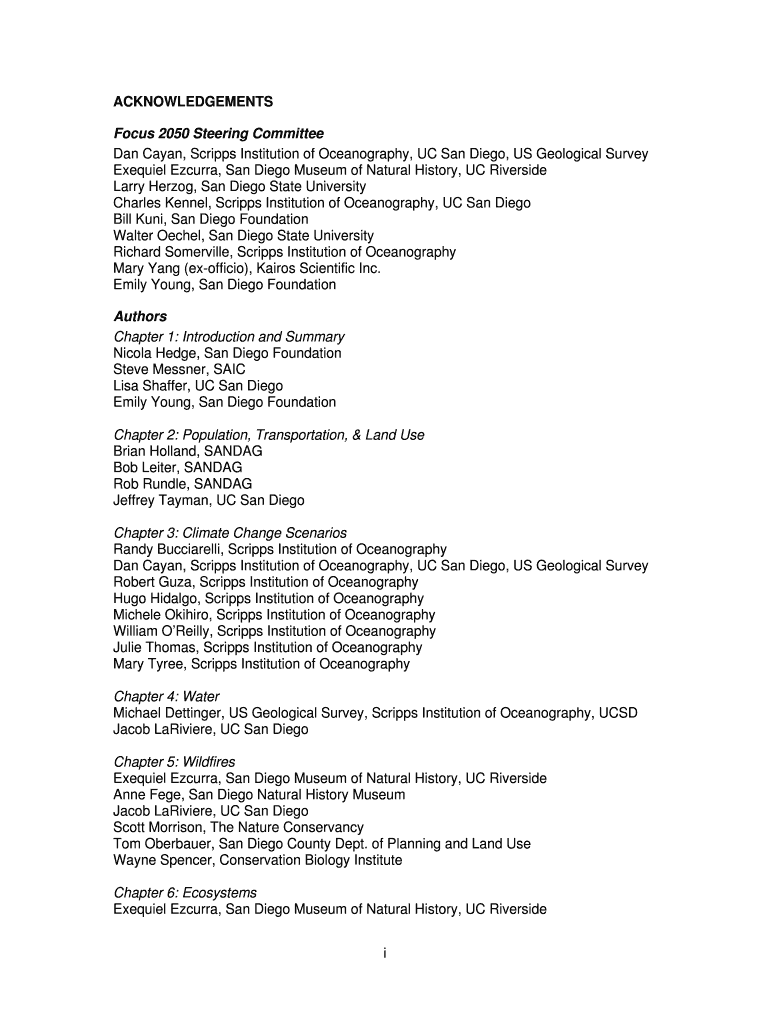
The i ACKNOWLEDGEMENTS Focus 2050 Steering document, a pivotal element for the City of San Diego's planning initiatives, provides a comprehensive assessment of climate change impacts projected for the year 2050. This document covers various sectors such as population growth, water supply, wildfires, ecosystems, public health, and electricity demand. By understanding these potential impacts, city planners and stakeholders can develop adaptive strategies to address future challenges effectively.
How to Use the i ACKNOWLEDGEMENTS Focus 2050 Steering - City of San Diego
To effectively use the i ACKNOWLEDGEMENTS document, stakeholders should thoroughly review each sector analysis. The document can guide decision-making processes, helping to prioritize environmental and infrastructure investments. It serves as a reference for identifying vulnerable areas, thus enabling planners to formulate targeted interventions and resilience plans. Local governments, environmental agencies, and community organizations can leverage this data to engage in informed discussions and collaborative planning efforts.
Steps to Complete the i ACKNOWLEDGEMENTS Focus 2050 Steering - City of San Diego
- Download the Document: Access the official document through the City of San Diego’s website or request a copy through city planning offices.
- Identify Relevant Sectors: Pinpoint the sections relevant to your area of expertise or interest, such as public health or environmental management.
- Engage with Stakeholders: Organize stakeholder meetings to discuss insights from the document and its implications.
- Develop Strategic Plans: Use the insights gained to draft strategic plans aimed at mitigating the outlined risks.
- Review and Update: Regularly review and update plans as new data and policy changes emerge.
Why Should You Use the i ACKNOWLEDGEMENTS Focus 2050 Steering - City of San Diego
Utilizing the i ACKNOWLEDGEMENTS Focus 2050 Steering document is crucial for staying informed about climate risks that could affect San Diego. It provides a robust foundation for crafting policies that promote sustainability and resilience. Communities, businesses, and government entities stand to benefit significantly by aligning their strategies with the comprehensive data and projections provided, thus ensuring preparedness for future climate scenarios.
Key Elements of the i ACKNOWLEDGEMENTS Focus 2050 Steering - City of San Diego
- Population Growth: Examining trends and their implications on resources and infrastructure.
- Water Supply: Assessing the impacts of climate change on water availability and distribution.
- Wildfires: Evaluating fire risks and potential mitigation strategies.
- Ecosystem Stability: Understanding biodiversity threats and ecosystem management priorities.
- Public Health: Analyzing health risks from heat and pollution, and planning appropriate public health responses.
- Electricity Demand: Exploring infrastructure needs resulting from increased energy consumption.
Legal Use of the i ACKNOWLEDGEMENTS Focus 2050 Steering - City of San Diego
The i ACKNOWLEDGEMENTS document is a public policy tool, serving as a foundation for legislative measures and city planning policies. It provides legal entities and lawmakers with evidence-based insights necessary for drafting ordinances and regulations. By integrating recommendations from the document into legal frameworks, the city ensures compliance with national and state environmental mandates.
Who Typically Uses the i ACKNOWLEDGEMENTS Focus 2050 Steering - City of San Diego
- City Planners: To develop long-term urban and environmental planning strategies.
- Policy Makers: For formulating regulations and policies that address climate risks.
- Environmental Organizations: To advocate for sustainability initiatives and conservation efforts.
- Public Health Officials: To prepare for and mitigate health impacts related to climate change.
- Utility Companies: For planning infrastructure investments and energy management systems.

State-Specific Rules for the i ACKNOWLEDGEMENTS Focus 2050 Steering - City of San Diego
California’s environmental regulations and guidelines, such as those pertaining to greenhouse gas emissions and renewable energy standards, influence the application of insights from the i ACKNOWLEDGEMENTS document. The legal and regulatory ecosystem within the state requires that any strategic planning align with established environmental protection laws. This alignment ensures that recommendations are both feasible within the context of state rules and supportive of overarching climate goals.
Form Submission Methods (Online/Mail/In-Person)
Currently, the i ACKNOWLEDGEMENTS Focus 2050 Steering document does not require submission in the traditional sense like tax or legal forms. However, stakeholders involved in related planning processes might need to submit their feedback or strategic plans derived from the document through various channels:
- Online: Utilizing city portals or dedicated email addresses for submissions.
- Mail: Sending documents to city planning departments as needed.
- In-Person: During stakeholder meetings or public hearings organized by planning offices.