






Definition and Meaning
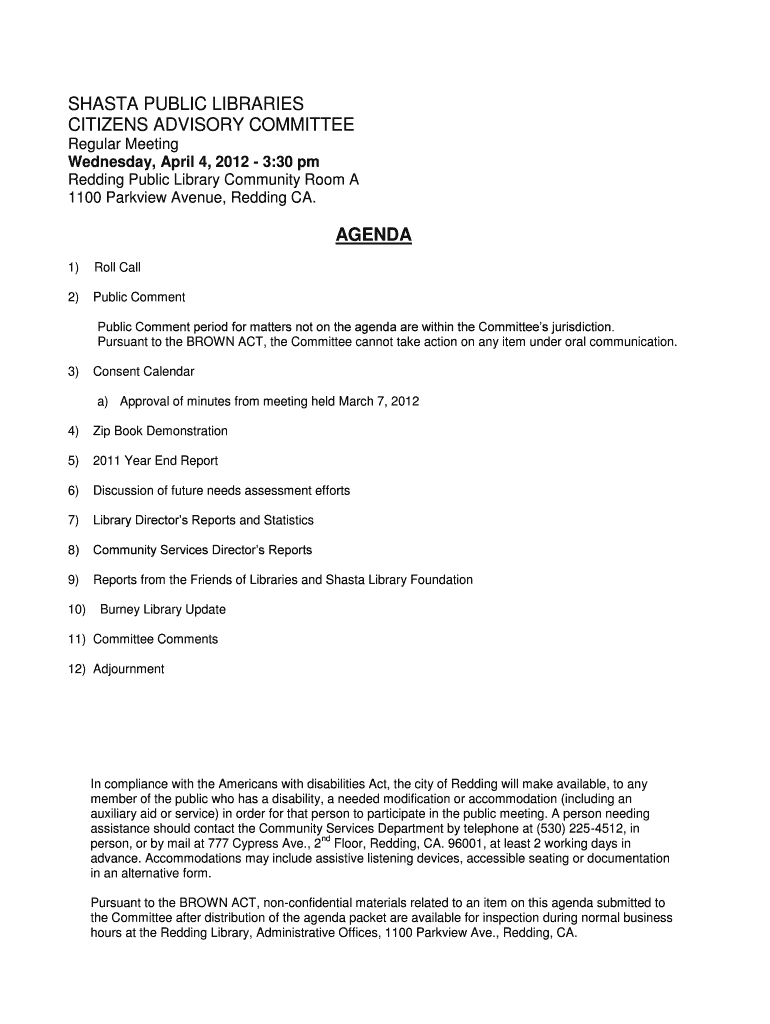
The "Agenda - City of Redding" is an official document outlining the proposed schedule and topics for discussion during city meetings. It serves as an essential guide, ensuring that both officials and the public are aware of the issues to be addressed. Each agenda is tailored to reflect specific meeting goals, whether it's a regular city council meeting, a special committee gathering, or a public forum. The agenda provides a structured format, listing items such as roll call, public comments, presentations, and approvals of previous minutes.
Key Elements of the Agenda
Understanding the structure of the "Agenda - City of Redding" is crucial for comprehending its function:
- Roll Call: Initiates the meeting with an attendance check of officials.
- Public Comments: Provides a platform for residents to voice opinions or concerns.
- Approval of Minutes: Involves reviewing and endorsing the minutes from prior meetings to ensure accuracy.
- Presentations: Highlights important programs, reports, or guest speakers relevant to the city’s interests.
- Discussion Items: Encompasses topics scheduled for debate or decision-making.
- Compliance with Acts: Includes ensuring meetings are accessible under the Americans with Disabilities Act to facilitate public engagement.
Steps to Acquire the Agenda - City of Redding
Acquiring the "Agenda - City of Redding" is straightforward for those interested in staying informed:
- Visit the City of Redding's Official Website: Agendas are typically available online several days before meetings are scheduled.
- Access through City Hall: Printed copies may be available at City Hall for those who prefer physical documents.
- Email Subscription: Sign up for email alerts to receive agendas directly as they are published.
How to Use the Agenda for Meetings
Utilizing the "Agenda - City of Redding" effectively requires preparation:
- Review Topics: Familiarize yourself with each topic slated for discussion to contribute meaningfully.
- Identify Relevant Sections: Focus on sections pertinent to your interests or community involvement.
- Prepare Comments or Questions: Draft any input you wish to deliver during the public comments section.
- Note Timings: Be aware of when particular items will be discussed to ensure effective participation.
Who Typically Uses the Agenda
The "Agenda - City of Redding" is invaluable to various stakeholders:
- City Officials: Utilize the agenda to prepare for decision-making and administrative reporting.
- Community Members: Engage in civic activities by attending meetings informed on pertinent issues.
- Journalists: Rely on agendas to report accurately on governmental proceedings and community impacts.
- Activists and Interest Groups: Use agendas to advocate for changes or policies in line with their objectives.


Importance of Public Participation
Public participation is an integral aspect of the agenda's role in city governance:
- Informed Citizenry: Ensures community members are aware of and can respond to decisions affecting their lives.
- Democratic Engagement: Encourages transparency and accountability from elected officials.
- Diverse Input: Promotes varied perspectives that can lead to well-rounded policy development.
Legal Considerations for Agenda Use
The "Agenda - City of Redding" must comply with legal standards:
- Open Meetings Laws: Requires that meetings are conducted openly and accessible to the public.
- Americans with Disabilities Act Compliance: Ensures that individuals with disabilities can participate fully in the meetings.
- Record-Keeping: Agendas and meeting minutes are part of the public record, serving as documentation for legal and historical purposes.
Digital vs. Paper Versions
Both digital and paper versions of the agenda are available, each serving different needs:
- Digital Version: Offers ease of access via computers or mobile devices, allowing for broader distribution and timely updates.
- Paper Version: Provides an option for individuals without digital access and ensures availability during meetings for reference.
The agenda thus plays a pivotal role in city governance by facilitating organized, transparent, and inclusive municipal operations.