






Definition & Meaning
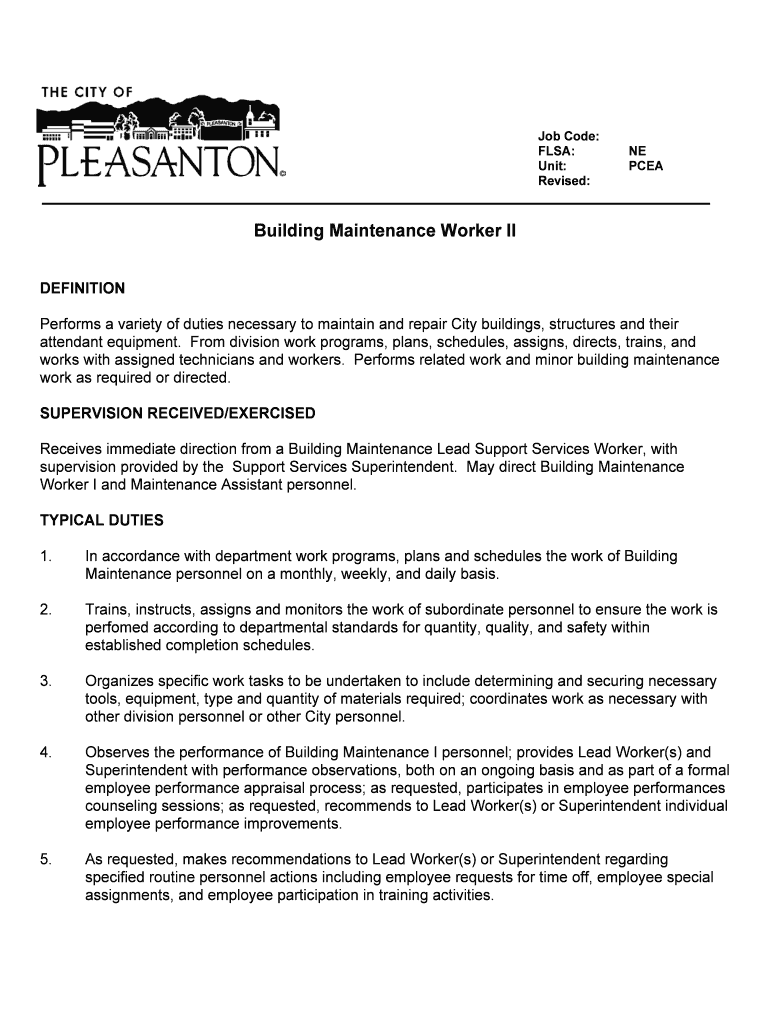
The form titled "Performs a variety of duties necessary to maintain and repair City buildings, structures and their" outlines the duties and responsibilities of individuals responsible for the upkeep and repair of municipal buildings and structures. Typically applied to positions such as Building Maintenance Workers, this form sets the framework for tasks related to maintaining structural integrity, ensuring safety standards, and managing renovations or improvements. It generally specifies the expectations for maintaining equipment, overseeing site inspections, and conducting necessary repairs to maintain functionality and safety.
Key Elements of the Form
The crucial elements of this form include comprehensive details about the specific duties assigned to personnel involved in building maintenance and repair. These elements are necessary to ensure clarity and precision in job roles:
- Responsibilities: Listing of duties such as electrical, plumbing, and carpentry work.
- Supervision: Hierarchical structure indicating reporting authority and supervisory roles.
- Safety Standards: Compliance requirements related to occupational safety and health regulations.
- Quality Control: Procedures for ensuring that repairs and maintenance meet established standards.
- Documentation: Requirements for maintaining records of inspections, repairs, and maintenance activities.
Steps to Complete the Form
Completing this form involves several organized steps to ensure all the required information is accurately recorded:
- Identify the Building: Start by listing the buildings or structures involved.
- Assign Duties: Clearly define the specific tasks to be performed by each worker.
- Supervisory Roles: Indicate who supervises the activities and who reviews the performance.
- Safety Protocols: Document the safety procedures that will be implemented.
- Compliance Check: Ensure that all activities comply with local, state, and federal regulations.
- Review and Approve: Have a supervisor or manager review the completed form for accuracy before approval.
Who Typically Uses the Form
Primarily, this form is utilized by municipal government departments that oversee city facilities and infrastructure. It is also relevant for:
- Building Maintenance Workers: Individuals directly performing repairs and maintenance.
- Supervisors and Managers: Responsible for overseeing the completion and compliance of tasks.
- City Officials: Reviewing and approving forms to ensure regulatory compliance.
- Contractors and Vendors: External parties involved in maintenance activities under city contracts.


Importance of This Form
Having a structured form in place provides multiple benefits and validates the need for maintaining and repairing city facilities:
- Ensures Accountability: Clear assignments and oversight enhance responsibility and transparency.
- Safety Assurance: Adherence to safety standards minimizes accident risks.
- Resource Management: Facilitates efficient allocation and utilization of workforce and materials.
- Standardization: Helps maintain consistent maintenance practices across city properties.
- Regulatory Compliance: Supports adherence to legal obligations and regulatory codes.
Important Terms Related to the Form
Understanding key terminology associated with this form can improve comprehension and proper utilization:
- Preventive Maintenance: Scheduled checks and repairs to avoid equipment failure.
- Incident Report: Document detailing any accidents or issues encountered.
- Work Order: Official authorization for a maintenance task or repair.
- Inspection Checklist: List used during building inspections to ensure thorough evaluation.
Legal Use of the Form
This form serves as a legal document within municipal operations, ensuring compliance with building codes and safety regulations. It validates the actions taken during maintenance processes:
- Occupational Safety: Ensures compliance with OSHA standards.
- Building Codes: Aligns with local and state building regulations.
- Contractual Obligations: Establishes agreement terms between the city and contractors.
- Record Keeping: Provides a legal record of maintenance practices and incident management.
Variants or Alternatives
While the core form may remain consistent, there can be variations to cater to specific needs or alternative practices:
- Digital Versions: Online formats to facilitate electronic tracking and updates.
- Comprehensive Forms: Detailed versions that include additional fields for more extensive projects.
- Simplified Forms: Basic versions for routine, minor maintenance tasks without extensive documentation.
Examples of Using the Form
Real-world scenarios can provide clarity regarding when and how this form is put into practice:
- Routine Maintenance: Regular check-ups of HVAC systems where the form captures service schedules and tasks performed.
- Repairs: Recording actions taken to fix a roof leak in a municipal library.
- Safety Inspections: Documenting a fire drill evaluation to ensure emergency preparedness measures are functional.