






Definition & Meaning
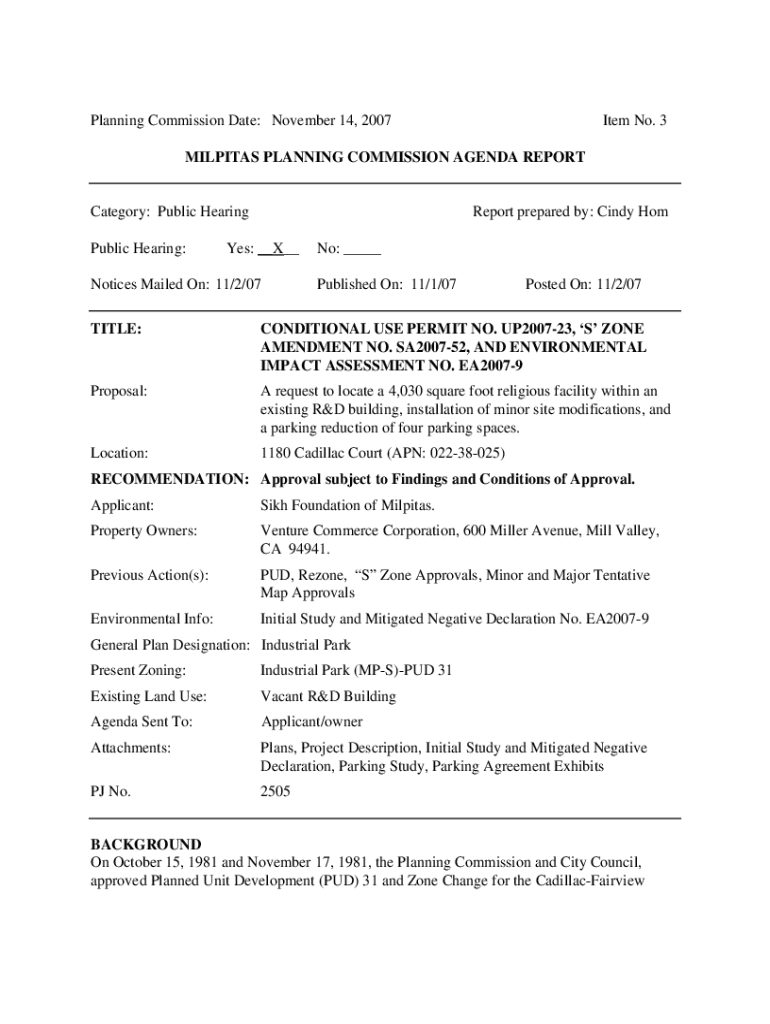
The "Milpitas Planning Commission Agenda Report" is a formal document issued by the Milpitas Planning Commission. It primarily serves to inform stakeholders, including city officials and the public, about an upcoming meeting or hearing concerning urban planning and development projects within the city of Milpitas, California. The agenda report typically details the subjects to be addressed, such as zoning changes, permit applications, and community impact assessments. For instance, the document may cover topics linked to Conditional Use Permit No. UP2007-23, which proposes establishing a religious facility within an R&D building.
How to Use the Milpitas Planning Commission Agenda Report
To maximize the utility of the agenda report, it is essential for users to familiarize themselves with the document's structure and sections:
- Review the Introduction: Understand the purpose and context of the meeting.
- Agenda Items: Examine each item for specific topics of interest, such as new developments or modifications to existing facilities.
- Recommendations and Findings: Analyze the commission's suggestions and reasons supporting project approvals or rejections.
- Public Input: Identify opportunities for public commentary or participation.
- Implementation: Utilize the report’s conclusions to guide project planning, community engagement, and compliance with local regulations.
Steps to Complete the Milpitas Planning Commission Agenda Report
Although the report itself is typically prepared by the planning commission, contributors such as city planners or petitioners might need to supply information:
- Submit Project Details: Include comprehensive descriptions of the project, such as size, location, and intended use.
- Provide Regulatory Compliance Information: Ensure the project meets all relevant zoning laws and environmental regulations.
- Include Community Impact Statements: Demonstrate awareness of and responses to possible social, economic, and environmental impacts.
- Attach Supporting Documents: Supply architectural drawings, traffic studies, or legal documentation that supports the proposal.
- Review Draft: Ensure all necessary information is included and accurate before submission to the planning commission.
Important Terms Related to Milpitas Planning Commission Agenda Report
Familiarity with key terms can enhance understanding:
- Conditional Use Permit (CUP): A zoning exception that allows the property to be used in a way not typically permitted within the district.
- Zoning Ordinance: Regulatory measures governing land use within specific areas.
- Environmental Assessment: A study evaluating the potential environmental effects of a proposed project.
- Public Hearing: An official forum for community members to provide input on proposed developments.
Key Elements of the Milpitas Planning Commission Agenda Report
The agenda report is structured to ensure comprehensive coverage of each project:
- Title and Date of the Meeting: Clearly indicating the scheduled date for discussion.
- Summary of Proposals: Providing a concise overview of each topic or project on the agenda.
- Detailed Analysis: Explaining the foundational research and analysis supporting project recommendations.
- Attachments: Including any relevant supporting documents, such as technical studies or diagrams.
Who Typically Uses the Milpitas Planning Commission Agenda Report
Various stakeholders utilize the agenda report to make informed decisions:
- City Planners and Officials: Use the document to guide urban planning and ensure regulatory compliance.
- Developers and Business Owners: Leverage insights from the report to aid in project planning and execution.
- Community Members: Access information to understand potential local impacts and participate in public hearings.


Legal Use of the Milpitas Planning Commission Agenda Report
The agenda report adheres to legal standards by providing transparency and equitable access to information:
- Complies with California Public Records Act: Ensures transparency in governmental proceedings.
- Regulatory Compliance: Aligns with local, state, and federal regulations concerning urban development.
- Public Participation: Encourages community input by highlighting opportunities for engagement during public hearings.
Digital vs. Paper Version
Both digital and paper versions of the agenda report serve distinct purposes and audiences:
- Digital Version: Accessible online for quick and broad dissemination, enhancing reach and convenience.
- Paper Version: Available for stakeholders without reliable internet access, often distributed at public meetings or libraries.
Preferences for digital or paper are influenced by accessibility needs and personal habits.