






Definition & Meaning
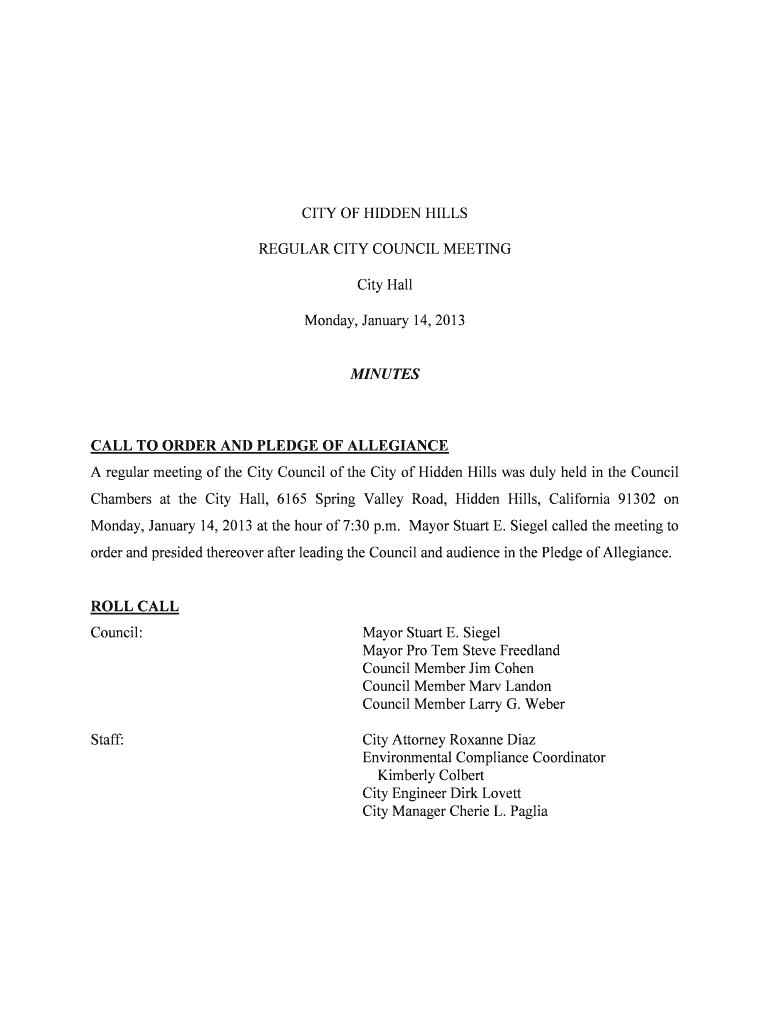
The "January 14, 2013 - Hidden Hills" document refers to the minutes from a specific City Council meeting in Hidden Hills. These minutes are an official and comprehensive record of the discussions and decisions that took place during this meeting. They provide an insightful look at the municipal governance processes, capturing agenda items like public announcements, hearings, and requests for city planning and development. Through these minutes, citizens and stakeholders gain transparency into local government actions and decisions, which can impact the community on various levels.
Purpose and Utility
- Record Keeping: Provides an official account of council proceedings.
- Public Transparency: Ensures that residents stay informed about local government activities.
- Reference and Accountability: Acts as a future reference for city officials and residents in evaluating past decisions and commitments made by the council.
How to Use the January 14, 2013 - Hidden Hills Document
Effectively utilizing the minutes from the City Council meeting requires a careful review of its contents. Pursuing the document ensures stakeholders understand key municipal decisions and community issues.
Steps for Effective Use
- Review the Agenda: Start by understanding what topics were scheduled for discussion. This helps in following the flow of the meeting proceedings.
- Identify Key Discussions: Look for sections highlighting critical deliberations such as public hearings or major requests (e.g., lot mergers or new developments).
- Analyze Decisions: Study the decisions made regarding community issues like traffic or architectural styles for new buildings.
- Cross-Reference with Other Meetings: Check for consistency or progression of topics across different Council meetings to track long-term projects or concerns.
Steps to Complete the January 14, 2013 - Hidden Hills
Engaging with the City Council minutes doesn't require completion like traditional forms but involves steps for thorough analysis. Here's a guide on how to interpret and engage with the content.
Detailed Interpretation Process
- Check Call to Order: Examine who led the meeting and any opening remarks.
- Note Attendance: Review the roll call to understand which council members and staff were present, enabling assessments of representative quorum.
- Scrutinize Public Announcements: These can provide updates on community events or emerging issues.
- Engage with Public Hearings: Look at the discourse around public participation which provides insight into community concerns.
- Follow-Up on Action Items: Document action items such as letters to external bodies for regulatory concerns and track their completion status in subsequent meetings.
Key Elements of the January 14, 2013 - Hidden Hills
Critical components of the minutes document include structured segments that ensure all aspects of the meeting are recorded systematically.
Core Components
- Call to Order: Marks the official start and sets the tone for the meeting.
- Roll Call: Lists who was present, ensuring accountability and transparency.
- Approval of Agenda: Confirms consensus on the topics to be discussed.
- Public Hearings and Discussions: Open forums where community voices inform council decisions.
- Formal Requests and Approvals: Reviews specific proposals, such as lot mergers or constructions, and the council's consensus on them.
Important Terms Related to January 14, 2013 - Hidden Hills
Understanding common terms and lingo used in City Council minutes can enhance an individual's ability to interpret these records.
Glossary of Terms
- Lot Merger: A procedural act to combine two or more parcels of land into a single contiguous lot, affecting zoning and land use.
- TMDL (Total Maximum Daily Load): A regulatory term outlining the maximum amount of a pollutant that a waterbody can receive and still meet water quality standards.
- Conceptual Review: An initial assessment of a proposed project to determine if it aligns with local zoning ordinances and community goals.
Legal Use of the January 14, 2013 - Hidden Hills
City Council minutes can serve as a legal record for various official purposes, ensuring adherence to municipal regulations and community standards.
Legal Applications
- Documentation of Decisions: Acts as legal evidence of decisions made and actions taken by the City Council.
- Compliance Verification: Ensures community projects align with agreed-upon parameters established during council meetings.
- Litigation Support: Used in legal contexts to affirm council's past discussions and resolutions, particularly if community members dispute decisions.
State-Specific Rules for the January 14, 2013 - Hidden Hills
Local governance documents like City Council minutes are subject to state-specific regulations, ensuring consistency with broader legislative frameworks.
Regulatory Alignment
- Open Meeting Laws: Compliance with California's Brown Act, ensuring meetings are conducted transparently and accessible to the public.
- Environmental Regulations: Alignment with state environmental policies, particularly in discussions about land development and water quality issues.
Examples of Using the January 14, 2013 - Hidden Hills
Real-world use cases of the document demonstrate its practical application in civic and community planning processes.
Practical Scenarios
- Community Advocacy: Residents use meeting minutes to support advocacy efforts regarding local development projects.
- Academic Research: Scholars analyze council minutes to study urban development trends and municipal governance.
- Legal Challenges: Individuals and groups reference specific council discussions to validate legal actions or challenges against city decisions.
By thoroughly engaging with these structured and detailed sections, users can maximize the utility of the "January 14, 2013 - Hidden Hills" document, gaining a complete understanding of the municipal decision-making processes and their broader impacts.